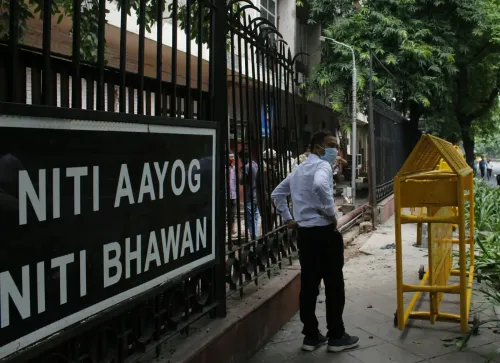
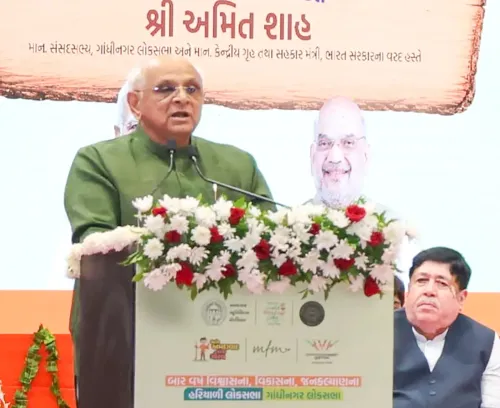
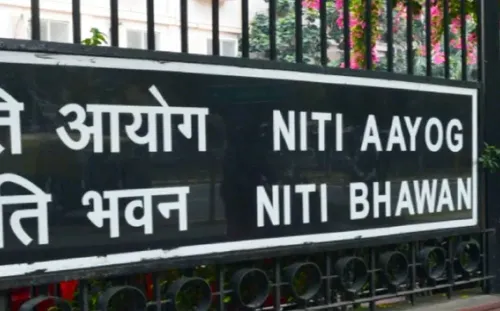
Gujarat tops NITI Aayog Investment Friendliness Index 2026, beats Maharashtra and Tamil Nadu

Synopsis
Gujarat has beaten Maharashtra and Tamil Nadu to claim the top rank in NITI Aayog's first-ever Investment Friendliness Index 2026 — scoring 56.6 against Maharashtra's 53.7. The gap is driven by a rare convergence: the lowest fiscal deficit among major states, power tariffs 29 per cent below the national average, and an expressway network that leads the country. For competing states, the index now sets a hard benchmark.
Key Takeaways
Gujarat ranked 1st among 17 major states in NITI Aayog's Investment Friendliness Index 2026 with a score of 56.6 .
Maharashtra ( 53.7 ) and Tamil Nadu ( 53.3 ) placed second and third respectively.
Gujarat's industrial electricity tariffs are nearly 29 per cent lower than the national average, with 23.8 hours of average daily power supply.
The state contributes 31 per cent of India's merchandise exports and has a per capita GSDP of ₹2,64,232 — 67 per cent above the major-state average.
Gujarat recorded the lowest fiscal deficit among assessed states at 2.81 per cent of GSDP in FY2024 .
The state has 614 Atal Tinkering Labs and the country's longest estimated expressway network at 635 kilometres .
Gujarat has claimed the top spot among 17 major Indian states in NITI Aayog's inaugural Investment Friendliness Index 2026, scoring 56.6 points to outpace Maharashtra (53.7) and Tamil Nadu (53.3). The index, the first of its kind, evaluated states across 84 indicators spanning eight pillars that cover the full investment lifecycle — from policy and governance to infrastructure, business facilitation, and fiscal management.
How the Index Was Scored
The assessment framework examined the entire investment journey, grouping indicators under pillars including policy and governance, infrastructure readiness, business facilitation, and fiscal health. Gujarat's lead of more than 3 points over second-placed Maharashtra signals a meaningful gap, not a marginal one, across multiple dimensions of investment readiness.
The NITI Aayog report attributes Gujarat's ranking to a combination of policy stability, transparent governance, and a robust industrial ecosystem that collectively reduce friction for incoming investors.
Single-Window System and Labour Stability
A key factor cited in the report is the role of the Industrial Extension Bureau (iNDEXTb), which offers investors end-to-end facilitation through a single-window system. The mechanism enables faster approvals and operates within a defined, time-bound framework for statutory clearances and No Objection Certificates (NOCs).
The report also notes that restrictions on strikes in essential services have helped maintain industrial stability, keeping labour disruptions to a minimum — a factor that directly affects investor confidence in project timelines.
Infrastructure, Logistics, and Industrial Hubs
Gujarat's industrial geography is another pillar of its ranking. The report highlights Dholera Special Investment Region (SIR), GIFT City, Sanand, Dahej, Jhagadia, and Saykha as plug-and-play ecosystems that reduce project implementation time and costs for new entrants.
On logistics, Gujarat accounts for nearly 10 per cent of India's state highway network — almost four times the national average. The state holds the country's highest estimated expressway length at 635 kilometres, and nearly 7 per cent of India's railway network passes through it. The report says efficient logistics and lower turnaround times have strengthened supply chain competitiveness.
Power availability is a further differentiator: industrial electricity tariffs in Gujarat are nearly 29 per cent lower than the national average, and industries receive an average daily power supply of 23.8 hours, exceeding the average among major states.
Economic Fundamentals and Fiscal Discipline
Gujarat contributes 31 per cent of India's merchandise exports and recorded the third-highest Gross State Domestic Product (GSDP) growth among states during the 2019–24 financial years. Its per capita GSDP stands at ₹2,64,232 — approximately 67 per cent higher than the average of major states.
Fiscally, the state recorded a deficit of 2.81 per cent of GSDP in FY2024, the lowest among all assessed states. Outstanding liabilities stood at around 18 per cent of GSDP, nearly 40 per cent below the major-state average — what the report describes as prudent fiscal management.
The report also credits the Vibrant Gujarat Global Summit for reinforcing the state's position as a magnet for domestic and international investment commitments.
Innovation Ecosystem and What Comes Next
As of FY2025, Gujarat had established 614 Atal Tinkering Labs, translating to 1.24 laboratories per lakh people — nearly 19 per cent above the major-state average. The report says this infrastructure supports innovation, entrepreneurship, and emerging technologies.
The inaugural index sets a benchmark against which states will likely be measured in subsequent editions. For Gujarat, maintaining the top position will depend on sustaining execution quality as competing states, particularly Maharashtra and Tamil Nadu, close the gap on individual pillars.
Point of View
But the margin is instructive. A 3-point lead over Maharashtra — India's largest economy by nominal GSDP — reflects structural advantages that have been compounding for over a decade: iNDEXTb's single-window system, Dholera's plug-and-play infrastructure, and a fiscal discipline that most states cannot match. What the index does not fully capture is the concentration risk: Gujarat's export and industrial dominance is geographically clustered, and its labour-stability advantage rests partly on legislative restrictions that critics argue limit worker rights. The real test of this index will be whether it drives policy reform in lagging states or simply validates existing hierarchies.
NationPress
17 Oct 2026
Frequently Asked Questions
What is NITI Aayog's Investment Friendliness Index 2026?
It is the first edition of a ranking by NITI Aayog that assesses 17 major Indian states across 84 indicators grouped under eight pillars, covering the full investment lifecycle from policy and governance to fiscal management. Gujarat topped the inaugural edition with a score of 56.6.
Which states ranked behind Gujarat in the index?
Maharashtra ranked second with a score of 53.7, followed by Tamil Nadu at 53.3. The index covered 17 major states in total.
Why did Gujarat rank first in the Investment Friendliness Index?
According to the NITI Aayog report, Gujarat's top rank reflects a combination of its single-window facilitation system through iNDEXTb, plug-and-play industrial hubs, logistics strength, power tariffs 29 per cent below the national average, strong export performance, and the lowest fiscal deficit among assessed states.
How does Gujarat's logistics infrastructure compare nationally?
Gujarat accounts for nearly 10 per cent of India's state highway network — about four times the national average — and has the country's highest estimated expressway length at 635 kilometres. Nearly 7 per cent of India's railway network also passes through the state.
What is Gujarat's fiscal position according to the report?
Gujarat recorded a fiscal deficit of 2.81 per cent of GSDP in FY2024, the lowest among all states assessed. Its outstanding liabilities stood at around 18 per cent of GSDP, nearly 40 per cent below the major-state average.