Is Nitin Nabin the Right Choice for BJP's National President?
Synopsis
Political dynamics in Gujarat shift as BJP announces Nitin Nabin as national president. Celebrated by the ruling party, the move faces scrutiny from Congress, highlighting concerns over centralization and internal democracy. Will Nabin's leadership bring the change BJP aims for?
Key Takeaways
Nitin Nabin appointed as BJP's national president.
Congress criticizes BJP's centralized leadership .
Vishwakarma highlights Nabin's journey from grassroots to leadership.
Concerns about internal democracy within BJP.
Nabin is the youngest leader to hold this position.
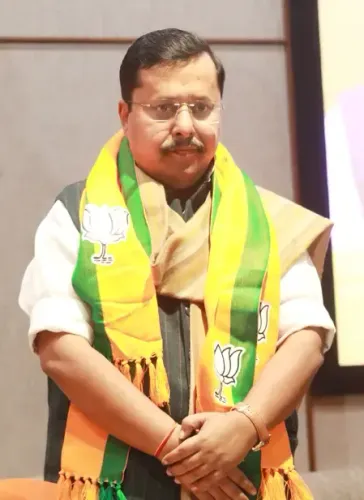
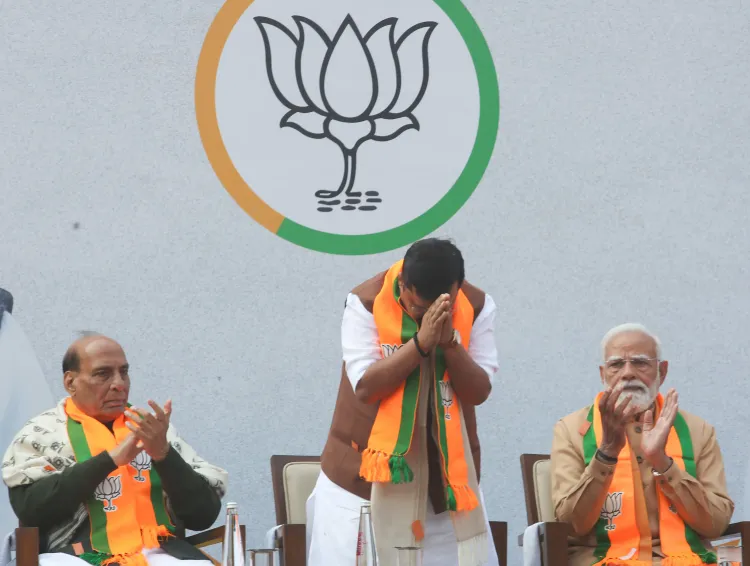
Ahmedabad, Jan 20 (NationPress) Political reactions have begun to emerge in Gujarat following the announcement that Nitin Nabin has been appointed as the new national president of the Bharatiya Janata Party (BJP) on Tuesday.
The ruling party viewed this change as a significant boost to organizational momentum, while the opposition Congress raised concerns about the transparency and internal democracy of the selection process.
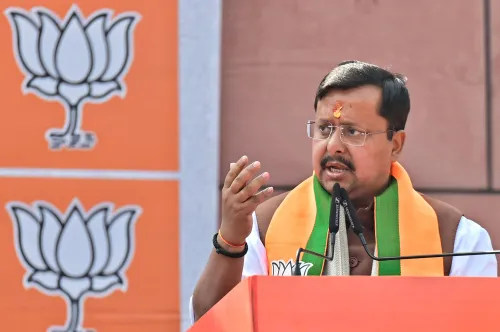
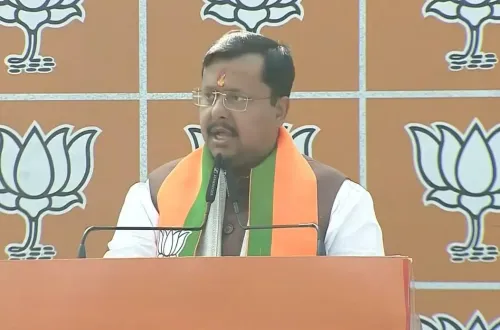
Jagdish Vishwakarma, president of Gujarat BJP, extended his congratulations to Nabin on behalf of the state unit, characterizing his rise as a moment of renewed zeal for the party.
In an official statement, he emphasized that Nabin’s leadership would embody the BJP’s guiding principle of “Nation First, Party Next, Self Last.”
Vishwakarma also noted Nabin’s political journey, highlighting his ascent from grassroots activism to the pinnacle of the party’s organization as an inspirational model for other workers.
He mentioned that the BJP’s cadre-driven framework would be bolstered from the booth level all the way to the national level under Nabin's leadership.
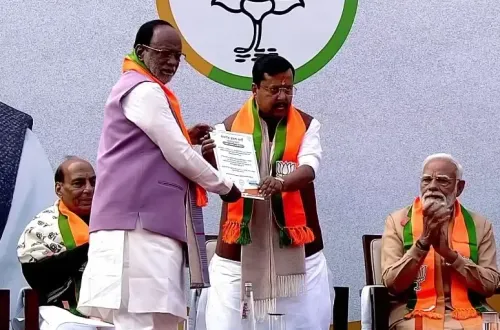
Nabin was officially named as the BJP’s national president earlier that day at the party headquarters in New Delhi. He was the only nominee in the organizational election and has become the youngest leader to hold this position. A five-time MLA from Bihar, Nabin succeeds J.P. Nadda, marking him as the BJP’s 12th national president.
In contrast, the Gujarat Congress criticized the appointment, expressing concerns about what they perceive as the BJP’s “centralised” leadership model.
Party spokesperson Dr. Manish Doshi articulated that while political parties have the autonomy to select their leaders, the BJP's internal processes appear to reflect an excessively concentrated power structure.
“I believe that even within the BJP, there is a centralized control of power,”
Doshi stated, accusing both the BJP and the RSS of adhering to an ideology that discourages internal democratic practices.
He claimed that power has been monopolized by a select few for over three decades, rendering regional voices “unacknowledged and unheard.”
Doshi also accused the BJP of neglecting critical issues such as inflation and unemployment, asserting that internal dissent is routinely suppressed.
Point of View
This development within the BJP can be seen as an attempt to rejuvenate the party's leadership. However, it also raises important questions about the democratic processes within political organizations. The balance between centralized decision-making and grassroots participation remains a critical issue that needs addressing for the party's long-term success.
NationPress
24 Sept 2026
Frequently Asked Questions
What are the concerns raised by Congress?
Congress has criticized the BJP's centralized leadership structure, claiming it undermines internal democracy and limits regional voices.
What was Jagdish Vishwakarma's statement?
Jagdish Vishwakarma congratulated Nabin, emphasizing that his leadership would reflect the BJP's core principle of 'Nation First, Party Next, Self Last.'
What does centralized leadership mean?
Centralized leadership refers to a power structure where decision-making is concentrated in the hands of a few individuals, potentially limiting participation from the wider party membership.
What impact might Nabin's appointment have?
Nabin's appointment could invigorate the party’s grassroots efforts, but it also raises questions about the balance of power and internal democracy within the BJP.