Gujarat Police seize ₹13,600 crore drugs in 5 years, arrest 5,346
Synopsis
Gujarat Police have seized drugs worth ₹13,600 crore and arrested over 5,346 people in five years — and case registrations are accelerating. With India's first Drug Reward Policy, AI-based offender profiling via 'NARIT', and out-of-turn promotions for officers, Gujarat is building what officials claim is a replicable national model for anti-narcotics enforcement.
Key Takeaways
Gujarat Police seized over 1.36 lakh kg of drugs worth ₹13,600 crore in the past five years.
5,346 individuals were arrested across more than 3,700 registered narcotics cases.
Gujarat became the first state in India to implement a formal Drug Reward Policy offering financial incentives to officers and informants.
AI-based software 'NARIT' is being used to profile offenders and track criminal networks under the NDPS Act .
Narcotics case registrations rose from 315 in 2020 to 584 in just the first five months of 2026 .
Dedicated anti-narcotics cells are being established in every district, including remote rural areas.
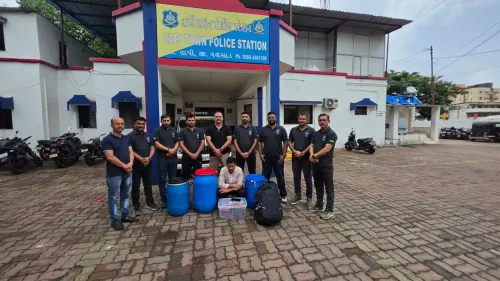
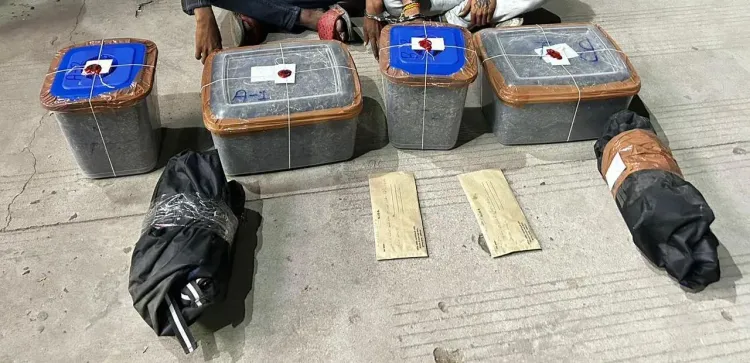
Gujarat Police have seized over 1.36 lakh kilograms of narcotic substances valued at more than ₹13,600 crore and arrested 5,346 individuals in drug trafficking cases over the past five years, state officials announced on 26 June 2026 — the International Day Against Drug Abuse and Illicit Trafficking. The disclosures underscore the scale of Gujarat's sustained anti-narcotics campaign targeting both domestic networks and international smuggling corridors.
Key Figures from Five Years of Operations
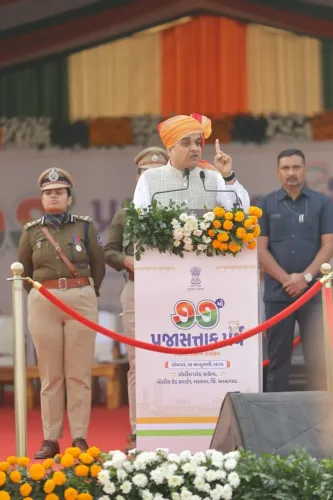
Director General of Police G.S. Malik said more than 3,700 cases related to the trafficking and trade of narcotic substances had been registered over the five-year period, resulting in the arrest and imprisonment of 5,346 accused persons. He added that the seizures — spanning 1.36 lakh kilograms of drugs — had been made through a series of strategic operations. Malik said the sustained enforcement had 'broken the backbone of international drug smuggling networks.'
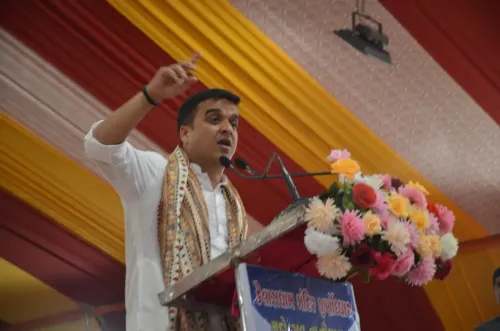
Deputy Chief Minister Harsh Sanghavi said Gujarat Police's operations had significantly disrupted trafficking routes. 'Today, mafias involved in the drug trade are afraid to transport their consignments to other states through Gujarat,' he said.
Policy Reforms Driving Enforcement
Gujarat has introduced several structural changes to sharpen its anti-narcotics machinery. The state became the first in India to implement a formal Drug Reward Policy, offering financial incentives to police personnel who expose major drug networks and to citizens and informants who provide credible intelligence. Police officers who risk their lives dismantling international drug rackets are also eligible for out-of-turn promotions.
An Anti-Narcotics Task Force (ANTF) has been established to target international supply chains, and local police stations have been authorised to register and directly investigate narcotics cases — a function previously reserved for specialised units such as the Anti-Terrorism Squad (ATS) and Special Operations Group (SOG). Dedicated anti-narcotics cells are being set up in every district, including in remote villages.
AI-Powered Offender Profiling
Officials said the state has developed an artificial intelligence-based software system named 'NARIT' for profiling offenders and tracking criminal networks. According to police, the system analyses criminal records, financial transactions, international links, and digital connections to strengthen cases under the Narcotic Drugs and Psychotropic Substances (NDPS) Act. The deployment of such technology marks a notable shift from reactive enforcement to predictive policing in the narcotics domain.
Rising Case Numbers and Rehabilitation Push
Police data show that 315 narcotics cases were registered in Gujarat in 2020. In the first five months of 2026 alone, 584 cases have already been registered — a near-doubling of the annual baseline. Officials attributed the increase to stronger surveillance and enforcement rather than a spike in drug activity itself.
Sanghavi stressed that enforcement was only one dimension of the state's response. 'This fight is not limited to arresting criminals; it is also about safely rescuing the youth of the state who have fallen into the trap of addiction,' he said. The government has strengthened and modernised de-addiction centres, providing counselling and medical treatment to help affected individuals reintegrate into mainstream society. With case registrations accelerating and institutional reforms deepening, Gujarat's anti-narcotics framework is being positioned as a replicable model for other states.
Point of View
But the more telling figure is the case-registration trajectory: 315 cases in all of 2020 against 584 in just the first five months of 2026. Officials frame this as enforcement intensity; it could equally reflect demand growth that enforcement has not yet bent. Gujarat's structural innovations — the Drug Reward Policy, NARIT, out-of-turn promotions — are genuinely novel, but their impact on actual drug availability on the street remains unmeasured in any publicly available audit. The rehabilitation dimension, mentioned briefly by Sanghavi, is the harder and more consequential half of this battle, and it deserves as much institutional investment as the seizure machinery.
NationPress
24 Sept 2026
Frequently Asked Questions
How much drugs did Gujarat Police seize in the last five years?
Gujarat Police seized over 1.36 lakh kilograms of narcotic substances valued at more than ₹13,600 crore between 2021 and 2026. The seizures were made through a series of strategic operations targeting both domestic and international trafficking networks.
How many people were arrested in Gujarat drug cases over five years?
A total of 5,346 individuals were arrested in connection with drug trafficking across more than 3,700 registered narcotics cases over the five-year period, according to DGP G.S. Malik.
What is Gujarat's Drug Reward Policy?
Gujarat's Drug Reward Policy, the first of its kind in India, offers financial incentives to police personnel who expose major drug networks and to citizens or informants who provide credible intelligence leading to significant seizures. Officers who risk their lives dismantling international drug rackets are also eligible for out-of-turn promotions.
What is the 'NARIT' software used by Gujarat Police?
NARIT is an artificial intelligence-based software system developed by Gujarat to profile drug offenders and track criminal networks. It analyses criminal records, financial transactions, international links, and digital connections to support investigations and strengthen cases under the NDPS Act.
Why are narcotics case registrations rising in Gujarat?
Narcotics case registrations in Gujarat rose from 315 in 2020 to 584 in just the first five months of 2026. Officials attributed the increase to stronger surveillance and enforcement capabilities rather than a rise in underlying drug activity.