Gujarat: Kutch, Dahod, Chhota Udepur win national awards under PM Dhan-Dhaanya Krishi Yojana
Synopsis
Three of Gujarat's four districts under the Pradhan Mantri Dhan-Dhaanya Krishi Yojana won national awards on the scheme's first anniversary — a result that highlights both the promise of targeting aspirational agricultural districts and the uneven pace of progress. With ₹24,000 crore at stake and 100 districts in scope, these early honours set a benchmark that the remaining 82 unrecognised districts will need to match.
Key Takeaways
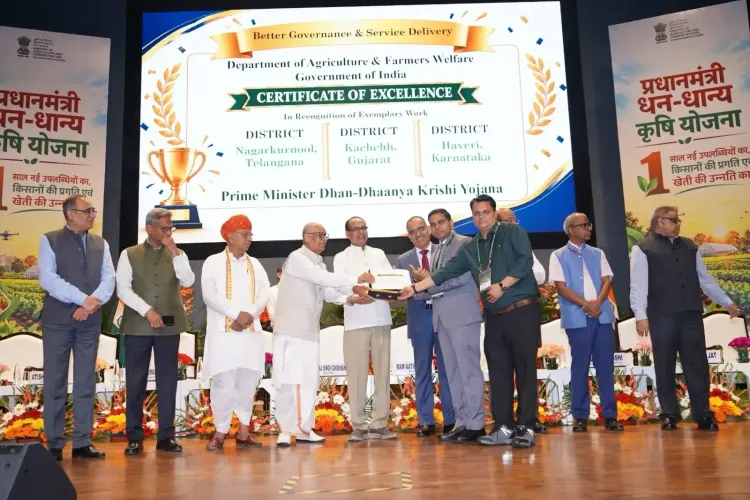
Kutch , Dahod , and Chhota Udepur received national awards under the Pradhan Mantri Dhan-Dhaanya Krishi Yojana on 12 October 2026 .
Kutch was recognised for governance and service delivery; Dahod and Chhota Udepur for improving irrigation infrastructure.
Awards were presented by Union Minister Shivraj Singh Chouhan at a ceremony in New Delhi ; 18 districts nationally were honoured.
The scheme, launched by PM Narendra Modi on 12 October 2025 , covers 100 aspirational agricultural districts with an outlay of ₹24,000 crore .
3 of 4 Gujarat districts covered under the scheme received national recognition in the first year; Panchmahal was not among the awardees.
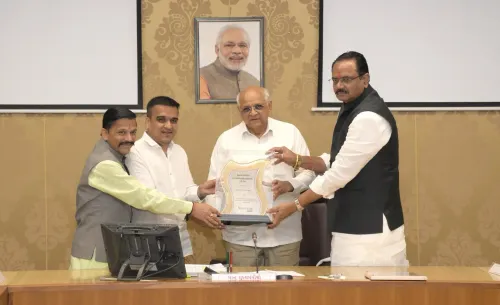
Three districts of Gujarat — Kutch, Dahod, and Chhota Udepur — have received national awards for outstanding performance under the Pradhan Mantri Dhan-Dhaanya Krishi Yojana (PMDKY), as the flagship farm development scheme marks its first anniversary on 12 October 2026. Kutch was recognised for governance and service delivery, while the two tribal-dominated districts were honoured for measurable improvements in irrigation infrastructure.
Award Ceremony and Recognition
The awards were presented by Union Agriculture and Farmers Welfare Minister Shivraj Singh Chouhan at a ceremony organised by the Union Ministry of Agriculture and Farmers Welfare in New Delhi on Monday, coinciding with the scheme's one-year review. At the national level, 18 districts across India were recognised for excellence spanning the six core objectives of the scheme.
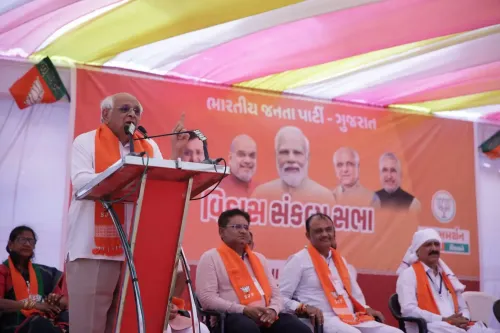
Chief Minister Bhupendra Patel congratulated the district administrations and Agriculture Department officials of all three districts on the recognition, calling it a reflection of ground-level effort.
What the Districts Were Recognised For
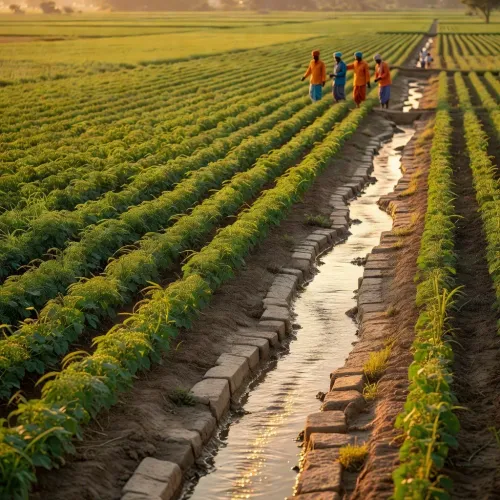
Kutch earned its award for stronger governance and streamlined service delivery to farmers. Dahod and Chhota Udepur, both hilly and predominantly tribal districts, were acknowledged for expanding irrigation capacity, strengthening water infrastructure, and ensuring improved water availability for agriculture — factors that have directly contributed to gains in farm productivity and output, according to the state government.
Notably, three of the four Gujarat districts covered under the scheme — Kutch, Dahod, Chhota Udepur, and Panchmahal — received national recognition within the first year of implementation, placing the state among the better-performing participating regions.
About the Pradhan Mantri Dhan-Dhaanya Krishi Yojana
The scheme was launched by Prime Minister Narendra Modi on 12 October 2025 and covers 100 agricultural aspirational districts across the country — areas identified as having significant agricultural potential but lagging in productivity, cropping intensity, and access to credit. With a total outlay of ₹24,000 crore, the programme targets improvements across six key areas: raising agricultural productivity, promoting crop diversification and sustainable practices, enhancing post-harvest storage capacity, improving irrigation infrastructure, expanding agricultural credit access, and strengthening governance and service delivery.
The identified districts are characterised by relatively low agricultural productivity, moderate cropping intensity, and below-average agricultural credit parameters — gaps the scheme is designed to systematically address.
Why This Matters for Tribal and Aspirational Regions
The recognition of Dahod and Chhota Udepur is significant in a broader national context. Irrigation gaps in hilly and tribal belts have historically constrained farm incomes and deepened rural distress in these areas. Progress in water infrastructure at the district level, if sustained and independently verified, could serve as a replicable model for other aspirational districts in similar geographies. This comes amid growing scrutiny of whether centrally sponsored agricultural schemes translate into measurable farm-income gains on the ground.
What Comes Next
With the first-year review complete, the scheme's second phase will be closely watched for whether momentum in award-winning districts is maintained and whether lagging districts — including Gujarat's own Panchmahal, which did not receive a national award this cycle — can close the gap. The national-level outcome data and district-wise progress reports are expected to inform future resource allocation under the ₹24,000 crore framework.
Point of View
But the more revealing question is what drove Dahod and Chhota Udepur's irrigation gains — whether it was structural investment or a sprint ahead of the anniversary review. The scheme's ₹24,000 crore outlay targets 100 districts, yet only 18 were recognised, leaving the majority of aspirational districts without a milestone marker at the one-year point. Independent verification of productivity and income outcomes — not just infrastructure creation — will determine whether PMDKY avoids the fate of earlier farm schemes that generated awards but not sustained output growth. Gujarat's own Panchmahal, covered under the scheme but absent from the winners' list, is an early data point worth watching.
NationPress
13 Oct 2026
Frequently Asked Questions
What is the Pradhan Mantri Dhan-Dhaanya Krishi Yojana?
The Pradhan Mantri Dhan-Dhaanya Krishi Yojana is a centrally sponsored agricultural development scheme launched by PM Narendra Modi on 12 October 2025, covering 100 aspirational districts with a ₹24,000 crore outlay. It targets districts with low farm productivity, moderate cropping intensity, and limited agricultural credit access, aiming to improve outcomes across six key areas including irrigation, crop diversification, and governance.
Which Gujarat districts won national awards under the scheme?
Kutch, Dahod, and Chhota Udepur won national awards at the scheme's first-anniversary review held in New Delhi on Monday. Kutch was recognised for governance and service delivery, while Dahod and Chhota Udepur were honoured for improving irrigation infrastructure.
Who presented the awards and where?
Union Agriculture and Farmers Welfare Minister Shivraj Singh Chouhan presented the awards at a ceremony organised by the Union Ministry of Agriculture and Farmers Welfare in New Delhi. A total of 18 districts across India were recognised at the national-level review.
Why were Dahod and Chhota Udepur specifically recognised for irrigation?
Both Dahod and Chhota Udepur are hilly, tribal-dominated districts where irrigation infrastructure gaps have historically constrained agricultural productivity. According to the state government, district administrations expanded irrigation capacity, strengthened water infrastructure, and improved water availability for farmers, contributing to measurable gains in farm output.
Which Gujarat district was not recognised, and what does that mean?
Panchmahal, the fourth Gujarat district covered under the scheme, was not among the 18 nationally recognised districts at the first-year review. Its absence from the winners' list provides an early indicator of where implementation progress may need to accelerate in the scheme's second year.