Gujarat Unveils Innovative Food Security Measures: CBDC Coupons and Grain ATMs
Synopsis
Gujarat is set to revolutionize food security with a massive Rs 2,856 crore budget, targeting 75 lakh families through cutting-edge initiatives like digital food coupons and grain ATMs. Discover how these advancements aim to ensure equitable access to essential food resources.
Key Takeaways
Rs 2,856 crore allocated for food security.
Targeting 75 lakh families for enhanced support.
Introduction of digital food coupons using CBDC technology.
Launch of Annapurti grain ATMs for convenient access to grains.
Focus on transparency and efficiency in food distribution.
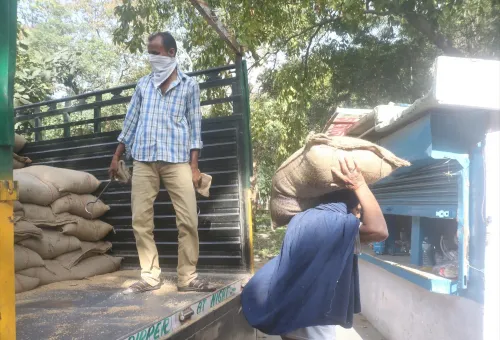
Gandhinagar, March 16 (NationPress) The Gujarat administration has designated Rs 2,856 crore to the Food, Civil Supplies and Consumer Affairs Department for the fiscal year 2026–27. This initiative aims to broaden food security coverage for about 75 lakh families and to implement technology-enhanced strategies, including digital food coupons and grain dispensing machines.
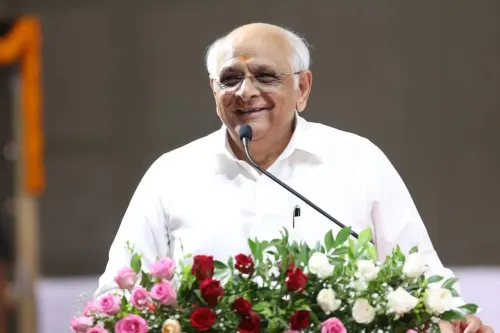
During a press briefing in Gandhinagar on Monday, Minister Raman Solanki emphasized the government's unwavering dedication to safeguarding food security for the most marginalized populations.
“With the guiding principles of ‘Antyodaya’ and ‘Garib Kalyan’, we are focused on ensuring food security reaches the last individual in line,” Solanki affirmed.
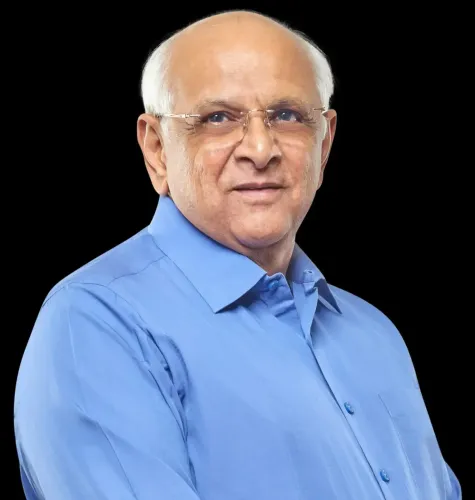
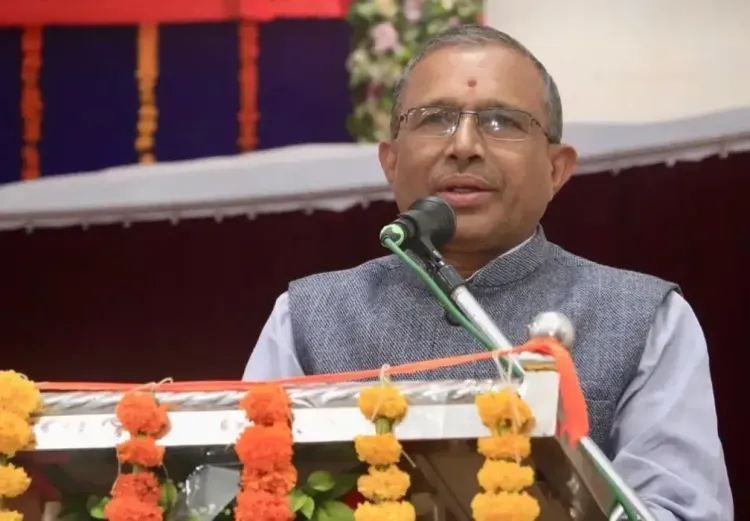
He further explained that ‘Garib Kalyan’ (welfare of the poor) serves as a foundational ethos of the state administration under Chief Minister Bhupendra Patel and Deputy Chief Minister Harsh Sanghavi.
Additional Chief Secretary Mona Khandhar noted that Rs 700.63 crore has been allocated to ensure food security for approximately 75 lakh families who are beneficiaries of the National Food Security Act (NFSA).
Moreover, a budget of Rs 841.69 crore has been set aside to provide tur dal and chana to NFSA cardholders at subsidized prices, helping maintain a nutritious diet.
Khandhar also remarked that in 2025–26, the distribution of pulses saw an increase of 28,491 metric tonnes compared to the previous year.
To combat iodine and iron deficiency, the government has earmarked Rs 59.49 crore to offer double fortified salt to 75 lakh families at a subsidized rate of Rs 1 per kilogram.
Highlighting the role of technology in enhancing transparency within the public distribution system, she mentioned that Gujarat has initiated a pilot project for digital food coupons utilizing Central Bank Digital Currency (CBDC).
“This system leverages e-KYC, which will help mitigate challenges like biometric authentication failures,” Khandhar explained, stating that e-KYC for 4.23 crore ration card members has been successfully completed.
The Chief Secretary added that the government is maintaining the procurement of food grains at the minimum support price to guarantee fair compensation for farmers.
In 2025–26, the state procured various grains from 40,396 farmers and transferred Rs 47,494 lakh directly to their bank accounts.
To promote millet consumption, the government has allocated Rs 36.51 crore to provide farmers with an incentive of Rs 300 per quintal for procuring bajra, jowar, ragi, and maize.
Khandhar mentioned that the commission for over 17,000 fair price shop dealers has risen from Rs 150 per quintal to Rs 185 per quintal.
A budget of Rs 67.20 crore has been allocated for this increase. “With the motto ‘Sajag Grahak, Surakshit Gujarat’, we have initiated numerous measures to safeguard consumer rights,” Khandhar stated.
She also announced plans to establish pre-litigation and conciliation centers within consumer dispute redressal commissions in every district, facilitating quicker resolutions to complaints without protracted legal processes.
Officials also highlighted the launch of the Investor Facilitation Portal, aimed at enhancing transparency in the legal metrology framework.
Among the new initiatives, the department intends to unveil ‘Annapurti’ grain ATMs designed to dispense subsidized grain to beneficiaries at any time.
Officials indicated that these machines, developed under the “Made in Gujarat” initiative, will enable beneficiaries to withdraw up to 25 kilograms of grain in approximately 35 seconds.
A budget of Rs 10 crore has been allocated for this project, with the inaugural grain ATM expected to be launched in Kalol.
The department has also set aside Rs 2.49 crore to establish a new IT cell aimed at bolstering the implementation of the SMART-PDS system.
An additional Rs 28.38 crore has been allocated to procure 67 standard laboratory instruments for the legal metrology system.
To enhance storage capacity, the state is considering the construction of 51 new godowns across 45 talukas, supported by NABARD, which officials claim will create an extra storage capacity of 93,400 metric tonnes.
The government also plans to shift to packaged distribution for tur dal, chana, and sugar in certified one-kilogram packets instead of loose quantities, aiming to improve transparency and minimize complaints.
Furthermore, officials mentioned that memorandums of understanding have been established to develop a Consumer Responsibility Index (CRI) to evaluate companies based on their consumer treatment and complaint resolution processes.
Point of View
The Gujarat government's substantial investment in food security represents a significant commitment to social welfare. By integrating technology into public distribution, the initiative not only aims to enhance efficiency but also to ensure that the most vulnerable populations receive adequate support. Such measures could serve as a model for other states looking to improve food access.
NationPress
27 Sept 2026
Frequently Asked Questions
What is the total budget allocated for food security in Gujarat?
The total budget allocated for food security in Gujarat is Rs 2,856 crore for the fiscal year 2026–27.
How many families will benefit from the food security measures?
Approximately 75 lakh families will benefit from the food security measures introduced by the Gujarat government.
What new technologies are being implemented in Gujarat's food security initiatives?
The Gujarat government plans to implement digital food coupons based on Central Bank Digital Currency (CBDC) and introduce grain dispensing machines.
What is the purpose of the Annapurti grain ATMs?
The Annapurti grain ATMs are designed to dispense subsidized grains to beneficiaries at any time, enhancing accessibility.
How will the government ensure transparency in the distribution system?
The government aims to improve transparency through technology, including the use of e-KYC systems and packaged distribution of essential food items.