Syama Prasad Mookerjee flyover inaugurated in Guwahati; CM Sarma hails his Assam legacy

Synopsis
A ₹376 crore flyover in Guwahati named after Syama Prasad Mookerjee became the occasion for Assam CM Himanta Biswa Sarma to spotlight a lesser-told chapter: Mookerjee's pre-Independence interventions that reportedly bolstered Assamese resistance to the grouping plan and shaped the state's educational institutions — a legacy now being woven into Assam's public infrastructure.
Key Takeaways
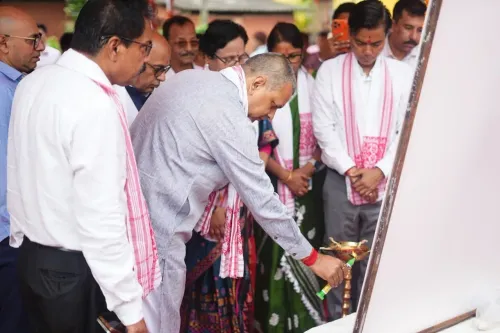
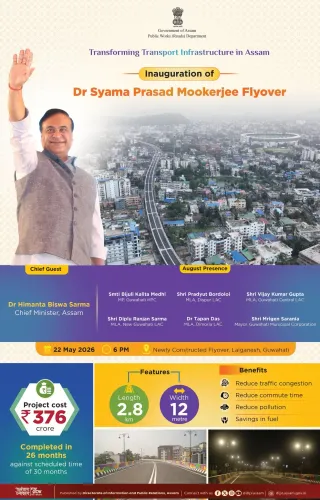
Assam CM Himanta Biswa Sarma inaugurated a ₹376 crore flyover in Guwahati named after Syama Prasad Mookerjee on 22 May 2025 .
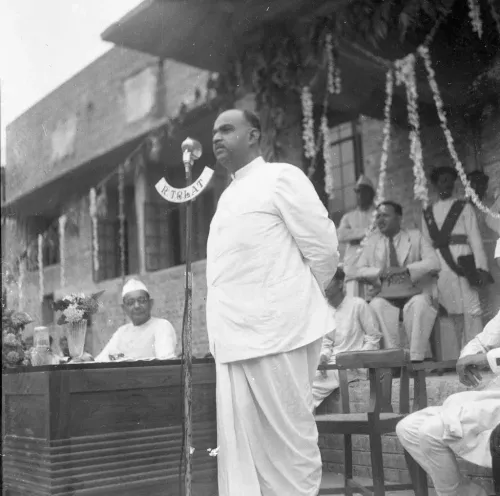
Sarma described Mookerjee as a 'true well-wisher of Assam' who opposed the grouping plan during the Partition era and supported Lokapriya Gopinath Bordoloi .
Mookerjee visited Assam during the politically volatile years of 1940–41 to bolster public morale following the Pakistan Resolution by the Assam Provincial Muslim League.
Under Mookerjee's initiative, Assamese medium education up to matriculation level was promoted and J.B.
College received recognition under the University of Calcutta .
The flyover, connecting Cycle Factory junction to Lalganesh , was completed in 26 months against a 30-month deadline on National Highway-27 .
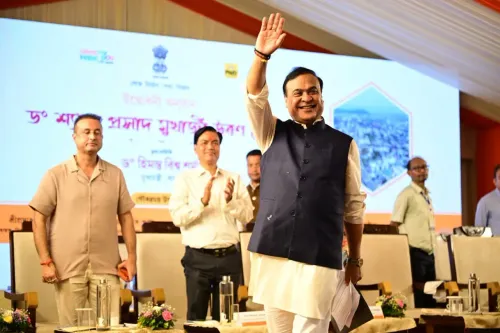
Assam Chief Minister Himanta Biswa Sarma on Friday, 22 May inaugurated a ₹376 crore flyover in Guwahati named after Bharatiya Jana Sangh founder Syama Prasad Mookerjee, honouring him as a 'true well-wisher of Assam' whose political interventions during the pre-Independence era helped safeguard the state's future. The ceremony drew attention to Mookerjee's largely underacknowledged role in Assam's political and educational history.
CM Sarma's Tribute at the Inauguration
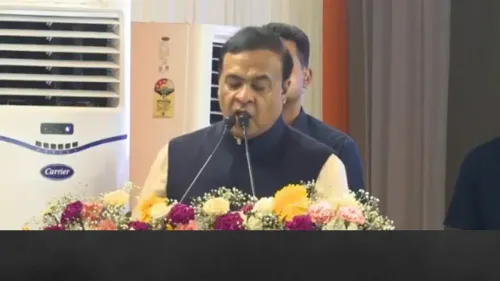
Addressing the gathering, Chief Minister Sarma said, 'Syama Prasad Mookerjee's political life was marked by ideals, patriotism, moral courage and unwavering commitment to national interest. At the most critical phase of Assam's political journey, he stood firmly with the Assamese people and provided moral courage to Lokapriya Gopinath Bordoloi.'
Sarma described Mookerjee as a leader who recognised Assam's distinct cultural and intellectual identity, adding that his contributions during a critical phase of the state's political history would always be remembered with gratitude.
Mookerjee's Stand Against the Grouping Plan
The Chief Minister recalled that during the politically volatile years of 1940–41, Assam witnessed growing anxiety following the Pakistan Resolution adopted by the Assam Provincial Muslim League. According to Sarma, Mookerjee visited Assam during that sensitive period and urged the people not to lose hope.
Mookerjee's speeches and political interventions reportedly strengthened public confidence and inspired Assamese leaders to continue their resistance against the grouping plan during the Partition era — a plan that had created serious uncertainty over the Northeastern state's future within a post-Independence India.
Contributions to Assamese Education and Culture
Sarma also highlighted Mookerjee's role in the educational sphere, noting that both Ashutosh Mukherjee and Syama Prasad Mookerjee made significant contributions towards promoting Assamese language and higher education. Ashutosh Mukherjee had encouraged the study of Assamese literature under the University of Calcutta and supported scholars from Assam at a time when efforts were underway to preserve and institutionalise Assamese literary heritage.
Under Mookerjee's initiative, Assamese medium education up to the matriculation level received major encouragement, and institutions such as J.B. College secured recognition under the University of Calcutta. Sarma quoted Mookerjee as having envisioned Assam as a future centre for advanced academic research in disciplines including language, anthropology, geology, botany, and forestry, and as having supported the demand for a separate university for Assam.
About the Newly Inaugurated Flyover
The flyover, stretching from the Cycle Factory junction on the Guwahati-Garbhanga Road to Lalganesh, was completed in 26 months — ahead of the stipulated timeline of 30 months — at a cost of ₹376 crore. The infrastructure project is expected to significantly improve connectivity in Guwahati's south-western corridor and ease vehicular movement along the busy highway connecting Arya Nagar to the Lakhra section of National Highway-27.
The naming of the flyover after Mookerjee signals the Bharatiya Janata Party (BJP)-led Assam government's continued effort to foreground nationalist icons from the pre-Independence era in the state's public memory.
Point of View
Invoking Mookerjee's opposition to the grouping plan carries specific regional resonance, linking a national icon to local anxieties about identity and sovereignty that still animate politics. What is notable is the emphasis on Mookerjee's educational contributions to Assam, a dimension rarely foregrounded in national discourse. Whether this translates into a deeper reckoning with Assam's complex pre-Independence political history, or remains ceremonial, will depend on whether such tributes are accompanied by substantive historical scholarship and curriculum inclusion.
NationPress
6 Oct 2026
Frequently Asked Questions
Who was Syama Prasad Mookerjee and what was his connection to Assam?
Syama Prasad Mookerjee was the founder of the Bharatiya Jana Sangh, a precursor to the BJP. He is credited with visiting Assam during the politically volatile years of 1940–41 to strengthen public morale and opposing the grouping plan that had created uncertainty over Assam's future during the Partition era.
What is the Guwahati flyover named after Syama Prasad Mookerjee?
The flyover connects the Cycle Factory junction on the Guwahati-Garbhanga Road to Lalganesh and was built at a cost of ₹376 crore. It was completed in 26 months, ahead of the 30-month deadline, and is expected to ease traffic along the Arya Nagar to Lakhra section of National Highway-27.
What did CM Himanta Biswa Sarma say about Mookerjee at the inauguration?
Sarma described Mookerjee as a 'true well-wisher of Assam' and said his political life was marked by patriotism, moral courage, and commitment to national interest. He credited Mookerjee with providing moral support to Assamese leader Lokapriya Gopinath Bordoloi during the Partition era.
What was the grouping plan that Mookerjee opposed?
The grouping plan was a Partition-era proposal that would have grouped Assam with other provinces in a manner that created serious uncertainty over the Northeastern state's future within independent India. Mookerjee's opposition and visits to Assam reportedly helped galvanise resistance among Assamese leaders and the public.
What were Mookerjee's contributions to education in Assam?
According to CM Sarma, Mookerjee promoted Assamese medium education up to the matriculation level and helped secure recognition for institutions such as J.B. College under the University of Calcutta. He also supported the demand for a separate university for Assam and recognised its potential in disciplines like language, anthropology, geology, botany, and forestry.