CM Himanta Honours Syama Prasad Mookerjee With Guwahati Park
Synopsis
Assam Chief Minister Himanta Biswa Sarma has announced that a park in Guwahati has been named after Dr. Syama Prasad Mookerjee, founder of the Bharatiya Jana Sangh and BJP's ideological predecessor, calling it a fitting tribute to his lasting contributions to the state.
Key Takeaways
CM Himanta Biswa Sarma announced on July 6, 2026 that a park in Guwahati has been named after Dr.
Syama Prasad Mookerjee .
Mookerjee was the founder of the Bharatiya Jana Sangh , the ideological precursor to the BJP .
The tribute aligns with a broader BJP pattern of dedicating public spaces to party founders and nationalist figures across governed states.
The gesture carries particular resonance in the Northeast , where CM Sarma convenes the North-East Democratic Alliance (NEDA) .
Guwahati is Assam's largest city and commercial hub, making the park a high-visibility civic landmark.
A formal inauguration ceremony for the park is awaited and could draw senior central BJP leadership.
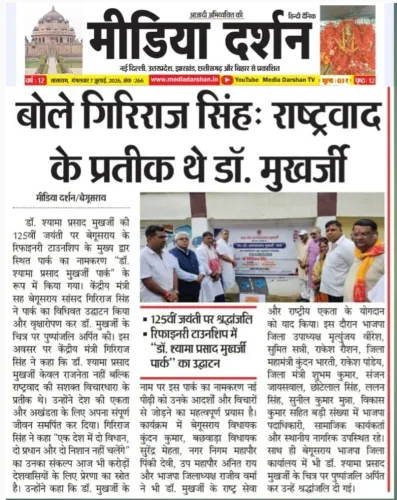
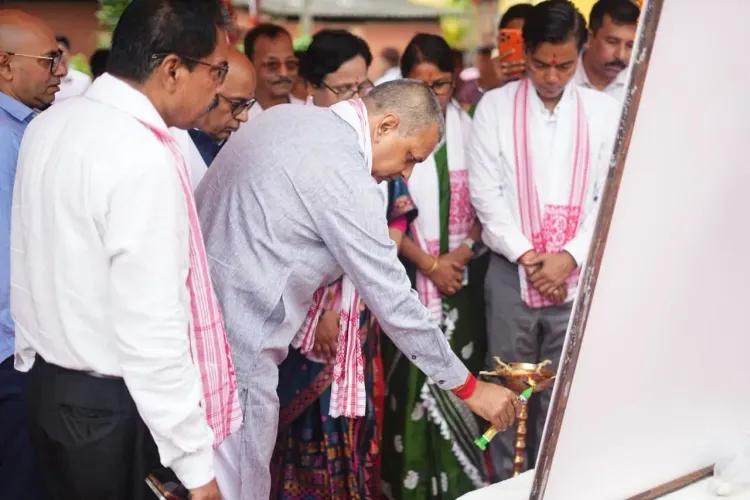
Assam Chief Minister Himanta Biswa Sarma on Monday, July 6, 2026, paid tribute to Dr. Syama Prasad Mookerjee, announcing that a park in Guwahati has been named in the founding ideologue's honour, calling it a fitting tribute to his enduring legacy in the state.
Context
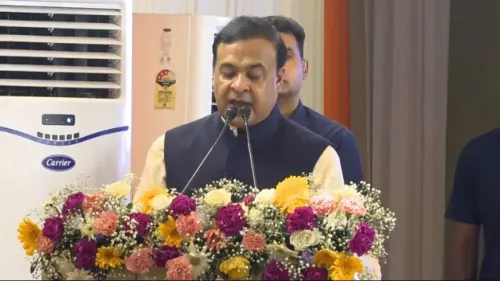
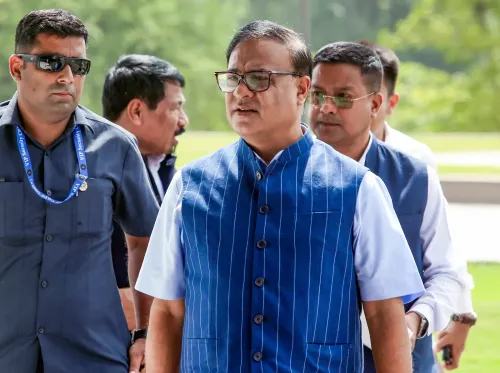
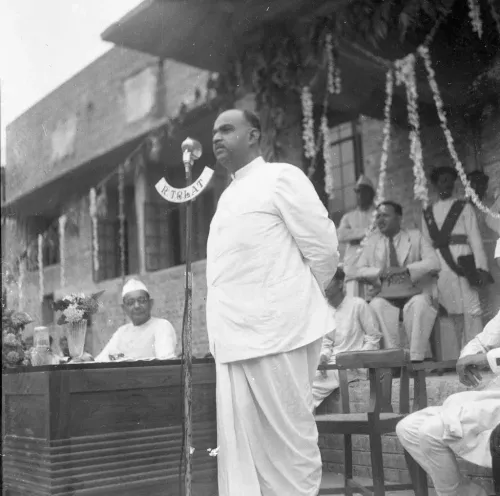
Sharing images from the park, CM Sarma wrote: 'Dr. Syama Prasad Mookerjee's contributions to Assam will remain forever etched in the hearts of everyone in the State. This park in Guwahati, named in his honour will be a fitting tribute to his legacy.' The post, accompanied by four images, underscores the state government's intent to memorialise Mookerjee's association with the region in a permanent, public manner.
Dr. Syama Prasad Mookerjee (1901–1953) was a towering figure in Indian politics — a former Union Cabinet minister, founder of the Bharatiya Jana Sangh (the ideological predecessor of the BJP), and a fierce advocate against the partition of Bengal and against separatist movements. His legacy is particularly resonant in eastern India, where his opposition to the requirement of a permit to travel to Jammu and Kashmir — during which he died in detention — remains a defining chapter of post-Independence political history.
Policy Backdrop
BJP-governed states have, over successive years, dedicated public infrastructure — parks, roads, institutions — to national party founders and ideological predecessors. This serves the dual purpose of civic commemoration and reinforcing a political-historical narrative that links the present ruling dispensation to pre-Independence and early post-Independence nationalist figures.
In the Northeast, such gestures carry additional significance. Under the framework of the North-East Democratic Alliance (NEDA), which CM Sarma convenes, there has been a concerted effort to weave regional identity into a broader pan-Indian political consciousness. Naming public spaces after figures like Mookerjee is part of that cultural and political outreach, reinforcing the idea that the Northeast's story is integral to India's national narrative.
Assam has previously commemorated leaders connected to partition-era developments and refugee rehabilitation — themes that are historically significant for a state that witnessed large-scale migration from erstwhile East Pakistan and later Bangladesh. Mookerjee's advocacy for displaced Hindus and his resistance to what he termed the 'two-nation theory's consequences' resonate in this context.
Stakeholders and Impact
For Guwahati's residents, the park represents a new civic landmark in the state's largest city and commercial hub. Public green spaces named after historical figures often become sites of political gatherings, cultural events, and civic memory — giving the tribute both symbolic and functional weight.
For the BJP and its ideological ecosystem, the naming aligns with a nationwide effort to elevate Bharatiya Jana Sangh founders and associated thinkers to the level of national icons, placing them alongside figures from other political traditions in the public imagination. CM Sarma's post, reaching a large social media audience, amplifies this message well beyond Assam's borders.
What's Next
Attention will now turn to whether a formal inauguration ceremony or an unveiling event is scheduled for the park, which could draw senior BJP leadership from the Centre and further elevate the tribute's profile. Any accompanying statements detailing Dr. Mookerjee's specific engagements with Assam — his visits, advocacy for the region, or policy interventions — would add historical texture to the commemoration.
The naming also sets a precedent for further such dedications across the Northeast, as the NEDA bloc looks to deepen its cultural and political footprint ahead of upcoming electoral cycles in the region.
Point of View
Who wields the NEDA framework as a tool of regional consolidation, such tributes serve a dual purpose: honouring a historical figure while signalling ideological continuity to a Northeast electorate. Mookerjee's anti-separatist legacy carries specific resonance in Assam, a state shaped by partition-era migration and identity politics. The move is as much about shaping political memory as it is about civic commemoration.
NationPress
5 Oct 2026
Frequently Asked Questions
Who is Dr. Syama Prasad Mookerjee and why is he significant?
Dr. Syama Prasad Mookerjee (1901–1953) was an Indian politician and founder of the Bharatiya Jana Sangh, the party that later evolved into the BJP. He is remembered for his opposition to separatism, his advocacy for displaced communities during Partition, and his protest against the permit system for entering Jammu and Kashmir, during which he died in detention.
Which park in Guwahati has been named after Syama Prasad Mookerjee?
Assam CM Himanta Biswa Sarma announced on July 6, 2026 that a park in Guwahati has been named in Dr. Syama Prasad Mookerjee's honour, though the specific name and exact location of the park were not detailed in the official post.
Why is Himanta Biswa Sarma paying tribute to Syama Prasad Mookerjee?
CM Sarma described Dr. Mookerjee's contributions to Assam as ones that 'will remain forever etched in the hearts of everyone in the State,' reflecting both personal reverence and the BJP's broader effort to honour its ideological founders through public memorials.
What is the North-East Democratic Alliance (NEDA)?
The North-East Democratic Alliance (NEDA) is a political alliance of BJP and like-minded parties in India's northeastern states, convened by Assam CM Himanta Biswa Sarma. It aims to consolidate BJP-aligned governance across the region.
Has the BJP named other public spaces after Syama Prasad Mookerjee?
BJP-governed states have periodically dedicated public infrastructure — including parks, roads, and institutions — to Bharatiya Jana Sangh founders and ideological predecessors. The Guwahati park is part of this broader pattern of civic commemoration.