CM Himanta honours Syama Prasad Mookerjee on 125th jayanti
Synopsis
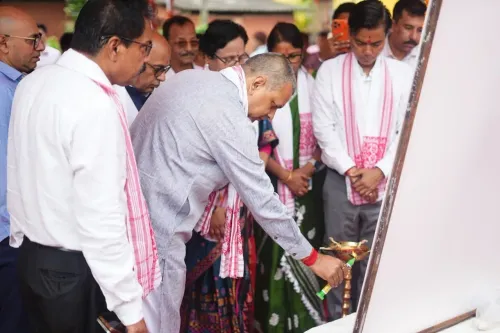
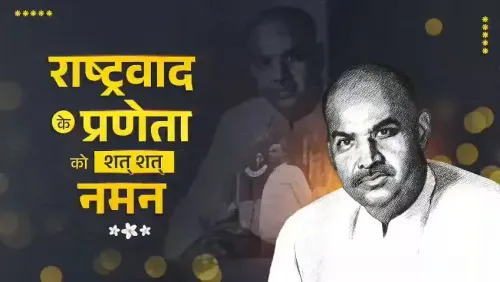
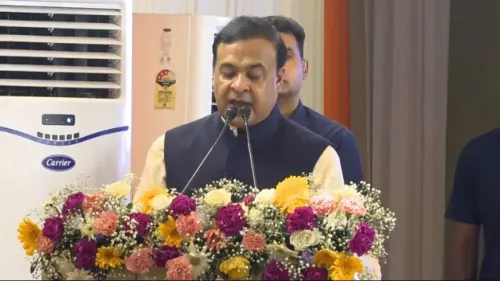
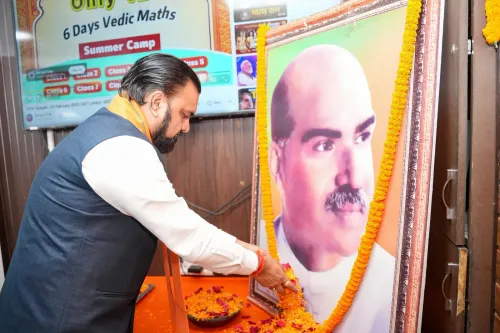
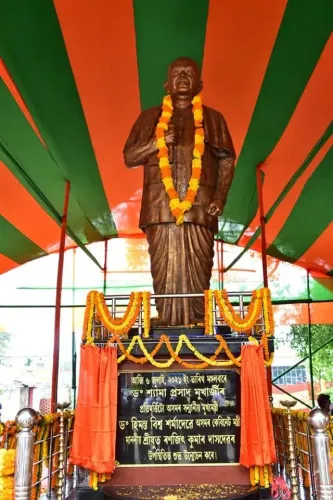
Assam Chief Minister Himanta Biswa Sarma on 6 July 2026 honoured Dr. Syama Prasad Mookerjee on his 125th birth anniversary, crediting him with keeping Assam, Bengal and Kashmir within India and endorsing Union Home Minister Amit Shah's tribute to the Jana Sangh founder.
Key Takeaways
Assam CM Himanta Biswa Sarma paid tribute to Dr.
Syama Prasad Mookerjee on his 125th birth anniversary on 6 July 2026 .
Sarma credited Mookerjee with ensuring Assam , West Bengal , and Jammu and Kashmir remained part of India through his political interventions.
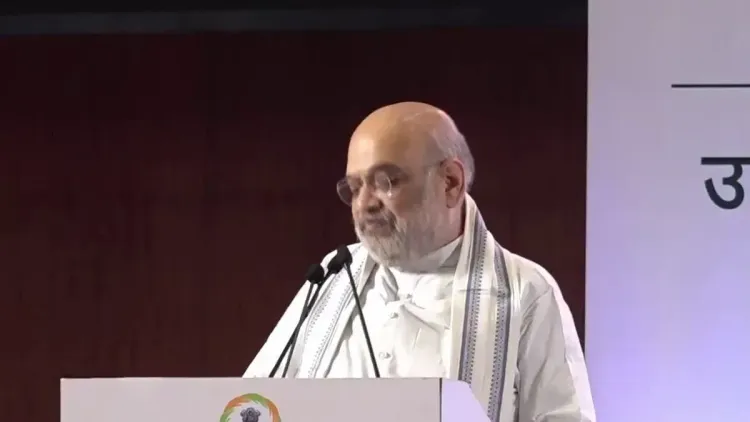
Union Home Minister Amit Shah also paid tributes to Mookerjee, which Sarma publicly endorsed as historically accurate.
Mookerjee founded the Bharatiya Jana Sangh in 1951 , the party that later became the BJP , on a platform of national integration.
His long-standing demand for the abrogation of Article 370 was fulfilled by the BJP government in 2019 .
As NEDA convenor, Sarma's tribute underscores the Northeast's place in the BJP's national integration narrative.
Assam Chief Minister Himanta Biswa Sarma on Monday, 6 July 2026 paid tribute to Dr. Syama Prasad Mookerjee on his 125th birth anniversary, asserting that without Mookerjee's political interventions, the present-day boundaries of Assam, West Bengal, and Jammu and Kashmir would not have remained part of India. Sarma also endorsed remarks by Union Home Minister Amit Shah, who paid his own tributes to Mookerjee on the occasion.
Context
Sarma's post states: 'Without Dr. Syama Prasad Mookerjee, there would not have been the Assam, Bengal and Kashmir as we know today.' He credited Mookerjee with recognising threats from 'inimical forces' and making 'towering contributions' to ensuring these regions remained part of Bharat. The Chief Minister specifically noted that Home Minister Shah 'rightly highlights this historical fact' while paying tributes to the leader on his 125th jayanti.
Syama Prasad Mookerjee was a prominent Indian politician who served as Industry Minister in Jawaharlal Nehru's cabinet before resigning. He founded the Bharatiya Jana Sangh in 1951, a party that would later evolve into the Bharatiya Janata Party (BJP). His political career was deeply shaped by the 1947 Partition and his efforts to influence the boundary decisions that determined which territories would remain within the Indian Union.
Policy Backdrop
Mookerjee's most prominent campaign was his opposition to the special constitutional status granted to Jammu and Kashmir under Article 370. He argued that a single nation could not operate under two separate constitutional arrangements and pressed for full integration of the state. He died in detention in Kashmir in 1953 while leading a protest against the requirement for a permit to enter the state.
In 2019, the BJP-led central government abrogated Article 370 and reorganised Jammu and Kashmir into two Union Territories — a move the party has consistently framed as the fulfilment of Mookerjee's decades-old demand. The Bharatiya Jana Sangh's founding platform of national integration has remained a central ideological thread connecting the party's early history to its present policy positions.
With respect to Assam and West Bengal, Mookerjee played an active role during the Partition deliberations, advocating for the division of Bengal in a manner that would keep a substantial Hindu-majority portion within India. Historians credit this political pressure as a factor in the creation of West Bengal as an Indian state rather than its absorption into the then-East Pakistan.
Stakeholders and Impact
The tribute carries resonance across multiple constituencies. For residents of Assam, West Bengal, and Jammu and Kashmir, the messaging frames their present-day national identity as a direct consequence of Mookerjee's political sacrifices. For the BJP and its ideological ecosystem, the 125th birth anniversary provides an occasion to reaffirm the party's foundational lineage and connect it to consequential territorial decisions.
As convenor of the North-East Democratic Alliance (NEDA), Sarma's voice carries weight across the eight northeastern states. His endorsement of Shah's tribute reinforces coordination between the Assam government and the central leadership on shared historical narratives, particularly those touching on the Northeast's integration into the Indian Union.
What's Next
The 125th birth anniversary of Mookerjee is expected to be marked by state-level and central commemorative events on 6 July 2026. The BJP has historically used such anniversaries to hold cadre outreach programmes, seminars, and exhibitions highlighting Mookerjee's contributions. References to his legacy may also surface in upcoming parliamentary sessions as the party continues to draw ideological lines between the Jana Sangh's founding vision and current governance priorities. Sarma's post signals that the Northeast will remain a prominent part of that commemorative framing.
Point of View
Bengal, and Kashmir together, Sarma draws a geographic arc that reinforces the Northeast's centrality to the national integration story, a narrative with particular electoral utility in his own region. Endorsing Amit Shah's framing also signals tight ideological alignment between the Assam government and central BJP leadership ahead of any commemorative political programming. The choice to elevate Mookerjee's role in shaping Partition-era boundaries keeps a historically contested interpretation of those events in active public circulation.
NationPress
5 Oct 2026
Frequently Asked Questions
Who was Syama Prasad Mookerjee and why is he important to BJP?
Dr. Syama Prasad Mookerjee was an Indian politician who founded the Bharatiya Jana Sangh in 1951 , the predecessor party to the BJP . He is revered by the BJP for championing national integration, opposing Article 370 , and advocating for the retention of Bengal and other regions within India during the 1947 Partition .
What is the 125th jayanti of Syama Prasad Mookerjee?
The 125th jayanti refers to the 125th birth anniversary of Dr. Syama Prasad Mookerjee , observed on 6 July 2026 . It is being marked by the BJP and affiliated organisations with commemorative events at both state and central levels.
What did Himanta Biswa Sarma say about Syama Prasad Mookerjee?
Assam CM Himanta Biswa Sarma said that without Mookerjee, 'there would not have been the Assam, Bengal and Kashmir as we know today,' crediting him with identifying threats from 'inimical forces' and making 'towering contributions' to keeping these regions within India .
What is the connection between Syama Prasad Mookerjee and Article 370?
Mookerjee was among the most prominent voices opposing Article 370 , which granted special status to Jammu and Kashmir . He died in detention in Kashmir in 1953 while protesting the permit system for entering the state. The BJP abrogated Article 370 in 2019 , describing it as the fulfilment of his demand.
What is NEDA and what is Himanta Biswa Sarma's role in it?
The North-East Democratic Alliance (NEDA) is a BJP-led political alliance of parties governing states in Northeast India . Assam Chief Minister Himanta Biswa Sarma serves as its convenor, making him the principal coordinator of BJP-aligned governance across the eight northeastern states.