Nandigram 2026: How Mamata Banerjee's launchpad became her liability
Synopsis
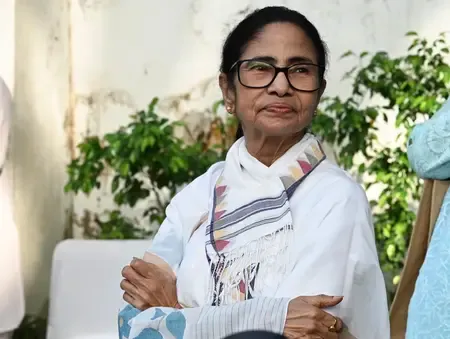
Nandigram built Mamata Banerjee's empire — and is now quietly undermining it. Trinamool's conspicuous silence on the 2026 Martyrs Day, while Chief Minister Suvendu Adhikari held the commemorative space, encapsulates the remarkable inversion: the movement that ended 34 years of Left rule has become the story of how its own architect lost the turf she once immortalised.
Key Takeaways
Trinamool Congress did not hold any significant commemoration on 10 November 2026 , observed annually as Nandigram Day or Martyrs Day .
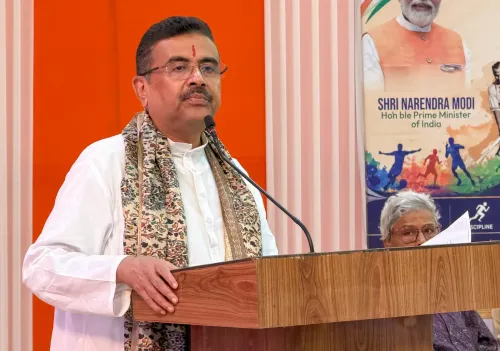
Chief Minister Suvendu Adhikari — a BJP leader and former Trinamool ally — paid homage to the martyrs at a ceremony in Nandigram instead.
The 2007 Nandigram agitation against acquisition of approximately 10,000 acres of farmland for a chemical hub gave Mamata Banerjee the 'Ma Mati Manush' narrative that ended 34 years of Left Front rule in 2011 .
Suvendu Adhikari defected from Trinamool to the Bharatiya Janata Party (BJP) in 2020 and defeated Mamata Banerjee in Nandigram in the 2021 Assembly election .
Trinamool MLA and spokesperson Kunal Ghosh publicly criticised the party's absence from the commemoration.
Nandigram now represents a political paradox for Trinamool: its founding myth and its most visible electoral wound exist in the same constituency.
Nandigram, the Purba Medinipur village in West Bengal that ignited a mass resistance movement against land acquisition in 2007 and propelled Mamata Banerjee to the state's highest office, has evolved into an uncomfortable political metaphor for the All India Trinamool Congress (TMC). The absence of any significant commemoration by the party on 10 November 2026 — observed annually as 'Nandigram Day' or 'Martyrs Day' — has drawn sharp internal criticism and reignited debate about how the movement's legacy is being managed.
The Day That Was Not Marked
Every year since the fall of the Buddhadeb Bhattacharjee-led Left Front government, 10 November has been commemorated to recall the crackdown in which Left Front supporters allegedly opened fire on a protest rally, killing at least two people in what became known as 'Operation Sunrise'. This year, however, it was Chief Minister Suvendu Adhikari — not Trinamool — who paid homage to the martyrs at a ceremony in Nandigram.
The strongest internal rebuke came from Trinamool MLA and spokesperson Kunal Ghosh, who is noted for plain speaking. The optics were damaging: the party that turned Nandigram into a war-cry stood conspicuously absent, while its principal political rival occupied the commemorative space.
How Nandigram Made Mamata
The story of Nandigram's political significance begins with the Left Front government's attempt to acquire approximately 10,000 acres of agricultural land in Purba Medinipur for a proposed chemical hub. The fierce resistance that followed gave Mamata Banerjee a moral cause and a galvanising slogan: 'Ma Mati Manush' (Mother, Motherland, People), which became the centrepiece of Trinamool's 2011 Assembly election campaign.
Together with the Singur agitation against the Tata Nano plant, Nandigram allowed Mamata to frame industrialisation as a question of land rights and government arrogance. The image of farmers resisting alleged land grabs dismantled the Left Front's carefully cultivated identity as the champion of rural Bengal. By 2011, Trinamool had ended 34 uninterrupted years of Left Front rule, and 'Ma Mati Manush' had entered the lexicon of Bengali political memory.
The Man Who Rose — and Then Switched Sides
Among the local leaders forged by the anti-acquisition agitation, none rose faster than Suvendu Adhikari. He was a principal organiser of the movement and one of the chief architects of Trinamool's consolidation in the region, widely regarded within the party as among Mamata's most trusted lieutenants.
That equation fractured in 2020, when Adhikari defected to the Bharatiya Janata Party (BJP) — a shift that reinvented Nandigram's political geography overnight. When Mamata chose to contest the 2021 Assembly election from Nandigram, the decision was understood as a symbolic reclamation: a bid to reassert that the movement's moral ownership belonged to her and to Trinamool.
The Setback That Nandigram Delivered
The gamble did not pay off. Mamata lost to Adhikari in the very constituency that had made her a credible chief ministerial candidate — described widely as the most symbolically damaging defeat of her career. Even as Trinamool swept West Bengal and secured a decisive third term in government, its supreme leader was forced to enter the Assembly through a by-election from her home seat of Bhabanipur. She subsequently lost that seat too, again to Adhikari's political orbit, reportedly failing to secure a fresh Assembly entry.
Notably, the BJP — which had no structural presence in Purba Medinipur when the Left dominated it — has emerged as the principal challenger in a region where Trinamool once appeared invincible. That realignment, critics argue, explains the awkwardness now surrounding Nandigram for the ruling party.
The Mirror Nandigram Holds Up
Celebrating Nandigram Day would require Trinamool to simultaneously revisit its greatest political triumph and its most embarrassing reversal. The movement's most prominent local face now leads the opposition in the state. Commemorating the martyrs risks drawing attention to the fact that the constituency where it all began is no longer Trinamool's.
Nandigram thus occupies a singular place in modern Bengali politics: the moment that ended one era and shaped another, and now a mirror that reflects, with uncomfortable clarity, the limits of the power it once conferred. The coming years will determine whether Trinamool can reclaim the narrative — or whether Nandigram remains permanently rewritten.
Point of View
Unrepeatable moral narrative, and Nandigram's reoccupation by Adhikari has drained that narrative of its exclusivity. The party's inability to generate a successor cause — something as visceral as 'Ma Mati Manush' — leaves it governing on administrative record alone, which is a far less romantic, and far more scrutinised, foundation.
NationPress
12 Nov 2026
Frequently Asked Questions
What is Nandigram Day and why is it significant?
Nandigram Day, also called Martyrs Day, is observed on 10 November each year to commemorate the 2007 crackdown in which Left Front supporters allegedly opened fire on a protest rally in Purba Medinipur, killing at least two people in an incident known as 'Operation Sunrise'. The day marks the pivotal agitation against land acquisition for a chemical hub that helped Mamata Banerjee dismantle 34 years of Left Front rule in West Bengal.
Why did Trinamool Congress skip Nandigram Day in 2026?
Trinamool Congress did not hold any significant commemoration of Nandigram Day on 10 November 2026, drawing criticism from party MLA and spokesperson Kunal Ghosh. The absence is widely attributed to the political awkwardness the constituency now represents: Mamata Banerjee lost Nandigram to Suvendu Adhikari in 2021, and the BJP — not Trinamool — now holds the commemorative ground.
How did Suvendu Adhikari go from Trinamool ally to rival in Nandigram?
Suvendu Adhikari was one of the principal organisers of the 2007 Nandigram anti-land acquisition movement and a trusted lieutenant of Mamata Banerjee. He defected to the Bharatiya Janata Party in 2020 and went on to defeat Mamata herself in the 2021 Assembly election from Nandigram, becoming Chief Minister of West Bengal.
What was the 'Ma Mati Manush' slogan and what did it achieve?
'Ma Mati Manush' (Mother, Motherland, People) was the rallying slogan coined by Mamata Banerjee for the 2011 West Bengal Assembly election campaign, drawing on the Nandigram and Singur agitations against forced land acquisition. It helped Trinamool Congress end 34 consecutive years of Left Front rule and swept Mamata to power as Chief Minister.
What is the current political significance of Nandigram for West Bengal?
Nandigram has become a symbol of political reversal: the constituency that launched Mamata Banerjee's rise to power later delivered her most embarrassing personal electoral defeat. The BJP's consolidation in Purba Medinipur, a region once dominated by the Left and then Trinamool, reflects a broader shift in Bengal's opposition landscape and signals the limits of identity-based political narratives.