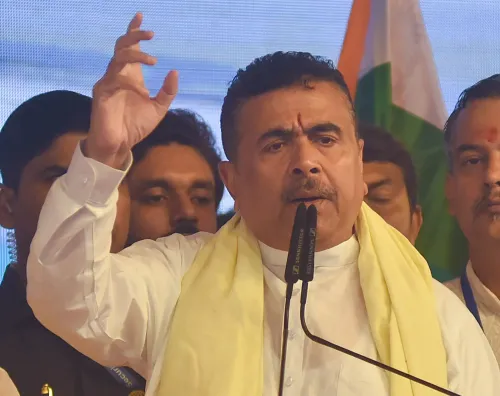
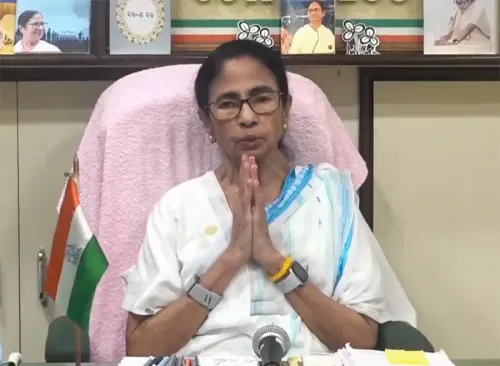
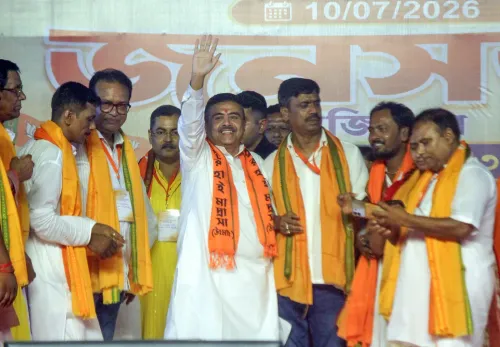
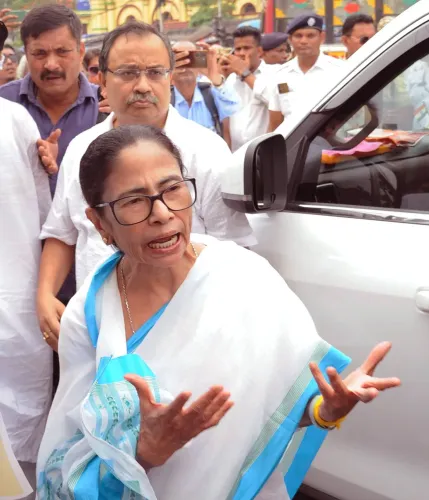
Suvendu Adhikari slams Mamata over Baruipur riots: 'No change in appeasement politics'
Synopsis
West Bengal's new Chief Minister Suvendu Adhikari has directly challenged Mamata Banerjee's framing of the Baruipur violence — sharing footage of a mob lynching and asking how the perpetrators qualify as protesters. The confrontation exposes the sharpest political fault line in post-election Bengal: law-and-order accountability versus the opposition's narrative of community grievance.
Key Takeaways
West Bengal CM Suvendu Adhikari on 9 July accused Mamata Banerjee of continuing appeasement politics despite the TMC's electoral defeat.
Banerjee had described violence in Baruipur, South 24 Parganas — including attacks on police and destruction of public property — as a 'spontaneous protest' over the alleged rape and murder of a 12-year-old girl .
Adhikari shared video footage of the mob lynching of Indrajit Tanti , 26 , who was reportedly dragged from his home and beaten to death.
The CM declared a 'zero-tolerance' policy on crimes against women and children, extending it to mob violence.
He warned that criminals acting under the cover of crowds would face legal consequences under his government.
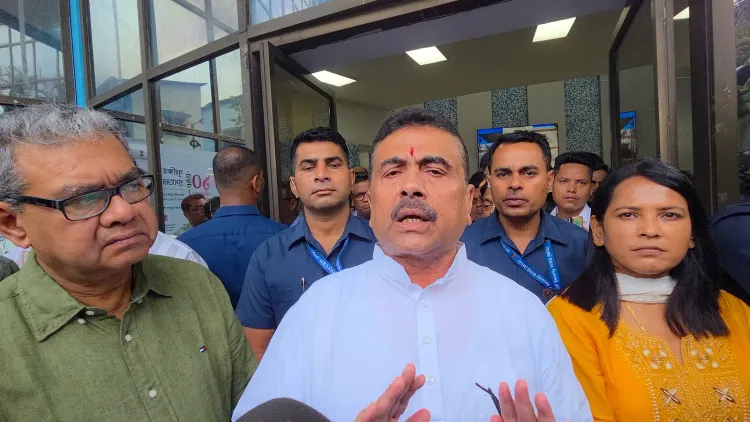
West Bengal Chief Minister Suvendu Adhikari on Thursday, 9 July launched a sharp attack on his predecessor Mamata Banerjee, accusing her of persisting with what he called a strategy of appeasement, deceit, and provocation — even after the Trinamool Congress (TMC) suffered a landslide electoral defeat. The remarks were directed at Banerjee's characterisation of violent unrest in Baruipur, South 24 Parganas, as a spontaneous protest.
What Triggered the Confrontation
The immediate flashpoint was Banerjee's public framing of recent violence in Baruipur — which included attacks on police personnel and the vandalising of public property — as a 'spontaneous protest' against the alleged rape and murder of a 12-year-old girl in the area the previous week. Adhikari rejected that characterisation outright, sharing videos on social media that he said showed the reality on the ground.
Among the clips he shared was footage of the mob lynching of Indrajit Tanti, a 26-year-old youth, who was reportedly dragged from his home and beaten to death by a crowd that identified him by name and identity. Adhikari argued that those responsible for Tanti's killing could not be classified as protesters under any reasonable definition.
Adhikari's Remarks in Full
'Are the rioters supposedly 'protesters'? You have lost yourself and your party has suffered a landslide defeat. Your own party is shattered and exhausted. Yet there has been no change in you. Endless appeasement politics, deceit, and provocation — these three bad habits still have not left you! There is no change within you,' CM Adhikari said in a social media message on Thursday afternoon.
He further questioned: 'In your statements, the ones you are calling 'protesters' dragged an innocent youth out of his home, identified him solely by his name and identity, and brutally beat him to death in a mob lynching. These unruly people set police vehicles on fire, who attacked the police, who tore up railway tracks, who created chaos, who violated law and order, who disrupted the area's peace and tried to spread unrest. Are they really 'protesters'?'
The New Government's Stated Position
Adhikari declared that his government would maintain a 'zero-tolerance' approach towards crimes involving rape and violence against women and children. He extended that stance explicitly to mob violence, warning that criminals who commit offences under the cover of a crowd would not be shielded by numbers.
'The days are over when crimes could be committed by hiding behind the cover of a crowd and organising collectively. Through legal means, this new government will ensure such criminals meet their end,' he said.
Background and Political Context
The Baruipur unrest erupted after the recovery of a minor girl's body on Sunday afternoon, with tensions escalating into violence that included attacks on police vehicles and disruption of railway tracks. This comes amid a broader political transition in West Bengal, where the Bharatiya Janata Party (BJP) under Adhikari has replaced the TMC after years in opposition. The exchange reflects the deep fault lines between the two leaders — Adhikari was himself a senior TMC figure before defecting to the BJP — and signals that the new administration intends to draw a sharp contrast with its predecessor on law-and-order issues.
Point of View
He is deliberately collapsing her law-and-order credibility at the moment she is weakest — post-defeat and mid-crisis. The harder question mainstream coverage is sidestepping is accountability for the original crime: the alleged rape and murder of a 12-year-old that triggered the unrest. Both sides are speaking past that victim. The new government's 'zero-tolerance' framing is pointed, but it will be tested by how swiftly it delivers justice on the underlying case — not just by how forcefully it condemns the riots.
NationPress
9 Oct 2026
Frequently Asked Questions
Why did Suvendu Adhikari attack Mamata Banerjee on 9 July?
Adhikari accused Banerjee of calling rioters in Baruipur 'protesters', which he said amounted to defending mob violence including the lynching of a 26-year-old man. He argued this reflected her continued appeasement politics even after the TMC's electoral defeat.
What happened in Baruipur, South 24 Parganas?
Violent unrest broke out in Baruipur following the recovery of the body of a 12-year-old girl allegedly raped and murdered in the area. The violence included attacks on police personnel, burning of police vehicles, tearing up of railway tracks, and the mob lynching of Indrajit Tanti, a 26-year-old youth.
Who is Indrajit Tanti?
Indrajit Tanti was a 26-year-old man who was reportedly dragged from his home by a mob in Baruipur and beaten to death. CM Adhikari shared video footage of the lynching to counter Banerjee's description of the perpetrators as protesters.
What is the new West Bengal government's stance on the violence?
Chief Minister Suvendu Adhikari has declared a zero-tolerance policy on crimes against women and children, and has extended that position to mob violence. He stated that criminals acting under the cover of crowds would be pursued and prosecuted through legal means.
What is Mamata Banerjee's position on the Baruipur unrest?
Banerjee reportedly described the violence in Baruipur as a spontaneous protest against the alleged rape and murder of a minor girl. Adhikari has challenged this characterisation, arguing it amounts to shielding those responsible for lynching and attacking police.