What Highlights Did CEC Gyanesh Kumar Present at IICDEM 2026?
Synopsis
The India International Conference on Democracy and Election Management (IICDEM) 2026 has commenced in New Delhi, featuring prominent global figures in democracy. CEC Gyanesh Kumar emphasizes India's rich democratic heritage, setting the stage for crucial dialogues on electoral practices and transparency. Discover how this landmark event aims to shape the future of global democracy.
Key Takeaways
IICDEM 2026 is India's largest conference on democracy.
It brings together global experts in electoral management.
Discussions will enhance transparency and inclusivity in elections.
Historical references underscore India's rich democratic heritage.
Participation spans over 70 countries, showcasing global commitment to democracy.
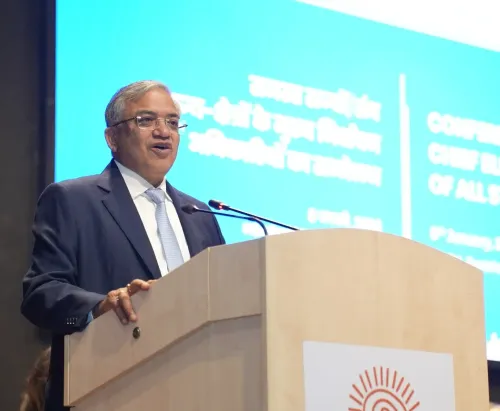
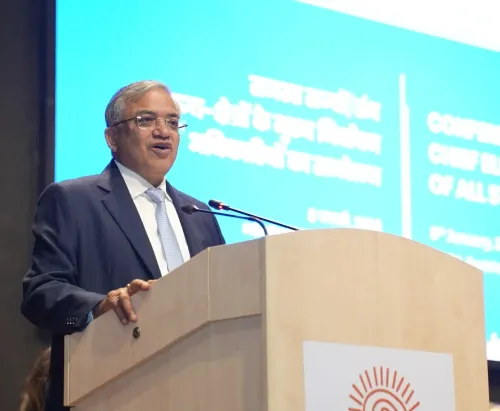
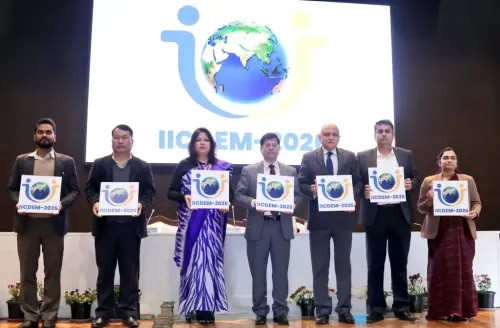
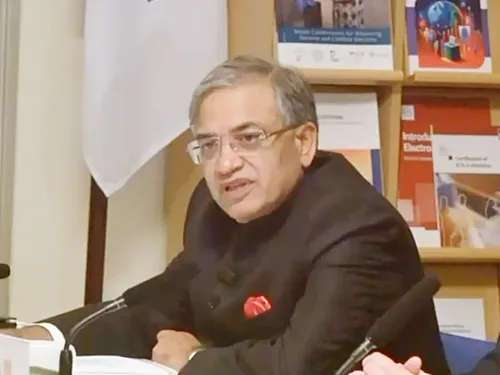
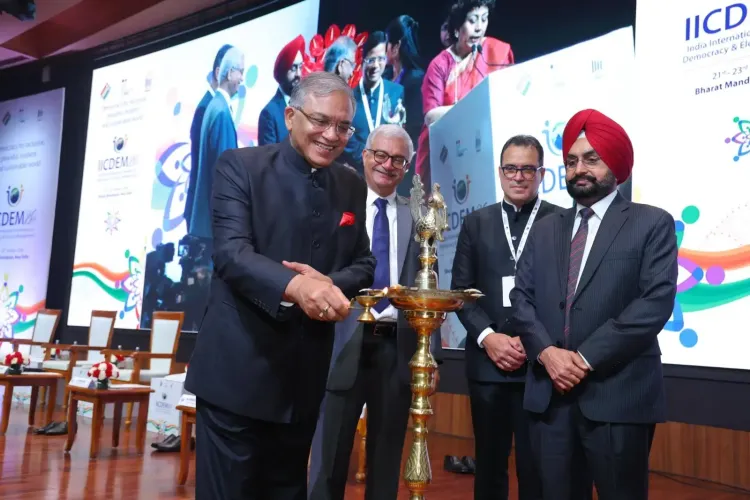
New Delhi, Jan 21 (NationPress) The Election Commission of India (ECI) officially launched the India International Conference on Democracy and Election Management (IICDEM) 2026 at Bharat Mandapam in the national capital this Wednesday. This three-day event is set to be the largest global assembly of its type that India has hosted, focusing on democracy and election management. It will unite election administrators, policymakers, scholars, and experts from around the globe. During his address, Chief Election Commissioner (CEC) Gyanesh Kumar emphasized the significance of India's ancient democratic traditions.
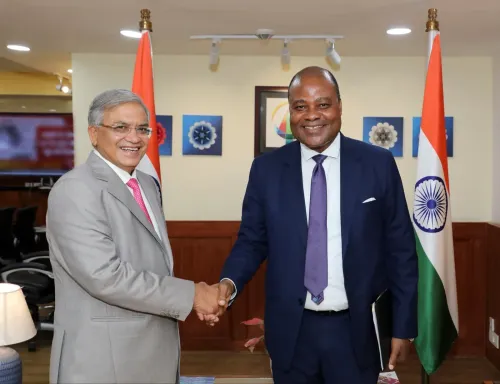
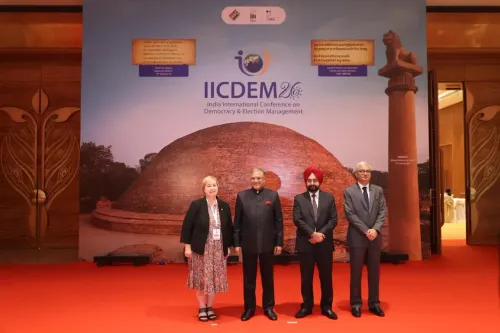
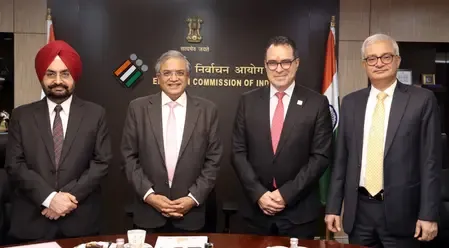
Earlier, the ECI, led by CEC Gyanesh Kumar, alongside Election Commissioners Dr. Sukhbir Singh Sandhu and Dr. Vivek Joshi, graciously received esteemed representatives from over 40 nations at the official reception for IICDEM 2026 at Bharat Mandapam. This reception marked the official commencement of discussions, allowing delegates to engage in conversations about shared democratic values and electoral practices.
As of now, around 71 delegates from 32 countries have confirmed their attendance at IICDEM 2026. The event is anticipated to attract nearly 100 international delegates from over 70 nations, along with representatives from international organizations, members of foreign missions in India, and experts in election management.
The conference's agenda includes a variety of general and plenary sessions, kicking off with an inaugural session, followed by plenary meetings of Election Management Body (EMB) leaders, EMB working group discussions, and thematic sessions. These dialogues will center on global electoral challenges, model international electoral standards, and innovative practices in electoral processes, aiming to fortify democratic institutions worldwide.
Delegates from various election management bodies worldwide will discuss strategies to enhance democracy, boost voter participation, and ensure electoral processes are more transparent, inclusive, and equitable.
In his opening address, CEC Gyanesh Kumar stated, “Today, I am honored to inaugurate this international conference in New Delhi. I warmly welcome our global delegates. As often said, India is the mother of democracy. When you step outside this hall, you will see the stupa and the Ashokan pillar, symbols connected to the early foundations of democratic thought dating back to around 600 BCE.”
He further pointed out that the conference's backdrop included a Sanskrit hymn from the Atharva Veda, which is over a millennium old, discussing village samitis and committees.
“The backdrop also highlights Kudavolai, an ancient voting system mentioned in Tamil inscriptions and sculptures dating back approximately a thousand years after the current era,” he added.
“These historical references unite us not just to celebrate democracy, but also to explore its future trajectory, challenges, and methods to enhance electoral processes. They illustrate how Indian elections have evolved into one of the largest democratic exercises globally in terms of logistics, scale, and transparency,” the CEC concluded.
Gyanesh Kumar emphasized the magnitude of Indian elections, noting that in the last Lok Sabha elections, over one billion voters were registered, more than 640 million exercised their right to vote, and polling took place at over one million polling stations nationwide.
“The Booth Level Officer serves as the foundation and vital pillar of electoral democracy in India. As outlined in our Constitution, Indian elections are split into two main segments — the preparation of electoral rolls and the conduct of elections,” the CEC explained.
Election Commissioner Vivek Joshi, in his remarks, welcomed the attendees of IICDEM 2026 and stressed the significance of robust electoral systems.
“Many of us here are engaged in elections as part of our ongoing duties. We recognize that elections are not mere events on a calendar; they are systems requiring ongoing preparation, coordination, and constant guidance,” he noted.
He added that the Election Commission of India, established as a constitutional authority under Article 324 of the Constitution, is responsible for overseeing, directing, and conducting elections. “Over time, the Commission has become a cornerstone of India’s democratic structure, maintaining the principles of neutrality, transparency, and fairness essential for free and fair elections,” Joshi remarked.
Point of View
The IICDEM 2026 represents a crucial opportunity for nations to unite in their commitment to democratic values. As the world looks to India, a nation steeped in democratic history, the insights shared at this conference will be pivotal in guiding future electoral practices globally.
NationPress
30 Sept 2026
Frequently Asked Questions
What is IICDEM 2026?
The India International Conference on Democracy and Election Management (IICDEM) 2026 is a major global gathering focused on democratic practices and electoral management, hosted in New Delhi by the Election Commission of India.
Who is the Chief Election Commissioner addressing the conference?
The conference is being addressed by Chief Election Commissioner Gyanesh Kumar, who is emphasizing India's long-standing democratic traditions.
How many countries are participating in IICDEM 2026?
Approximately 71 delegates from 32 countries are participating, with expectations of nearly 100 international delegates from over 70 nations attending.
What topics will be discussed at the conference?
The discussions will focus on global electoral issues, international electoral standards, innovations, and best practices aimed at strengthening democratic institutions.
What historical significance does CEC Gyanesh Kumar highlight?
CEC Gyanesh Kumar highlights India's ancient democratic systems, referencing the Ashokan pillar and historical voting practices such as Kudavolai.