Is Bangladesh Facing Revolutionary Rule After Regime Change?
Synopsis
As Bangladesh navigates a turbulent political landscape following the ousting of Prime Minister Sheikh Hasina, the nation grapples with the implications of revolutionary governance. Will this shift lead to a new era of stability or a deeper entrenchment of power? Explore the intricate dynamics at play in this critical region.
Key Takeaways
Bangladesh is currently experiencing a significant political shift.
The removal of Prime Minister Sheikh Hasina has led to the rise of unelected authority.
The upcoming referendum raises concerns about the erosion of democratic norms .
International engagement, particularly with China , is on the rise.
Historical precedents warn against the dangers of revolutionary governance.
Dhaka: The unraveling of political stability is seldom clear-cut. It often emerges cloaked in soothing rhetoric - reform, transition, popular will. Currently, Bangladesh finds itself in such a phase, where constitutional governance is gradually being supplanted by revolutionary rationales, with potential repercussions that may reach far beyond its borders.
The ousting of Prime Minister Sheikh Hasina in August 2024 was not an isolated incident. It came after years of escalating political pressure, increasing international isolation, and a sense of internal complacency. While Hasina's administration was not without its faults, it was democratically elected and generally aligned with Western strategic interests. Its removal has resulted in uncertainty, leading to a vacuum that is being filled by unelected authority.
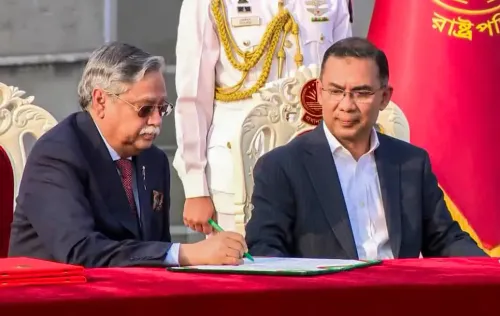
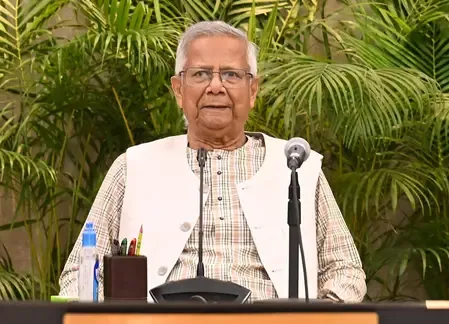
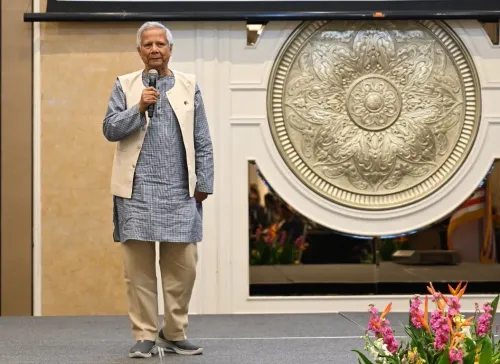
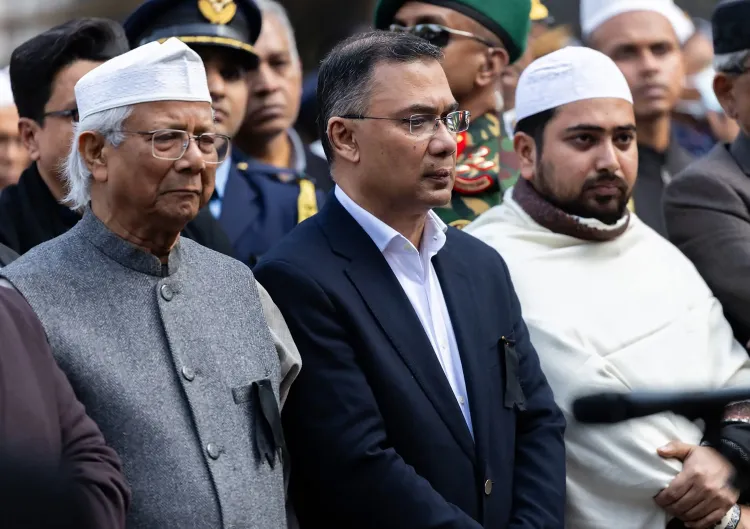
Muhammad Yunus took charge not through democratic elections but amidst chaos. Since then, Bangladesh has been under what effectively resembles an interim governance structure, now seeking permanence through a proposed national referendum set for February 12. Although publicly framed as a measure of popular sovereignty, critics increasingly view the referendum as a strategy to circumvent elections and consolidate power beyond constitutional boundaries.
History is replete with cautionary tales regarding such pivotal moments. Leaders who assert revolutionary legitimacy often contend that extraordinary circumstances necessitate extraordinary authority. Institutions can wait, they argue, and elections can be deferred. Stability, they claim, must come first. However, this often leads to a decline in accountability rather than its restoration.
Bangladesh has experienced variations of this pattern previously. Movements sparked by genuine grievances eventually morphed into new forms of control. What makes the current situation particularly alarming is the overt dismissal of constitutional norms in favor of revolutionary narratives—a trajectory that has previously led other nations towards enduring authoritarianism.
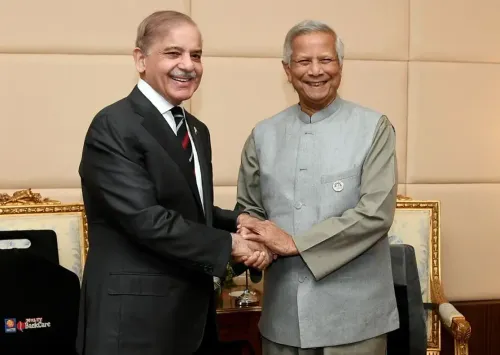
The international implications are significant. Since August 2024, Bangladesh's foreign policy has visibly shifted. Engagement with China has intensified, especially in infrastructure and defense sectors. Beijing's diplomatic presence has become noticeably pronounced, with public endorsements of the current political direction. This involvement raises legitimate concerns regarding external influence over Bangladesh's internal political reconfiguration.
Pakistan's interests intersect in this context as well. As China's closest regional ally, Islamabad has long sought greater strategic depth in South Asia. A politically weakened or ideologically transformed Bangladesh would not only represent a diplomatic advantage but also recalibrate regional power dynamics, with implications for India and, consequently, Western security interests.
Meanwhile, Western engagement appears hesitant and disjointed. Diplomatic statements continue to stress inclusivity and dialogue, yet there has been scant public scrutiny regarding the referendum itself or the broader shift away from electoral legitimacy. Such silence, whether intentional or not, risks being interpreted as tacit acceptance.
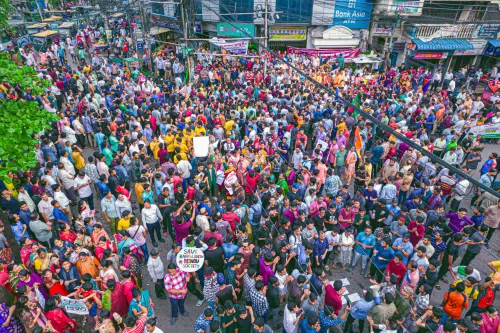
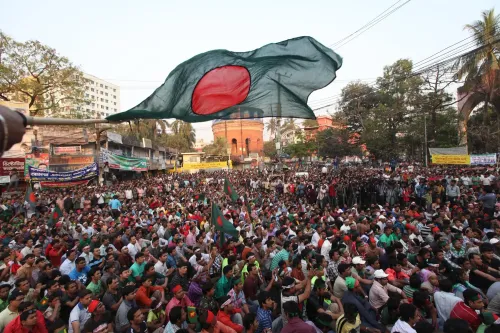
The July 2024 unrest is now frequently characterized as a “people’s uprising.” While this characterization may indeed hold some truth, mere street mobilization does not bestow unlimited governing authority. By their very nature, revolutions provide unstable foundations for enduring governance, often elevating those who claim to represent “the people” while sidelining institutions designed to restrain power.
The experience of Iran post-1979 serves as a cautionary tale. Revolutionary necessity was employed to justify the establishment of a supreme authority beyond constitutional oversight. Decades later, the outcome has been a rigid political system resistant to reform and deeply antagonistic to dissent.
Bangladesh is not Iran; its history, culture, and political landscape are distinct. However, the rationale being utilized today—prioritizing revolutionary legitimacy over constitutional process—is uncomfortably reminiscent.
For ordinary Bangladeshis, these developments are far from theoretical. Economic instability persists. Political pluralism has dwindled. Uncertainties regarding the future of elections remain unresolved. What was initially framed as a temporary transition is increasingly resembling an indefinite experiment in centralized authority.
The strategic ramifications extend well beyond Dhaka. Bangladesh holds a pivotal position in the Bay of Bengal, adjacent to crucial maritime routes and neighboring one of the world’s most volatile regions. A Bangladesh veering towards extra-constitutional governance while strengthening ties with China and Pakistan would shift regional dynamics in ways that warrant serious consideration in Washington and European capitals.
However, none of this is predetermined. Bangladesh still has a politically engaged populace, experienced civil servants, and a history of resilience. Yet, time is of the essence. Transitional arrangements tend to become permanent when left unchallenged.
Western policymakers are presented with a choice: prioritize rhetorical stability while dodging uncomfortable questions, or assert—quietly yet firmly—that legitimacy emanates from elections, not referendums engineered to entrench power.
Revolutionary politics often promise renewal but frequently result in the concentration of authority and the gradual stifling of dissent. Bangladesh now finds itself at a crossroads where the language of transition could soon solidify into a system from which reversal becomes arduous.
The lesson from history is unmistakable: when constitutional order is postponed “temporarily,” it is seldom restored easily. The future of Bangladesh—and the stability of a critical region—may hinge on whether this lesson is heeded in a timely manner.
(Salah Uddin Shoaib Choudhury is an award-winning journalist, writer, and editor of the newspaper Blitz. He specializes in counterterrorism and regional geopolitics. The views expressed are personal.)
Point of View
It's imperative to recognize that the current political upheaval in Bangladesh poses significant challenges to democratic principles. The shift towards revolutionary governance raises pertinent questions about the future of political pluralism and stability. The nation must navigate these turbulent waters carefully, ensuring that the voices of its citizens remain at the forefront of any political transition.
NationPress
20 Sept 2026
Frequently Asked Questions
What led to the political unrest in Bangladesh?
The political unrest in Bangladesh was primarily sparked by the ousting of Prime Minister Sheikh Hasina, following years of political pressure and growing international isolation.
What is the significance of the upcoming referendum?
The upcoming referendum, framed as a measure of popular sovereignty, is viewed by critics as a way to bypass elections and consolidate power beyond constitutional limits.
How has international engagement changed since August 2024?
Since August 2024, Bangladesh has shifted its foreign policy orientation, notably increasing engagement with China, especially in infrastructure and defense sectors.
What historical examples reflect the current situation in Bangladesh?
The situation in Bangladesh echoes historical examples like Iran post-1979, where revolutionary legitimacy led to the establishment of a rigid political system resistant to reform.
What are the potential regional implications of Bangladesh's political changes?
A shift towards extra-constitutional governance in Bangladesh could alter regional dynamics, particularly affecting relations with India and Western security interests.