What Did India and the Arab League Discuss?
Synopsis
In a significant meeting in Cairo, India's MoS for External Affairs, Kirti Vardhan Singh, and Arab League Secretary General Ahmed Aboul Gheit explored vital political, economic, and cultural ties. The upcoming 2nd India-Arab Foreign Ministerial Meet in New Delhi adds to the anticipation of strengthened collaboration between these regions.
Key Takeaways
Strengthening Political Relations: India and the Arab League are committed to enhancing political ties.
Economic Opportunities: Both regions are exploring significant economic partnerships.
Cultural Engagement: The shared cultural heritage continues to foster strong connections.
Upcoming Meetings: The 2nd India-Arab Foreign Ministerial Meet is highly anticipated.
Historical Bonds: Long-standing relationships date back to ancient trade and scholarly exchanges.
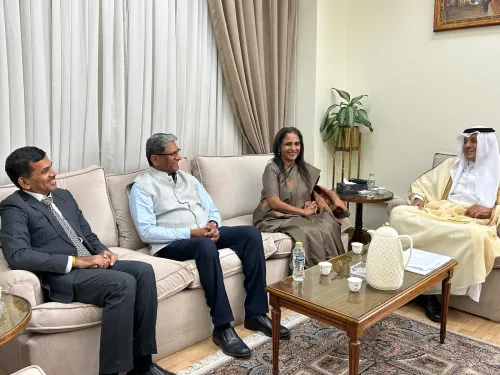
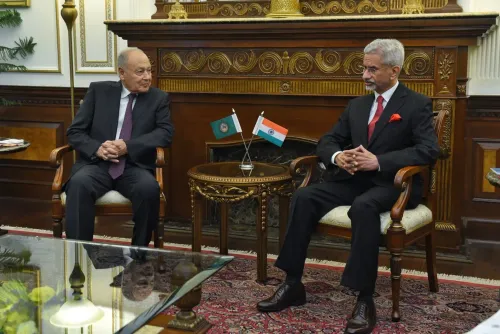
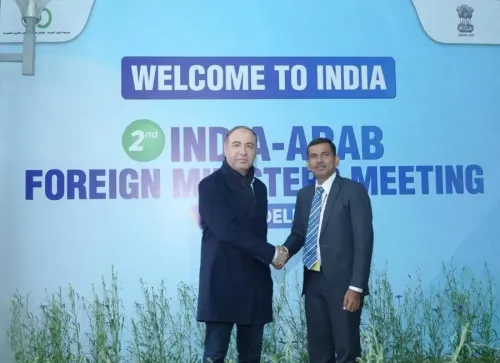
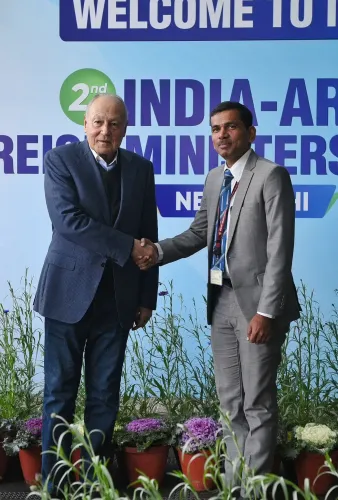
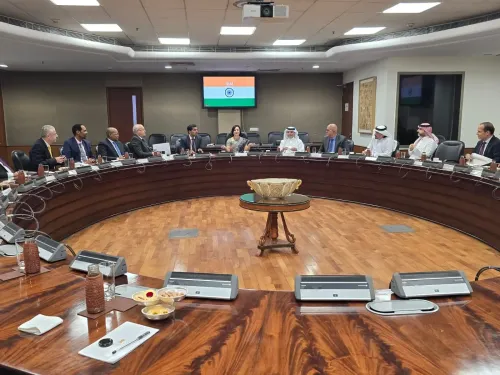
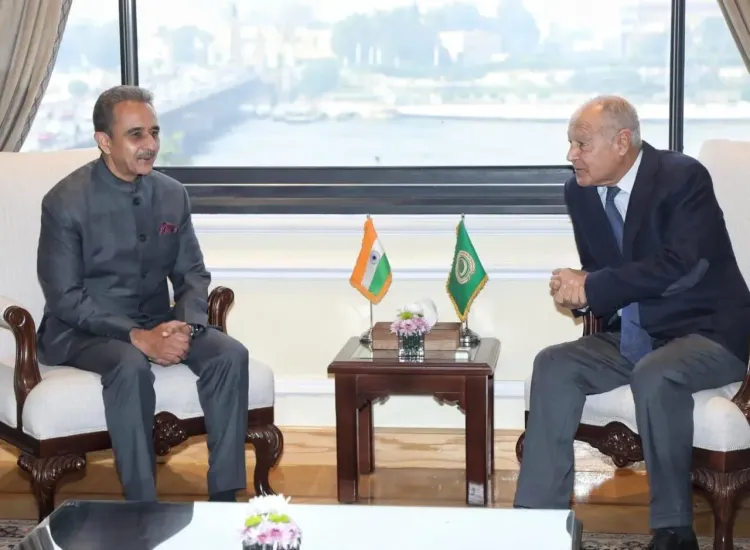
Cairo, Jan 15 (NationPress) Minister of State (MoS) for External Affairs Kirti Vardhan Singh convened a meeting with Ahmed Aboul Gheit, Secretary General of the Arab League, on Thursday. They engaged in discussions covering a broad spectrum of political, economic, and cultural connections between the two parties.
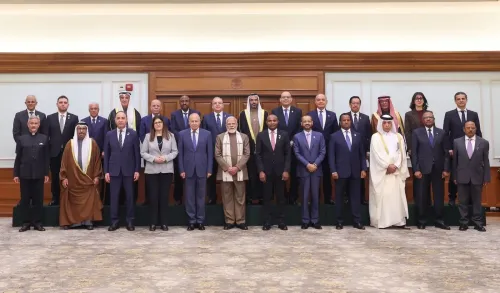
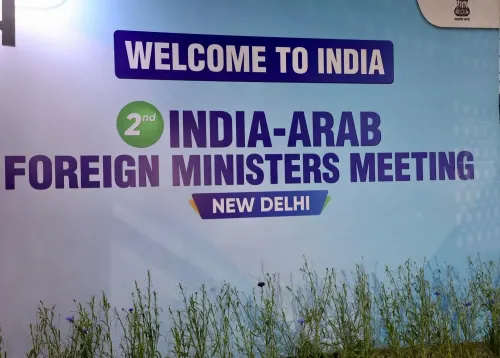
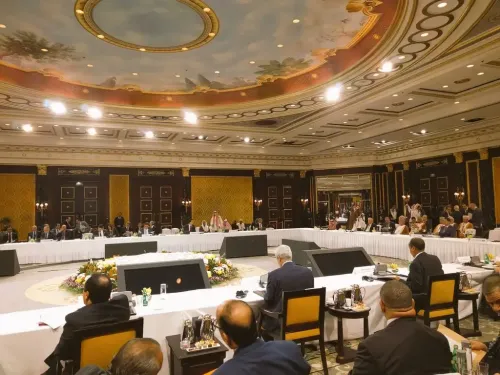
Both Singh and Gheit expressed anticipation for the forthcoming 2nd India-Arab Foreign Ministerial Meet, slated to occur in New Delhi later this month.
“I was pleased to meet H.E. Ahmed Aboul Gheit, the Secretary General of the Arab League. We held fruitful discussions regarding India’s extensive political, economic, and cultural interactions with the Arab League. We also eagerly await the upcoming 2nd India-Arab Foreign Ministerial Meet scheduled for the end of this month,” Singh shared on X.
In November of the previous year, Neena Malhotra, Secretary (South) at the Ministry of External Affairs (MEA), presided over a consultation meeting with Arab Ambassadors in New Delhi, focusing on strategies to enhance collaboration between both sides.
MEA spokesperson Randhir Jaiswal noted in a post on X, “The Secretary (South) chaired a meeting with Arab Ambassadors in New Delhi, discussing strategies to fortify cooperation between India and the League of Arab States.”
India maintains strong and amicable ties with the nations comprising the League of Arab States (LAS), also known as the Arab League. These relations trace back to ancient times when traders, scholars, and diplomats routinely traveled the Arabian Sea and the overland routes linking India with West Asia and the Arabian Peninsula, exchanging knowledge and goods. A shared cultural legacy, reinforced by language and religion, continues to energize these historical connections.
The Arab League was founded in Cairo in 1945, initially comprising seven members to advocate for their various interests. Presently, the League includes 22 member states from the Arab world, spanning North Africa and the Middle East, as stated by the Indian Embassy in Egypt.
The member nations of the Arab League are integral to India’s extended neighborhood. India’s dedication to enhancing engagement with this region, shared perspectives on significant international issues, and robust economic and commercial relations form the foundation of India-Arab ties. A majority of India’s foreign trade traverses the Suez Canal, the Red Sea, and the Gulf of Aden.
As per the MEA, while India is recognized as a major economy and influential global player with the potential to shape the future landscape of global business dynamics, the LAS and its member states continue to hold substantial positions in the international economic arena and provide numerous opportunities for economic collaboration.
In recent years, India and the Arab nations have entered a promising phase of development and economic transformation, contributing to sustainable economic growth.
Point of View
It reflects a commitment to collaborative engagement in a rapidly changing world. This meeting signifies the importance of shared cultural heritage and economic opportunities, positioning both regions for future success.
NationPress
1 Oct 2026
Frequently Asked Questions
What was the main focus of the discussions between India and the Arab League?
The discussions primarily focused on enhancing political, economic, and cultural engagements between India and the Arab League.
When is the 2nd India-Arab Foreign Ministerial Meet scheduled?
The 2nd India-Arab Foreign Ministerial Meet is scheduled to take place in New Delhi at the end of this month.
What historical ties exist between India and the Arab League countries?
India shares a long history with the Arab League countries, dating back to ancient times when traders and scholars exchanged knowledge and goods across the Arabian Sea and land routes.