How is Operation Sagar Bandhu Enhancing India’s Relief Efforts in Sri Lanka?
Synopsis
India's 'Operation Sagar Bandhu' is making waves in Sri Lanka as it mobilizes extensive support for families devastated by Cyclone Ditwah. With airlifts, medical supplies, and collaboration with local authorities, India is demonstrating its commitment to humanitarian efforts in times of crisis. Discover the ongoing rescue missions and the impact on affected communities.
Key Takeaways
Operation Sagar Bandhu is a major humanitarian effort by India.
Significant supplies and medical assistance are being delivered to Sri Lanka.
Collaboration with local authorities is crucial for effective support.
Communication challenges are hindering rescue operations.
The impact of Cyclone Ditwah has been devastating, affecting over 1.1 million people.
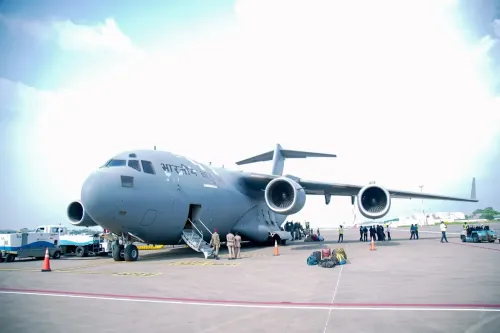
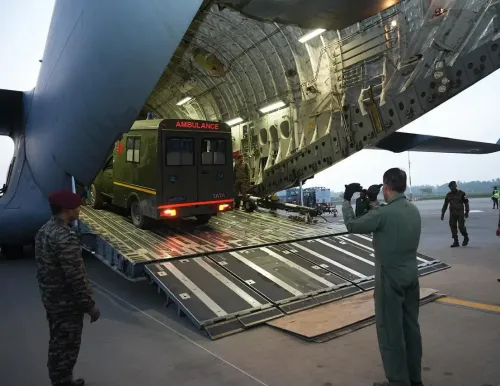
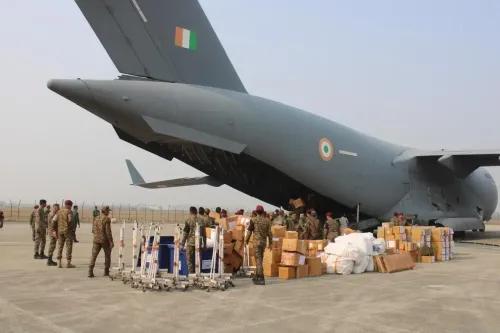
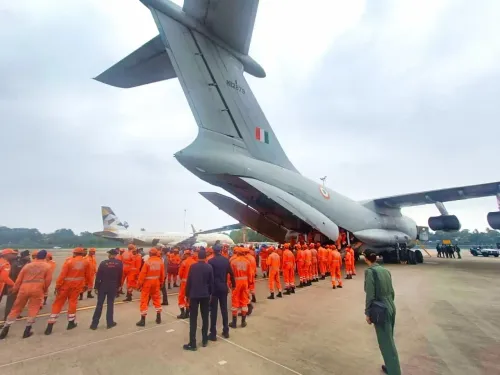
Colombo, Dec 1 (NationPress) India has significantly enhanced its involvement in 'Operation Sagar Bandhu', contributing to the ongoing search and rescue activities in Sri Lanka aimed at providing assistance to families impacted by catastrophic flooding and landslides following Cyclone Ditwah.
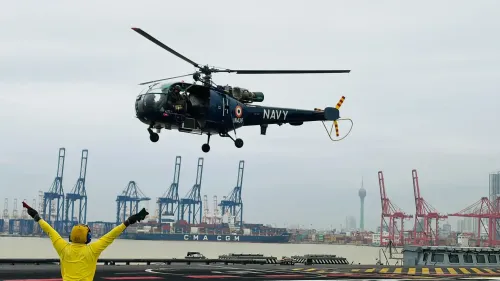
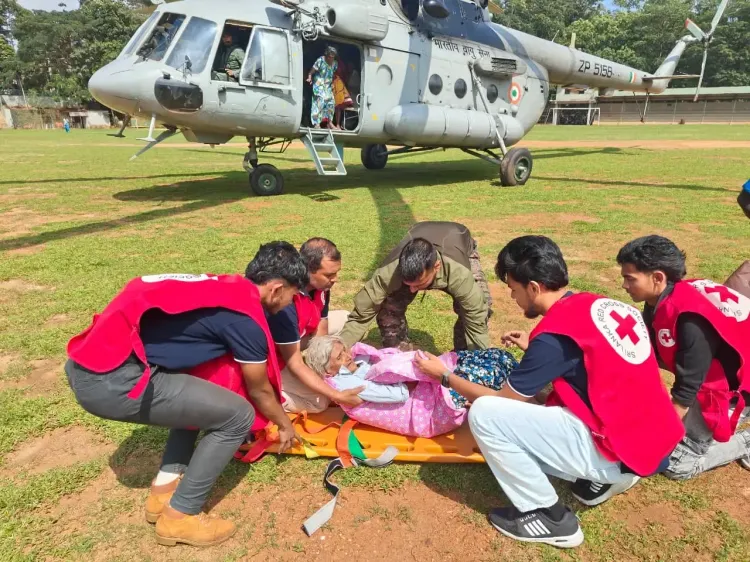
As MI 17 helicopters persist in their rescue missions, retrieving individuals from hard-to-reach areas and supplying urgent aid to communities isolated by the cyclone, the Indian Naval Ship (INS) Sukanya has arrived in Trincomalee, further reinforcing these relief operations.
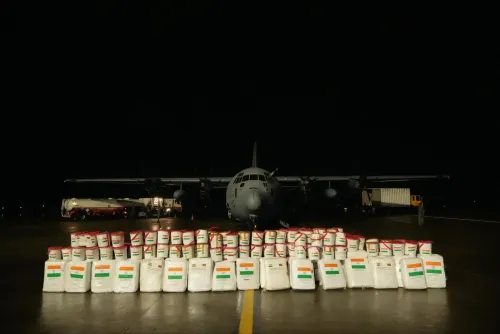
The Indian Air Force (IAF) deployed a C-130J aircraft on Sunday, delivering over four tonnes of BHISHM Modular Trauma Cubes, which are portable medical units equipped with diagnostic tools and surgical kits for swift deployment in disaster situations.
On Monday, an IAF 1875 helicopter successfully evacuated 57 individuals, including 10 children, from Irunguwatta to Matale while also transporting 2.5 tonnes of essential rations to Keagalle.
According to the Indian High Commission in Colombo, additional vital relief supplies are set to be delivered to Trincomalee later today.
As part of Operation Sagar Bandhu, INS Sukanya has already delivered 12 tonnes of crucial relief supplies to Trincomalee, which were handed over to local authorities for immediate distribution.
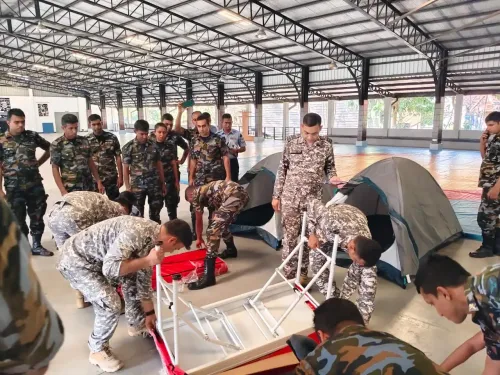
In the meantime, Indian rescue units are collaborating with the Sri Lankan Air Force, Navy, Army, Police, and local first responders to aid communities affected by the floods. Evacuations, supply deliveries, and emergency support measures are actively being implemented throughout the island.
Despite the ongoing adverse weather conditions resulting in a death toll of 355, with 366 individuals still unaccounted for, the Disaster Management Centre (DMC) reports that 1,118,323 people across 309,607 families have been impacted by the relentless rains, floods, and landslides.
Communication challenges continue to hinder rescue operations in the hardest-hit areas. According to the President's Media Division, Sri Lanka's telecommunications companies have agreed to prioritize emergency calls to alleviate network congestion and enhance the response framework.
Point of View
It is paramount to recognize India's proactive stance in humanitarian crises. The outpouring of support through Operation Sagar Bandhu not only reflects the nation's commitment to its neighbors but also strengthens diplomatic ties with Sri Lanka during this critical time. This collaborative effort highlights the importance of solidarity in times of disaster.
NationPress
3 Oct 2026
Frequently Asked Questions
What is Operation Sagar Bandhu?
Operation Sagar Bandhu is India's humanitarian initiative aimed at providing relief and support to Sri Lanka in the aftermath of Cyclone Ditwah, focusing on search and rescue operations.
What kind of aid is being provided?
The aid includes delivery of essential supplies, medical assistance through BHISHM Modular Trauma Cubes, and evacuation of stranded individuals from affected areas.
How is India coordinating with Sri Lanka?
India is working in coordination with the Sri Lankan Air Force, Navy, Army, Police, and local first responders to effectively assist flood-affected communities.
What are the current statistics on the impact of the cyclone?
As reported by the Disaster Management Centre, the cyclone has resulted in 355 deaths and affected over 1.1 million people across more than 300,000 families.
What challenges are being faced in the rescue efforts?
Communication issues and network congestion in severely affected areas are complicating ongoing rescue and coordination efforts.