Has the 1st Indigenous Hydrogen Fuel Cell Passenger Vessel Begun Service in Varanasi?
Synopsis
The recent launch of India's first indigenous hydrogen fuel cell passenger vessel in Varanasi marks a significant leap toward sustainable maritime transport. This groundbreaking initiative not only highlights India's move towards green technology but also aims to boost local tourism and job opportunities in the region.
Key Takeaways
First indigenous hydrogen fuel cell vessel in India.
Zero emissions technology for sustainable transport.
Operates on hydrogen, with only water as a byproduct.
Capacity for 50 passengers with air-conditioning.
Enhances local tourism and job creation.
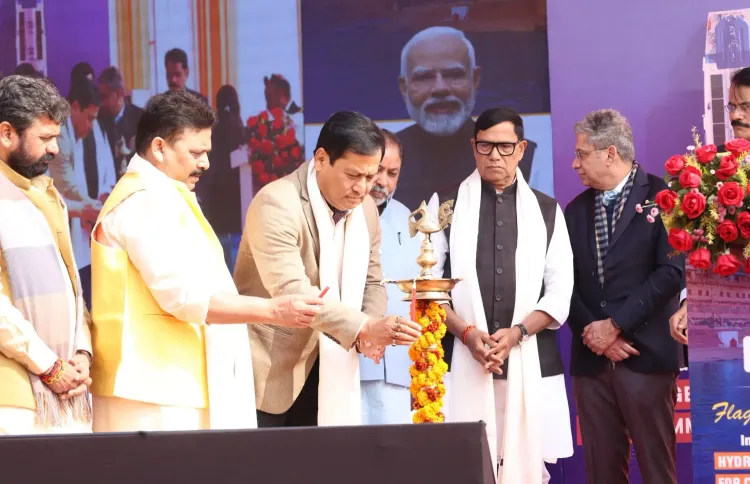
New Delhi, Dec 11 (NationPress) On Thursday, the government inaugurated the commercial operation of India's first entirely indigenous hydrogen fuel cell passenger vessel at Namo Ghat, Varanasi, representing a significant advancement in the nation's commitment to green maritime initiatives.
This vessel is the first in India to utilize hydrogen fuel cell propulsion for maritime transport, boasting fully homegrown technology.
It operates on a Low Temperature Proton Exchange Membrane fuel cell system, which efficiently converts stored hydrogen into electricity, with only water emitted as a byproduct.
Engineered as a 24-meter catamaran for urban transport, the vessel can accommodate 50 passengers in a comfortable air-conditioned cabin and travels at a service speed of 6.5 knots.
The hybrid energy configuration integrates hydrogen fuel cells, batteries, and solar energy, allowing for up to eight hours of operation on a single hydrogen refill. It has been certified by the Indian Register of Shipping.
Union Minister for Ports, Shipping and Waterways, Sarbananda Sonowal, expressed that under the dynamic leadership of Prime Minister Narendra Modi, India is witnessing a transformative shift towards clean and sustainable transportation systems.
“The introduction of our first indigenous hydrogen fuel cell vessel exemplifies the Prime Minister’s dedication to ‘Make in India’ and the push for green mobility across all sectors. This achievement also fortifies the broader mission of rejuvenating and protecting our sacred Ganga,” the minister noted.
As we embrace cleaner technologies on our waterways, we are not only fostering innovation but also ensuring that progress aligns with ecological stewardship, he added.
Owned by the Inland Waterways Authority of India (IWAI), the vessel was constructed by Cochin Shipyard Ltd (CSL). It has commenced service following successful trial operations.
The launch of this hydrogen fuel cell vessel signifies a pivotal milestone in India’s endeavor to cultivate a cleaner and more sustainable maritime ecosystem.
“I extend my congratulations to Cochin Shipyard Ltd. for delivering this groundbreaking vessel and to the Inland Waterways Authority of India for its commercial launch after thorough trials. This accomplishment demonstrates our commitment to achieving India’s net-zero targets by 2070 and to incorporating advanced green technologies within the inland water transport sector,” the minister added.
This innovation is also anticipated to enhance local tourism and create job opportunities, positioning Varanasi among the first cities globally to adopt hydrogen-powered passenger transport.
Point of View
The introduction of the hydrogen fuel cell passenger vessel in Varanasi symbolizes a pivotal moment for India’s commitment to sustainability. This initiative reflects the nation’s drive to innovate while preserving its environmental heritage, aligning with global standards of eco-friendly transportation.
NationPress
5 Oct 2026
Frequently Asked Questions
What is the significance of the hydrogen fuel cell vessel?
This vessel signifies India's commitment to sustainable transportation and innovative green technology in the maritime sector.
How does the hydrogen fuel cell system work?
It converts stored hydrogen into electricity, emitting only water vapor as a byproduct, making it an eco-friendly option.
What are the vessel's operational capabilities?
The vessel can operate for up to eight hours on a single hydrogen fill and has a service speed of 6.5 knots.
Who constructed the vessel?
The vessel was built by Cochin Shipyard Ltd (CSL) and is owned by the Inland Waterways Authority of India (IWAI).
How will this vessel impact local tourism?
It is expected to boost local tourism and create job opportunities in Varanasi.