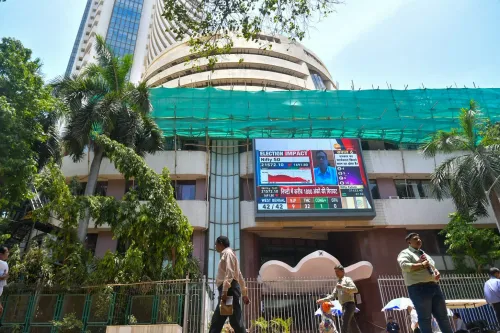
India Sees $106 Million Inflow, First Positive Week in 7 Weeks

Synopsis
After six brutal weeks of nearly $5 billion in outflows, India has finally recorded a $106 million net inflow — its first positive weekly foreign fund flow in seven weeks. ETFs led the charge with $220 million, while US-domiciled funds reversed a seven-week selling streak. But India-dedicated strategies are still bleeding for nine straight weeks.
Key Takeaways
India recorded a net inflow of $106 million in the latest week — its first positive weekly flow in seven weeks , per an Elara Capital report.
The inflow follows cumulative outflows of nearly $5 billion over the previous six weeks, with weekly outflows declining from a peak of $1.2 billion to $180 million .
ETFs led the recovery with inflows of $220 million , while long-only funds continued to see outflows of approximately $400 million .
US-domiciled funds reversed course with $225 million in inflows after seven straight weeks of outflows totalling $3.3 billion .
India-dedicated strategies have now recorded outflows for nine consecutive weeks , indicating active fund managers remain cautious.
Europe and China continued to see outflows over five weeks, while GEM funds attracted up to $2 billion weekly , highlighting divergent global capital trends.
India recorded a net foreign fund inflow of $106 million during the latest trading week, marking the first positive weekly flow in seven weeks, according to a report by Elara Capital. The development signals a potential turning point for Indian equity markets, which had faced sustained selling pressure from foreign investors since early 2025. The inflow comes amid a broader stabilisation in global liquidity conditions.
Breaking the Outflow Streak
The latest inflow follows a bruising six-week period during which cumulative outflows from India-focused funds totalled nearly $5 billion. Elara Capital's report noted that weekly outflows from such funds had declined sharply — from a peak of $1.2 billion to approximately $180 million — indicating a meaningful easing of selling pressure.
This gradual moderation in outflows suggests that the most aggressive phase of foreign institutional selling may be behind India, though analysts caution that a sustained reversal is yet to be confirmed.
ETFs Lead the Recovery
Exchange-traded funds (ETFs) were the primary driver of the recovery, attracting inflows of $220 million during the week. In contrast, long-only funds — typically managed by active fund managers with a longer investment horizon — continued to record outflows of approximately $400 million, highlighting that institutional conviction in India remains cautious.
Notably, US-domiciled funds, which had been a dominant source of selling pressure in recent weeks, posted inflows of $225 million after enduring seven consecutive weeks of outflows totalling $3.3 billion. This reversal in US-based fund flows is being closely watched as a potential indicator of renewed appetite for Indian equities among American institutional investors.
India-Dedicated Strategies Still Under Pressure
Despite the headline improvement, India-dedicated investment strategies have now recorded outflows for nine straight weeks, underscoring that foreign portfolio investors (FPIs) with a specific India mandate remain net sellers. This divergence — between ETF inflows and active fund outflows — reflects a split in investor sentiment: passive investors are returning, but active managers remain wary.
This is a critical distinction. ETF inflows are often driven by index rebalancing and tactical allocation, while long-only fund inflows signal deeper, conviction-led investment. The absence of the latter suggests that structural concerns — including India's rich valuations, currency pressures, and global risk-off sentiment — have not fully dissipated.
Global Liquidity Remains Supportive
The broader global fund flow environment remained favourable for the fourth consecutive week, providing a tailwind for emerging markets including India. US equity funds attracted inflows ranging between $10 billion and $22 billion per week over the past month, while global-mandated funds drew in $16 billion.
Global Emerging Market (GEM) funds continued to attract up to $2 billion in weekly inflows, and emerging market growth funds saw inflows of $1.4 billion. India, as a key weight in GEM indices, stands to benefit as these broader flows stabilise.
In stark contrast, Europe and China continued to witness outflows over the past five weeks, highlighting divergent regional trends and suggesting that global capital is selectively re-entering markets perceived as more resilient.
Commodity and Sector Fund Flows
Flows into commodity-related equity funds softened following strong gains recorded during the period of heightened geopolitical tensions. Energy equity funds saw moderating outflows, while gold inflows stabilised at a slower pace. Silver-related flows remained weak, reflecting a broader normalisation in safe-haven demand as geopolitical risk premiums eased.
Looking ahead, the sustainability of India's return to positive weekly inflows will depend on the trajectory of US Federal Reserve policy, global risk appetite, domestic corporate earnings performance, and the broader resolution of geopolitical uncertainties. If US-domiciled funds maintain their reversal and long-only funds begin to follow, India could see a more durable recovery in foreign capital flows in the weeks ahead.
Point of View
But the real story lies beneath it — ETF-driven flows are tactical and reversible, while the nine consecutive weeks of outflows from India-dedicated active funds signals that high-conviction institutional investors haven't returned. The fact that US-domiciled funds reversed a $3.3 billion, seven-week selling streak is the most significant data point here, and could be the leading indicator of a broader recovery. However, India's rich valuations and global uncertainty mean this week's green print could easily be a dead-cat bounce rather than a structural inflection. Policymakers and market participants should resist premature celebration — the real test is whether long-only funds follow ETFs back into India.
NationPress
28 Sept 2026
Frequently Asked Questions
Why did India record a $106 million fund inflow this week?
India recorded a $106 million net inflow in the latest week primarily driven by ETF inflows of $220 million and a reversal in US-domiciled fund flows, according to an Elara Capital report. This came after six weeks of cumulative outflows totalling nearly $5 billion , suggesting a gradual easing of selling pressure.
What is the significance of India's first positive fund flow in 7 weeks?
It marks a potential turning point after sustained foreign institutional selling that had weighed on Indian equity markets. However, since India-dedicated funds are still seeing outflows for nine consecutive weeks , the recovery is not yet broad-based or driven by high-conviction active investors.
Which funds led India's inflow recovery in April 2025?
Exchange-traded funds (ETFs) led the recovery with inflows of $220 million , while US-domiciled funds contributed $225 million after seven consecutive weeks of outflows. Long-only active funds, however, continued to record outflows of approximately $400 million .
How much did foreign funds pull out of India in the previous six weeks?
Foreign funds recorded cumulative outflows of nearly $5 billion from India over the six weeks preceding the latest positive flow. Weekly outflows had peaked at $1.2 billion before declining to around $180 million in the most recent period.
How are global emerging market fund flows affecting India?
Global Emerging Market (GEM) funds continued to attract up to $2 billion in weekly inflows , providing a supportive backdrop for India as a significant constituent of GEM indices. Stable global liquidity conditions for the fourth consecutive week have further aided the partial recovery in India-focused flows.