Rajasthan CMO Highlights PM Jan Dhan Yojana's Role in Financial Inclusion
Synopsis
The Chief Minister's Office of Rajasthan marked Independence Day eve by crediting PM Narendra Modi's Jan Dhan Yojana, launched in August 2014, as a transformative financial inclusion milestone, tagging Finance Minister Nirmala Sitharaman in the post.
Key Takeaways
PM Jan Dhan Yojana was launched on 28 August 2014 to provide zero-balance bank accounts, RuPay cards, and insurance to unbanked households.
The Rajasthan Chief Minister's Office posted on 14 August 2026 , the eve of Independence Day, invoking the scheme under the hashtag #आपणो_अग्रणी_राजस्थान .
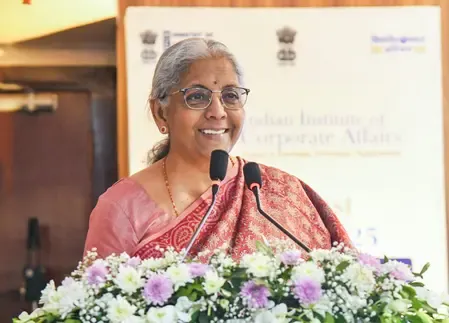
Union Finance Minister Nirmala Sitharaman was tagged, signalling state-Centre alignment on the financial inclusion agenda.
Rajasthan has been among states reporting high PMJDY account-opening numbers, with the scheme underpinning direct-benefit transfers to rural households.
PMJDY is a pillar of the JAM trinity (Jan Dhan, Aadhaar, Mobile), the backbone of India's digital-payments and subsidy-delivery infrastructure.
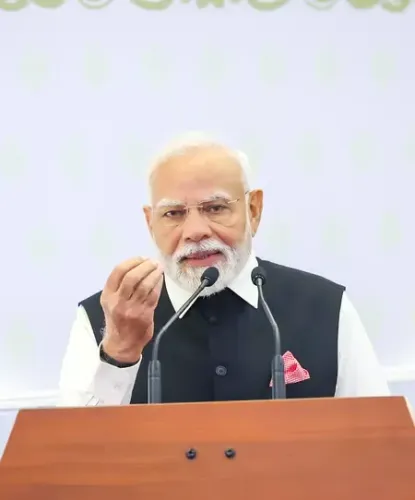
Twelve years after its launch, PM Jan Dhan Yojana remains a cornerstone of India's financial inclusion story — and the Chief Minister's Office of Rajasthan invoked it on 14 August 2026, the eve of Independence Day, tagging Union Finance Minister Nirmala Sitharaman and crediting Prime Minister Narendra Modi with transforming access to formal banking for millions of unbanked households.
The Scheme That Opened a Billion Doors
PM Jan Dhan Yojana (PMJDY) was formally launched on 28 August 2014 with a single, audacious goal: universal access to banking facilities for every Indian household. Zero-balance accounts, RuPay debit cards, and built-in insurance cover made it the most ambitious financial-inclusion drive the country had attempted. Before 2014, hundreds of millions of Indians — concentrated in rural belts and among the urban poor — had no relationship with a formal bank at all.
The CMO's post, shared under the hashtag #आपणो_अग्रणी_राजस्थान ('Our Pioneering Rajasthan'), frames the scheme as a defining rupture from the pre-2014 era. The tagging of Finance Minister Nirmala Sitharaman signals the state government's alignment with the Centre's ongoing financial-inclusion agenda.
Rajasthan's Place in the Jan Dhan Map
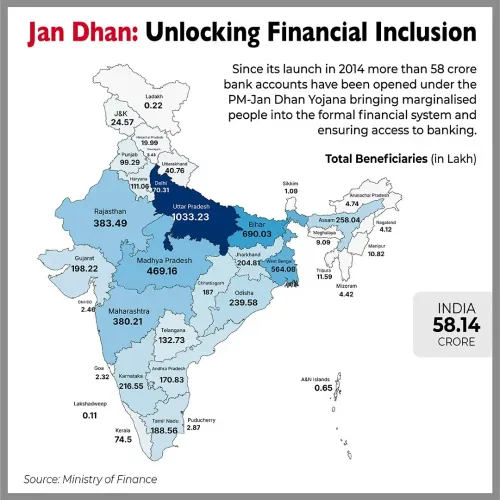
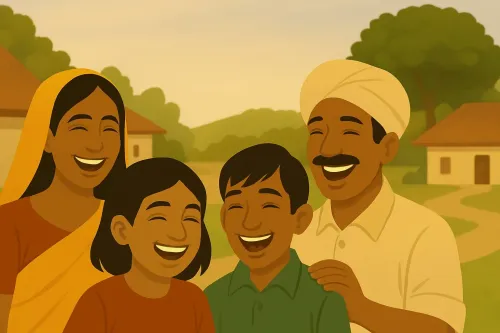
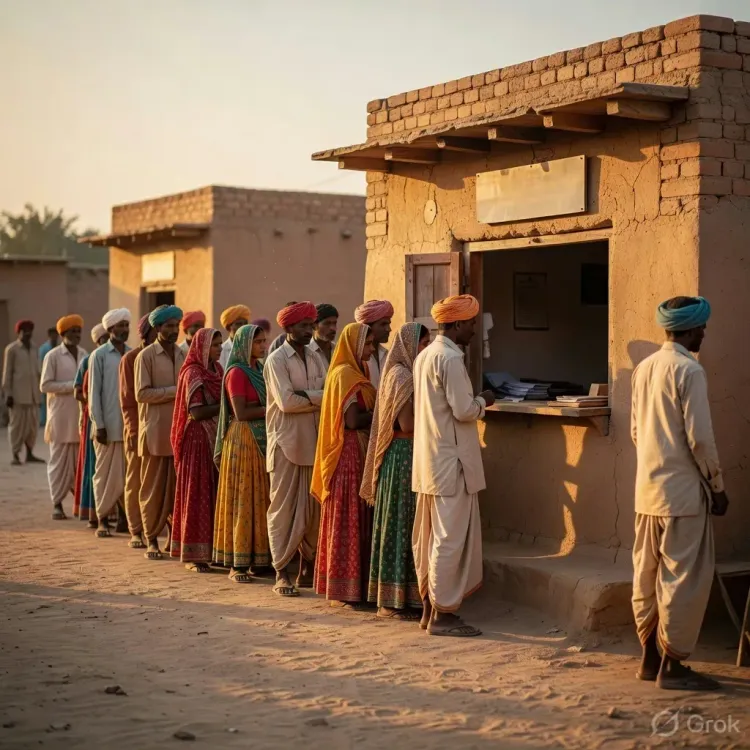
Rajasthan — a vast state with large stretches of rural and semi-arid terrain — has historically ranked among the states reporting high PMJDY account-opening numbers. The scheme's reach here matters because it underpins the plumbing for direct-benefit transfers: subsidies, pensions, and welfare payments now flow directly into Jan Dhan accounts, bypassing older, leakage-prone channels.
The broader national architecture built on PMJDY links accounts to Aadhaar biometrics and mobile numbers — the so-called JAM trinity (Jan Dhan, Aadhaar, Mobile) — which has become the backbone of India's digital-payments and subsidy-delivery ecosystem. Every rupee that lands in a beneficiary's account without a middleman is, in policy terms, a proof-of-concept for that original 2014 bet.
Why the Independence Day Timing Matters
Posting on the eve of Independence Day is deliberate political messaging. The Rajasthan CMO is stitching the welfare narrative of a decade into a moment of national pride — reminding constituents that formal banking access, once a privilege, is now a right exercised by hundreds of millions. The next test will be the upcoming quarterly progress report on PMJDY account linkage with government subsidies, and whether Rajasthan tables a state-level review with the Finance Ministry.
One scheme, one decade, one unflinching question: how many of those accounts are active, and how much money is actually moving through them? That answer will define the next chapter.
Point of View
The state signals institutional solidarity with the Finance Ministry's ongoing push to deepen PMJDY's active-account metrics. The post also fits a broader BJP-governed-state pattern of publicly crediting the 2014 policy rupture as the origin point of India's welfare architecture. The real political stakes lie in whether Rajasthan can point to concrete, verifiable gains — active accounts, subsidy flows, insurance claims — rather than headline account-opening numbers alone.
NationPress
14 Aug 2026
Frequently Asked Questions
What is PM Jan Dhan Yojana and when was it launched?
PM Jan Dhan Yojana (PMJDY) is a flagship financial inclusion scheme launched by Prime Minister Narendra Modi on 28 August 2014 . It provides zero-balance bank accounts, RuPay debit cards, and insurance cover to unbanked households across India.
Why did the Rajasthan CMO post about Jan Dhan Yojana in August 2026?
The post was shared on 14 August 2026 , the eve of Independence Day, as part of a broader narrative crediting central government welfare schemes. The CMO tagged Finance Minister Nirmala Sitharaman, aligning the state with the Centre's financial inclusion agenda.
What is the JAM trinity and how does Jan Dhan fit into it?
The JAM trinity stands for Jan Dhan, Aadhaar, and Mobile . Together, these three pillars form the backbone of India's digital-payments infrastructure and direct-benefit transfer system, allowing subsidies and welfare payments to reach beneficiaries without middlemen.
How has Rajasthan performed under PM Jan Dhan Yojana?
Rajasthan has been among the states reporting high account-opening numbers under PMJDY. The scheme is particularly significant in the state's rural and semi-arid regions, where formal banking access was historically limited.
Who is Nirmala Sitharaman and why was she tagged in this post?
Nirmala Sitharaman is India's Union Finance Minister, responsible for overseeing the implementation and periodic enhancements of financial inclusion schemes including PMJDY. Her tagging by the Rajasthan CMO signals state-Centre coordination on welfare delivery.