Odisha CMO hails PMJDY as pillar of financial inclusion
Synopsis
The Chief Minister's Office of Odisha on 14 June 2026 lauded Pradhan Mantri Jan Dhan Yojana as a historic milestone in financial inclusion, describing it as the backbone of Direct Benefit Transfer and a new chapter in transparency and public empowerment.
Key Takeaways
The Chief Minister's Office of Odisha praised PMJDY on 14 June 2026 as a historic step in financial inclusion.
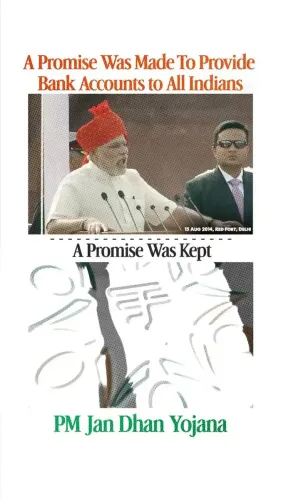
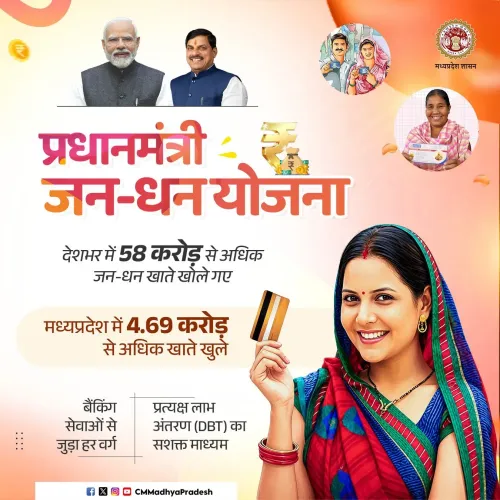
PMJDY was launched on 28 August 2014 by PM Narendra Modi to provide zero-balance accounts and RuPay cards to unbanked households.
The CMO described the scheme as the 'strong foundation of Direct Benefit Transfer (DBT) ,' enabling transparent welfare delivery.
The scheme is a core pillar of the JAM Trinity (Jan Dhan, Aadhaar, Mobile), which underpins India's digital welfare infrastructure.
Odisha has implemented PMJDY through local bank branches and banking correspondents, supporting state and central DBT programmes.
The post signals continued state-level political commitment to deepening the Jan Dhan architecture for welfare delivery.
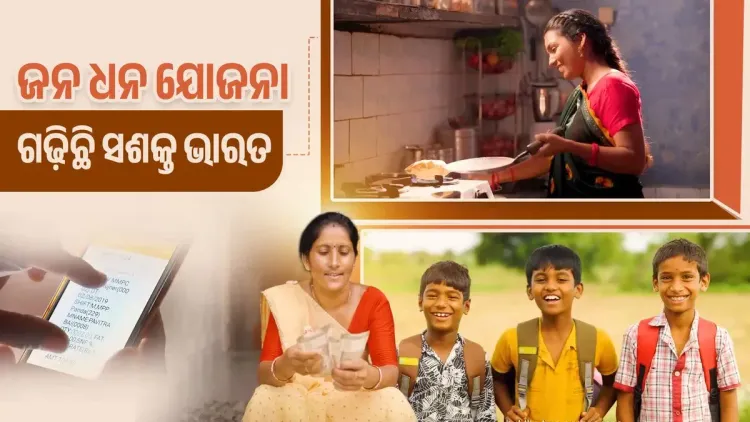
The Chief Minister's Office of Odisha on Sunday, 14 June 2026, praised the Pradhan Mantri Jan Dhan Yojana (PMJDY) as a historic journey from public funds to public welfare, calling the scheme a new chapter in transparency, empowerment and public trust.
Posting in Odia, the CMO wrote: 'ଜନଧନରୁ ଜନକଲ୍ୟାଣ ପର୍ଯ୍ୟନ୍ତ ଏକ ଐତିହାସିକ ଯାତ୍ରା' — 'A historic journey from Jan Dhan to Jan Kalyan (public welfare).' The post described PMJDY as having given 'new momentum to financial inclusion by connecting crores of people to the banking system' and as the 'strong foundation of Direct Benefit Transfer (DBT).'
Context
Pradhan Mantri Jan Dhan Yojana was launched by Prime Minister Narendra Modi on 28 August 2014 with the goal of ensuring every unbanked household in India had access to at least one zero-balance bank account, a RuPay debit card, and basic insurance cover. The scheme was conceived as the foundational layer of a broader financial architecture that would allow welfare benefits to flow directly to citizens without intermediaries. The CMO's post frames PMJDY not merely as a banking exercise but as a governance transformation — one that has enabled the state and central governments to route subsidies and entitlements through the Direct Benefit Transfer mechanism with greater accountability.Policy Backdrop
PMJDY sits at the heart of the JAM Trinity — Jan Dhan, Aadhaar, Mobile — a policy architecture actively promoted from 2014–15 to digitise welfare delivery across India. By seeding bank accounts with Aadhaar numbers and linking them to mobile phones, the government created infrastructure capable of disbursing payments for programmes ranging from MGNREGA wages and LPG subsidies to old-age pensions and scholarship transfers. Successive Union budgets and economic surveys have cited PMJDY as foundational to reducing leakage in government spending. Odisha has implemented the scheme through local bank branches and banking correspondents, with DBT savings reported periodically to the central government.Stakeholders and Impact
The primary beneficiaries of PMJDY are previously unbanked households — particularly in rural and tribal areas — who gained access to formal financial services for the first time. In a state like Odisha, where significant tribal and agrarian populations had historically remained outside the banking system, the scheme has been positioned as a tool of economic dignity as much as administrative efficiency. For the state government, a robust Jan Dhan base translates directly into a more effective DBT pipeline, reducing delays and diversions in welfare transfers. Scheme beneficiaries under programmes such as KALIA (Odisha's own farmer assistance scheme) and centrally sponsored initiatives have benefited from the account infrastructure PMJDY created.What's Next
Odisha's next quarterly DBT performance report and any fresh targets for account activation or credit linkage — expected to be announced in the state budget or a national financial inclusion review — will be closely watched. The CMO's public endorsement signals continued state-level political will to deepen the Jan Dhan architecture, particularly as the central government looks to expand credit and insurance products linked to PMJDY accounts. The convergence of Jan Dhan accounts with emerging digital public infrastructure could further extend the scheme's reach into areas such as micro-credit and direct insurance settlement.Point of View
Particularly as the JAM Trinity approaches its second decade. By explicitly linking Jan Dhan to DBT transparency, the post reinforces a governance argument that cuts across party lines — that formalising the financial system reduces leakage and builds citizen trust. For Odisha, a state with large tribal and agrarian populations historically outside formal banking, this framing also carries local political resonance. The timing suggests the state is positioning itself ahead of a likely national review of financial inclusion targets.
NationPress
13 Sept 2026
Frequently Asked Questions
What is Pradhan Mantri Jan Dhan Yojana?
Pradhan Mantri Jan Dhan Yojana (PMJDY) is a flagship financial inclusion scheme launched by the Government of India on 28 August 2014 to provide zero-balance bank accounts, RuPay debit cards and basic insurance cover to previously unbanked households across the country.
What did the Odisha CMO say about Jan Dhan Yojana?
The Chief Minister's Office of Odisha praised PMJDY on 14 June 2026 as a 'historic journey from Jan Dhan to Jan Kalyan,' describing it as the strong foundation of Direct Benefit Transfer and a new chapter in transparency and public empowerment.
How does PMJDY help Direct Benefit Transfer in Odisha?
PMJDY provides the bank account infrastructure through which DBT payments — including wages, subsidies and pensions — are transferred directly to beneficiaries, reducing leakage and ensuring faster, more transparent delivery of welfare benefits in Odisha.
What is the JAM Trinity and why does it matter?
The JAM Trinity refers to Jan Dhan accounts, Aadhaar identity numbers and Mobile connectivity. Together they form the digital infrastructure that allows the Indian government to deliver welfare payments directly to citizens, cutting out intermediaries and reducing fraud.
Which welfare schemes in Odisha use Jan Dhan accounts?
Odisha uses Jan Dhan account infrastructure for both centrally sponsored DBT programmes and state schemes such as KALIA, the farmer assistance initiative, ensuring that payments reach beneficiaries directly through seeded bank accounts.