CM Sawant Hails JAM Trinity as Proof of BJP's Inclusion Pledge

Synopsis
Goa Chief Minister Pramod Sawant invoked the JAM trinity — Jan Dhan, Aadhaar, and Mobile — on Independence Day eve 2026, framing the decade-old infrastructure as proof that BJP's pre-2014 promises on financial inclusion, women's empowerment, and poverty alleviation have been kept.
Key Takeaways
Goa CM Pramod Sawant posted on 14 August 2026 , the eve of Independence Day, hailing the JAM trinity as a kept promise.
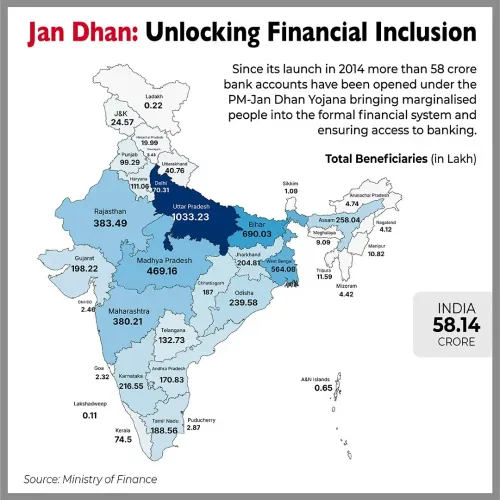
Pradhan Mantri Jan Dhan Yojana was launched in August 2014 to bring unbanked households into the formal financial system.
Aadhaar , managed by UIDAI and rolled out from 2009 , provides the biometric backbone for verified welfare delivery.
The JAM trinity powers India's Direct Benefit Transfer system, reducing leakages in subsidy and pension delivery.
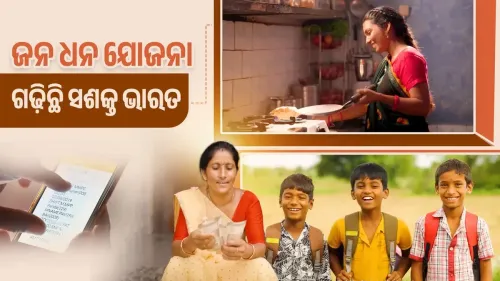
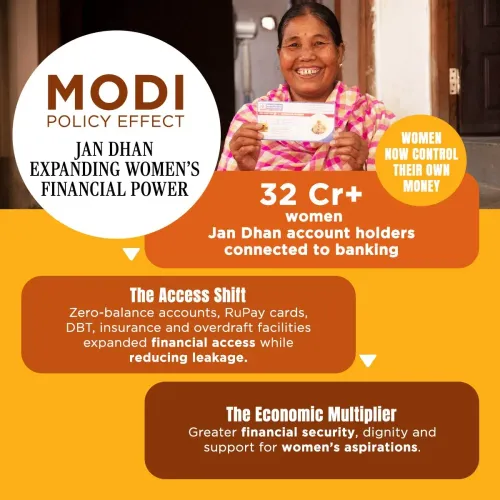
Women beneficiaries and low-income families are the primary focus of the inclusion drive Sawant highlighted.
Goa uses Aadhaar-linked DBT to channel pensions and subsidies to residents.
A promise made to India's poorest households — banking access, verified identity, mobile connectivity — has been delivered. That is the message Goa Chief Minister Pramod Sawant sent on 14 August 2026, the eve of Independence Day, invoking the JAM trinity — Jan Dhan, Aadhaar, Mobile — as living proof of a decade-old commitment to financial inclusion, women's empowerment, and poverty alleviation.
Sawant's post framed the three pillars — Pradhan Mantri Jan Dhan Yojana (PMJDY), Aadhaar, and mobile connectivity — as the fulfilment of a pre-2014 promise to strengthen what he called 'Nari Shakti' and 'Gareeb' (women's power and the poor). The timing, on the eve of Independence Day, was deliberate: linking national aspirations to on-the-ground delivery.
What the JAM Trinity Actually Built
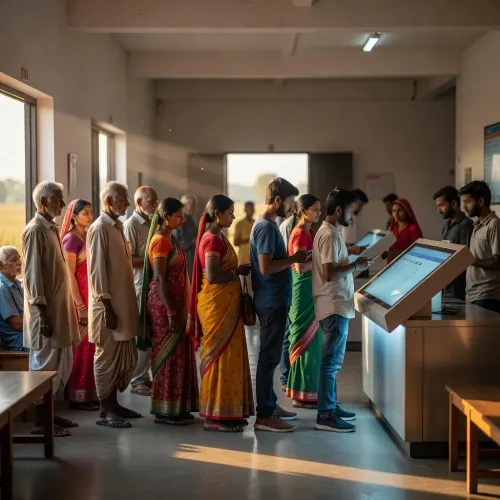
PMJDY, launched in August 2014, set out to bring every unbanked Indian household into the formal financial system. Paired with Aadhaar — the biometric identification architecture rolled out from 2009 under the Unique Identification Authority of India (UIDAI) — and the rapid spread of mobile penetration, the three together became the spine of India's Direct Benefit Transfer (DBT) infrastructure. Subsidies, pensions, and welfare payments that once leaked through layers of intermediaries could now flow directly into a verified account, confirmed by a fingerprint. The JAM trinity has since underpinned welfare delivery across states, including Goa, where Aadhaar-linked DBT channels pensions and subsidies to beneficiaries. Women have been a particular focus: a significant share of Jan Dhan accounts are held by women, making the scheme a concrete instrument of financial autonomy for households that previously had no banking relationship at all.Independence Eve and the Politics of Delivery
Sawant's framing is part of a consistent BJP communication pattern — anchoring Independence Day messaging to the argument that governance promises have translated into measurable public-good infrastructure. The JAM trinity has become the party's signature exhibit: not an aspiration, but a system already running at scale. For a Chief Minister who regularly amplifies central government schemes in state communications, the post doubles as both Independence Day tribute and political scorecard. The kicker: twelve years after the first Jan Dhan account was opened, the debate has shifted — from whether the unbanked can be reached, to how well the system now serves them.Point of View
Infrastructure-level rebuttal to pre-2014 critiques of welfare leakage. By foregrounding Nari Shakti and the poor, the framing aligns with the party's long-running effort to own the financial inclusion narrative at both central and state levels. The timing matters: anchoring the message to Independence Day amplifies its emotional register without requiring a new policy announcement. It signals that for BJP governments, the JAM trinity is now a settled legacy argument, not a work-in-progress.
NationPress
29 Sept 2026
Frequently Asked Questions
What is the JAM trinity in India?
The JAM trinity stands for Jan Dhan (bank accounts), Aadhaar (biometric identity), and Mobile (connectivity). Together they form the backbone of India's Direct Benefit Transfer system, enabling subsidies and welfare payments to reach beneficiaries directly without intermediaries.
When was Pradhan Mantri Jan Dhan Yojana launched?
Pradhan Mantri Jan Dhan Yojana (PMJDY) was launched in August 2014 by the Government of India to provide bank accounts to every unbanked household in the country.
What did Goa CM Pramod Sawant say about Jan Dhan?
On 14 August 2026 , Sawant posted that the promise to enhance financial inclusion, strengthen Nari Shakti, and support the poor has been kept through Jan Dhan, Aadhaar, and Mobile — the JAM trinity.
How does Aadhaar help financial inclusion in India?
Aadhaar , managed by UIDAI and rolled out from 2009 , provides a unique biometric identity that links citizens to their bank accounts, enabling verified, leakage-free transfer of government subsidies and welfare payments.
Who benefits most from the Jan Dhan scheme?
Unbanked households, women, and low-income families are the primary beneficiaries. A significant share of Jan Dhan accounts are held by women, giving them direct access to formal banking and government welfare transfers for the first time.