FM Sitharaman Highlights 58 Crore Jan Dhan Accounts
Synopsis
Union Finance Minister Nirmala Sitharaman on 8 June 2026 marked 12 years of the government's welfare architecture, citing 58 crore-plus Jan Dhan accounts as the backbone of leakage-free delivery of subsidies, insurance, and pensions to crores of Indians.
Key Takeaways
Union Finance Minister Nirmala Sitharaman posted on 8 June 2026 under #12YearsOfGaribKalyan , highlighting the scale of India's financial inclusion drive.
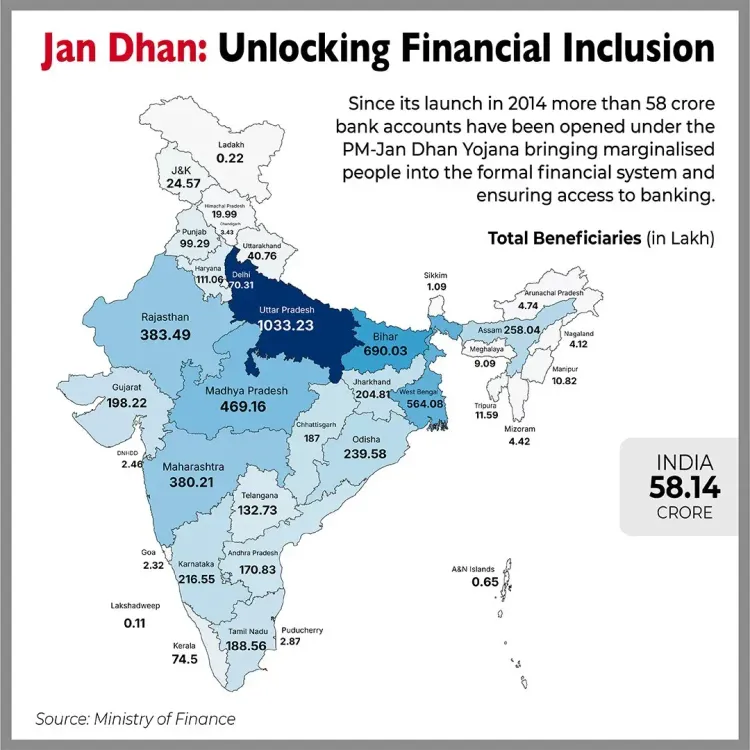
Over 58 crore Jan Dhan accounts have been opened since the scheme's launch on 28 August 2014 , bringing previously unbanked households into the formal banking system.
The accounts serve as the delivery channel for welfare scheme benefits, low-cost insurance products, and pensions , with the stated goal of eliminating leakages.
The JAM trinity — Jan Dhan, Aadhaar, Mobile — underpins India's Direct Benefit Transfer infrastructure, covering schemes from LPG subsidies to MGNREGA wages.
The #12YearsOfGaribKalyan hashtag frames the government's social protection measures as a continuous welfare architecture initiated after 2014.
Future policy focus is expected on reducing dormant accounts and expanding financial products linked to the Jan Dhan platform.
Union Finance Minister Nirmala Sitharaman on Monday, 8 June 2026 highlighted that over 58 crore Jan Dhan accounts have brought crores of Indians into the formal banking system, citing the milestone as proof that welfare benefits, low-cost insurance, and pensions are reaching citizens without leakages. The post, shared under the hashtag #12YearsOfGaribKalyan, marks over a decade of the government's financial inclusion and welfare delivery architecture.
Context
The Pradhan Mantri Jan Dhan Yojana (PMJDY) was launched on 28 August 2014 by the Narendra Modi government as a national mission to provide universal banking access to unbanked households. Each account came bundled with a RuPay debit card, accidental insurance cover, and an overdraft facility, making it more than a basic savings instrument. The scheme was conceived as the foundational layer of the broader JAM trinity — Jan Dhan, Aadhaar, and Mobile — designed to plug leakages in government transfers.
Sitharaman's post notes that the accounts have 'ensured that benefits under welfare schemes, low-cost insurance, and pensions reach without leakages,' a direct reference to the Direct Benefit Transfer (DBT) infrastructure that routes subsidies and entitlements straight into beneficiary accounts, bypassing intermediaries.
Policy Backdrop
The JAM trinity has been the spine of India's welfare delivery reform since 2014. By linking Jan Dhan accounts to Aadhaar biometrics and mobile numbers, the government channelled payments for schemes ranging from LPG subsidies and MGNREGA wages to PM-KISAN farm income support and pandemic-era cash transfers. Each successive Union Budget has deepened this linkage, expanding account coverage and attaching low-cost products such as the Pradhan Mantri Jeevan Jyoti Bima Yojana and the Pradhan Mantri Suraksha Bima Yojana to the Jan Dhan platform.
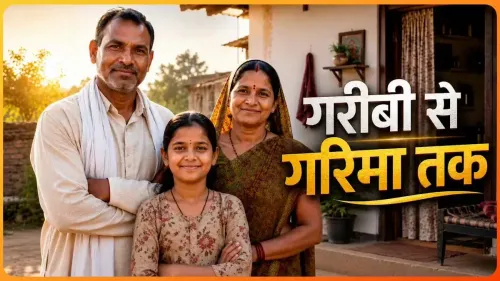
The #12YearsOfGaribKalyan hashtag frames these measures as a continuous, decade-plus welfare architecture. 'Garib Kalyan' — literally garib kalyan (welfare of the poor) — has been the government's umbrella branding for its social protection programmes, including free foodgrain distribution and direct cash support during the COVID-19 pandemic.
Stakeholders and Impact
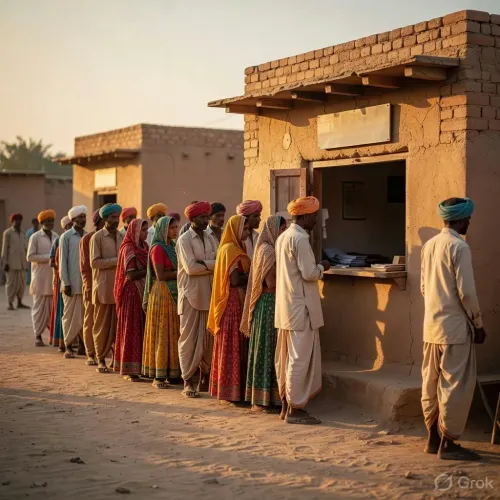
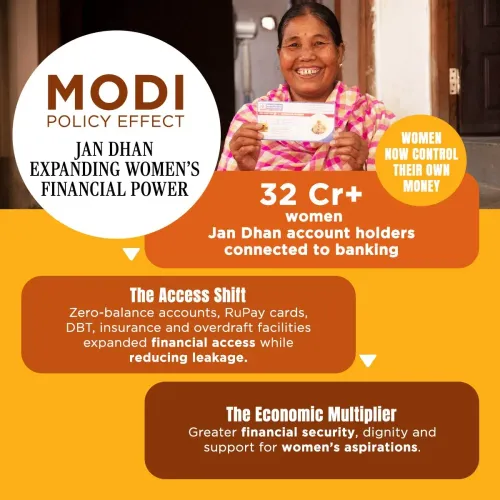
The primary beneficiaries of the Jan Dhan ecosystem are households that were previously unbanked — largely from rural areas, urban slums, and marginalised communities. With 58 crore-plus accounts, the programme represents one of the largest financial inclusion drives in the world. Women account for a significant share of account holders, and the accounts have served as conduits for gender-targeted schemes.
Beyond individual beneficiaries, the reduction in leakages has fiscal implications: government studies have cited substantial savings in subsidy expenditure attributable to DBT, though independent assessments of the precise figures vary. The insurance and pension linkages — including the Atal Pension Yojana — have extended a basic social security net to workers in the informal economy who were previously outside any formal safety net.
What's Next
The Finance Ministry's ongoing focus is expected to remain on improving the quality of Jan Dhan accounts — particularly addressing zero-balance and dormant accounts — and expanding the suite of financial products accessible through the platform. Analysts will watch whether the next Union Budget announces fresh linkages between Jan Dhan infrastructure and emerging welfare programmes or state-level schemes. The #12YearsOfGaribKalyan communications push suggests the government intends to consolidate this record as a political and policy narrative ahead of future electoral cycles.
Point of View
Using the #12YearsOfGaribKalyan hashtag to consolidate a decade of welfare-delivery reforms into a single, voter-legible narrative. The emphasis on 'leakages' is significant — it implicitly contrasts the JAM-enabled DBT architecture with the pre-2014 subsidy regime, a contrast the BJP has consistently deployed politically. By anchoring the message in the Jan Dhan account count rather than expenditure figures, the government leads with reach rather than cost, a framing that resonates with both fiscal hawks and welfare advocates. The timing of the campaign suggests a broader effort to build a policy legacy record, likely in preparation for upcoming electoral or budgetary cycles.
NationPress
24 Oct 2026
Frequently Asked Questions
What is the Pradhan Mantri Jan Dhan Yojana?
The Pradhan Mantri Jan Dhan Yojana (PMJDY) is India's national financial inclusion programme, launched on 28 August 2014, to provide zero-balance bank accounts, RuPay debit cards, and insurance cover to unbanked households.
How many Jan Dhan accounts have been opened in India?
As of the figures cited by Finance Minister Nirmala Sitharaman in June 2026, over 58 crore Jan Dhan accounts have been opened under PMJDY.
What is the JAM trinity in India?
The JAM trinity refers to the combination of Jan Dhan bank accounts, Aadhaar biometric identity, and Mobile connectivity, which together form the backbone of India's Direct Benefit Transfer system for routing welfare payments without leakages.
What is #12YearsOfGaribKalyan?
#12YearsOfGaribKalyan is a government communications campaign marking over 12 years of the Modi government's social protection and welfare delivery programmes, including Jan Dhan, free foodgrain distribution, and direct cash transfers.
How does Jan Dhan help reduce leakages in welfare schemes?
Jan Dhan accounts are linked to Aadhaar and mobile numbers, enabling the government to transfer subsidies, pensions, and insurance benefits directly to verified beneficiaries, bypassing intermediaries and reducing the diversion of funds.