Sitharaman: Jan Dhan Brought 32 Cr+ Women Into Banking
Synopsis
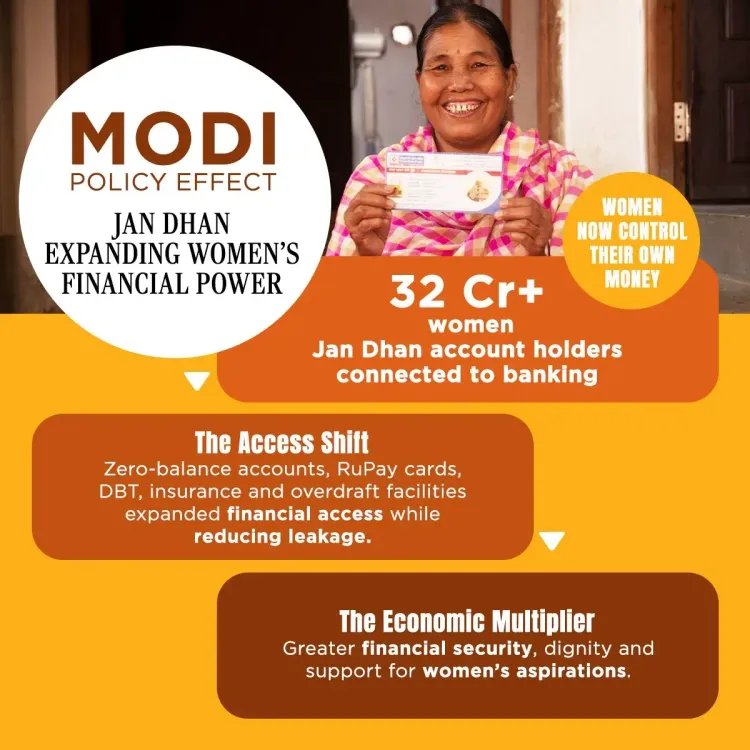
Finance Minister Nirmala Sitharaman marked the #12YearsOfNariShakti campaign by highlighting that PM Jan Dhan Yojana has brought over 32 crore women into formal banking through zero-balance accounts, DBT, RuPay cards, insurance, and overdraft support since 2014.
Key Takeaways
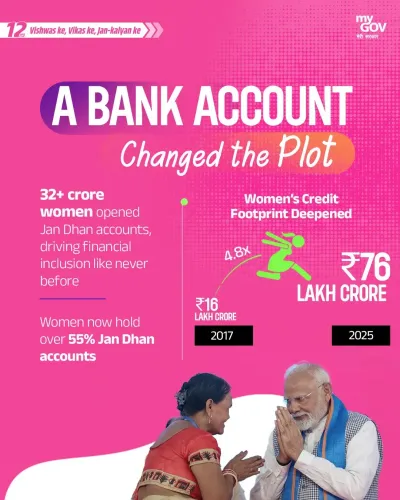
Over 32 crore women have been enrolled in the formal banking system through Pradhan Mantri Jan Dhan Yojana , according to Finance Minister Nirmala Sitharaman.
PMJDY , launched on 28 August 2014 , provides zero-balance accounts, RuPay debit cards , accidental insurance, and overdraft facilities to beneficiaries.
The Direct Benefit Transfer (DBT) mechanism routes government subsidies directly into Jan Dhan accounts, reducing leakages in welfare delivery.
RuPay , India's indigenous card network, was specifically designed to provide low-cost digital payment access to Jan Dhan account holders.
Sitharaman's post was made under the hashtag #12YearsOfNariShakti , indicating a broader government campaign marking twelve years of women-focused initiatives.
Future Economic Survey and Union Budget data are expected to shed light on account activity rates and any planned expansion of scheme benefits.
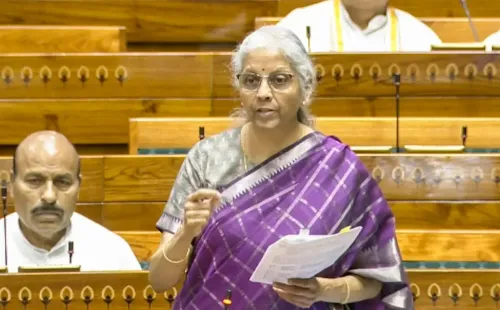
Union Finance Minister Nirmala Sitharaman on Friday, 12 June 2026, highlighted the role of the Pradhan Mantri Jan Dhan Yojana (PMJDY) in expanding financial access for women, citing that over 32 crore women have been brought into the formal banking system through the flagship scheme.
Context
Posting under the hashtag #12YearsOfNariShakti, Sitharaman stated that PMJDY 'has ensured greater financial power for the women,' pointing to zero-balance accounts, Direct Benefit Transfer (DBT), RuPay cards, insurance coverage, and overdraft support as the key instruments of this inclusion. The post marks what appears to be a campaign commemorating twelve years of government initiatives focused on women's empowerment.
The Pradhan Mantri Jan Dhan Yojana was launched on 28 August 2014 as India's flagship financial inclusion programme, aimed at opening bank accounts for previously unbanked households with a zero-balance facility. Women have consistently formed a significant share of its beneficiary base.
Policy Backdrop
PMJDY operates as an integrated platform, bundling a basic savings account with a RuPay debit card, accidental insurance cover, and an overdraft facility — typically up to Rs 10,000 — for eligible account holders. The Direct Benefit Transfer mechanism, which routes government subsidies and welfare payments directly into beneficiaries' accounts, has been a critical tool in reducing leakages and ensuring last-mile delivery.
Since 2014, successive Union Budgets have reinforced the financial inclusion agenda by expanding DBT coverage across welfare schemes spanning food, fuel, fertiliser, and social security. The convergence of zero-balance accounts, digital payments, and direct transfers has been positioned by the government as a structural shift away from cash-based subsidy delivery.
RuPay, the indigenous card payment network developed under the National Payments Corporation of India, was rolled out specifically to provide low-cost debit access to Jan Dhan account holders, reducing dependence on international card networks and lowering transaction costs for low-income users.
Stakeholders and Impact
The over-32-crore women account holders cited by the Finance Minister represent a substantial share of India's adult female population, many of whom were previously excluded from formal financial services. Access to a bank account enables women to receive government transfers directly, build savings, and access credit — factors linked to greater household bargaining power and economic agency.
Overdraft linkages under PMJDY have provided a credit entry point for women who lack collateral or a credit history, while insurance cover offers a basic safety net. Together, these features extend the scheme's utility well beyond simple account ownership into functional financial participation.
What's Next
The government's next Economic Survey or Union Budget is expected to carry updated financial inclusion metrics, including account activity rates and DBT disbursement data, which will offer a fuller picture of how many of the 32 crore+ accounts are operationally active. Analysts and policymakers will also watch for any proposed expansion of overdraft limits or insurance coverage under the scheme, as the government looks to deepen — not just widen — formal financial access for women across rural and semi-urban India.
Point of View
Using the #12YearsOfNariShakti hashtag to frame PMJDY as a women's empowerment achievement ahead of what is likely a coordinated government anniversary campaign. The emphasis on 32 crore women — rather than total Jan Dhan enrolment — signals a strategic pivot to gender-disaggregated outcomes, a metric increasingly scrutinised by development economists and multilateral institutions. By bundling accounts, DBT, insurance, and credit access into a single narrative, the Finance Ministry is reinforcing its argument that financial inclusion under this government is structural rather than symbolic. Whether account ownership translates to active usage and genuine economic agency remains the central question that future data disclosures will need to answer.
NationPress
19 Sept 2026
Frequently Asked Questions
What is PM Jan Dhan Yojana and how does it help women?
Pradhan Mantri Jan Dhan Yojana (PMJDY) is India's flagship financial inclusion scheme, launched on 28 August 2014 , that provides zero-balance bank accounts, RuPay debit cards , accidental insurance, and overdraft facilities. It helps women by giving them direct access to formal banking and enabling government welfare payments to reach them without intermediaries.
How many women have Jan Dhan accounts in India?
According to Finance Minister Nirmala Sitharaman , over 32 crore women have been brought into formal banking through PMJDY . This figure was cited in a post on 12 June 2026 under the #12YearsOfNariShakti campaign.
What is the overdraft facility under Jan Dhan Yojana?
Eligible Jan Dhan account holders can access an overdraft — a short-term credit facility — linked to their zero-balance accounts. This provides a basic credit entry point for women who may not have collateral or a formal credit history.
What is DBT and how does it work with Jan Dhan accounts?
Direct Benefit Transfer (DBT) is a government mechanism that routes subsidies and welfare payments directly into beneficiaries' bank accounts, including Jan Dhan accounts, eliminating middlemen and reducing leakages in delivery of schemes covering food, fuel, fertiliser, and social security.
What is the #12YearsOfNariShakti campaign?
#12YearsOfNariShakti is a hashtag used by government leaders, including Finance Minister Nirmala Sitharaman , to mark twelve years of government initiatives focused on women's empowerment in India . The specific scope and events of the campaign were not independently detailed in the post.