India-Vietnam ties built on trust, mutual respect: Indian Ambassador
Synopsis
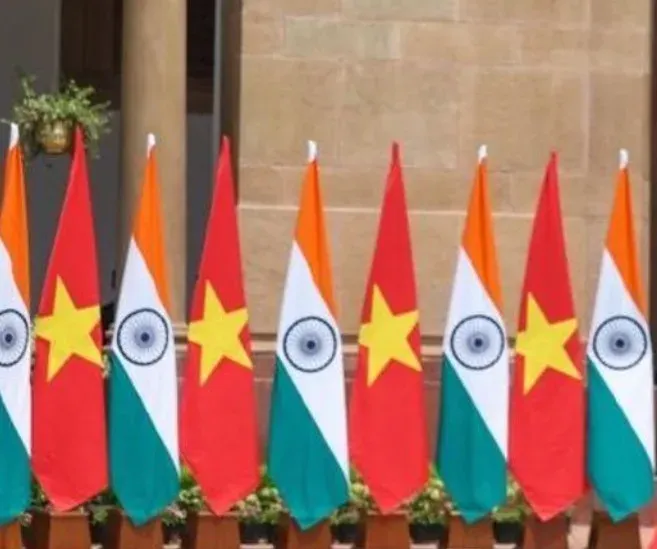
Ahead of India's 80th Independence Day, Ambassador Tshering W. Sherpa's op-ed in Vietnam News frames the India-Vietnam relationship not just as diplomatic goodwill but as a strategic convergence — from Act East and MAHASAGAR to parallel 2045/2047 development visions. The parallel timelines of independence and ambition are no accident, he argues.
Key Takeaways
Indian Ambassador Tshering W.
Sherpa described India and Vietnam as 'progressive and forward-looking partners' in an op-ed published in Vietnam News .
Sherpa quoted PM Narendra Modi : 'We will walk together, grow together, and win together.' Vietnam was identified as a key pillar of India's Act East policy and the Vision MAHASAGAR framework.
Both nations share parallel development goals — Viksit Bharat @ 2047 and Vietnam 2045 .
Vietnam's participation in the Indo-Pacific Oceans Initiative was highlighted as reinforcing shared commitment to regional peace and rule of law.
Sherpa extended greetings ahead of India's 80th Independence Day (15 August) and Vietnam's 81st (2 September) .
Indian Ambassador to Vietnam Tshering W. Sherpa has described India and Vietnam as 'progressive and forward-looking partners' whose relationship is anchored in trust, mutual respect, and goodwill — a bond he says will only deepen as both nations pursue ambitious national development goals. The remarks came as New Delhi prepares to mark its 80th Independence Day on 15 August.
What the Ambassador Said
Writing in Vietnamese English daily Vietnam News, Sherpa outlined the philosophical and historical foundations of the bilateral relationship. 'India and Vietnam, two progressive forward-looking partners, have transformed challenges into opportunities, learnt from each other and nurtured complementarities. The enormous goodwill, mutual respect and trust, with people at the core, is the strength of our traditional partnership which will only get stronger,' he wrote.
Sherpa also quoted Prime Minister Narendra Modi to underscore the shared vision: 'We will walk together, grow together, and win together.'
Vietnam as a Pillar of India's Act East Policy
The Ambassador positioned Vietnam as a key pillar of India's 'Act East' policy and the Vision MAHASAGAR framework — Mutual and Holistic Advancement for Security and Growth Across Regions. He reaffirmed India's commitment to ASEAN centrality and highlighted Vietnam's participation in the Indo-Pacific Oceans Initiative as a signal of shared commitment to the rule of law, regional peace, and stability.
'India is committed to ASEAN centrality. Our partnership flows into the multilateral arena. Việt Nam joining the Indo-Pacific Oceans Initiative strengthens our mutual commitment to the rule of law, peace, stability, and prosperity of the region,' Sherpa wrote.
Shared Civilisational Roots and Parallel Journeys
Sherpa traced the depth of the relationship to shared civilisational ties rooted in Buddhism, history, and culture. He noted that both countries emerged from colonialism in the same era — Vietnam in September 1945 and India in August 1947 — and drew inspiration from each other's national independence movements.
He drew a direct parallel between their development visions: 'The respective national goals of Viksit Bharat @ 2047 and Vietnam 2045 are not coincidental,' he said, framing the two nations as natural partners in long-term growth.
India's Global Role and Vasudhaiva Kutumbakam
Sherpa underlined India's people-centric approach to development and its self-identified role as a voice for the Global South, guided by the principle of Vasudhaiva Kutumbakam — the world is one family — while maintaining a path of strategic autonomy. 'Every step that India took was to better the lives of its people and bring prosperity to herself and the world,' he said.
Goodwill Across Both Nations
Concluding his message, Sherpa extended warm wishes to Indian nationals and friends of India marking Independence Day on 15 August, and congratulated Vietnamese friends ahead of Vietnam's 81st Independence Day on 2 September. The message reflects a broader diplomatic effort to reinforce people-to-people ties as the cornerstone of a relationship that spans decades of shared history and strategic alignment.
Point of View
On the eve of India's Independence Day, is deliberate. Framing Vietnam as central to both Act East and MAHASAGAR in the same breath signals that New Delhi is working to lock in Southeast Asian partners before geopolitical alignments harden. The Viksit Bharat–Vietnam 2045 parallel is an astute rhetorical move, but the real test of the partnership lies in trade and defence cooperation numbers, not shared timelines. India's Act East policy has long been praised in principle and underdelivered in practice; whether Vietnam becomes the exception will depend on execution, not eloquence.
NationPress
14 Aug 2026
Frequently Asked Questions
What did Indian Ambassador Tshering W. Sherpa say about India-Vietnam ties?
Ambassador Sherpa described India and Vietnam as 'progressive and forward-looking partners' whose relationship is built on trust, mutual respect, and goodwill. Writing in Vietnam News ahead of India's 80th Independence Day, he said the bilateral bond would only grow stronger with people at its core.
What is India's Vision MAHASAGAR and how does Vietnam fit into it?
Vision MAHASAGAR — Mutual and Holistic Advancement for Security and Growth Across Regions — is India's framework for regional cooperation in the Indo-Pacific. Ambassador Sherpa identified Vietnam as a key pillar of this vision, alongside India's Act East policy, citing Vietnam's membership in the Indo-Pacific Oceans Initiative.
Why did the Ambassador draw a parallel between Viksit Bharat 2047 and Vietnam 2045?
Sherpa used the parallel to highlight that both nations share not just historical roots but also long-term development ambitions on similar timelines. He argued this convergence is no coincidence, framing it as evidence of a naturally aligned strategic partnership.
When did India and Vietnam gain independence, and why does it matter diplomatically?
Vietnam gained independence in September 1945 and India in August 1947 — both emerging from colonialism in the same era and drawing inspiration from each other's national movements. Ambassador Sherpa used this shared history to reinforce the depth and authenticity of the bilateral relationship.
What is India's stance on ASEAN centrality?
India has reaffirmed its commitment to ASEAN centrality as a guiding principle of its regional foreign policy. Ambassador Sherpa stated that India's partnership with Vietnam flows into the multilateral arena, and that Vietnam's participation in the Indo-Pacific Oceans Initiative strengthens the shared commitment to regional peace and rule of law.