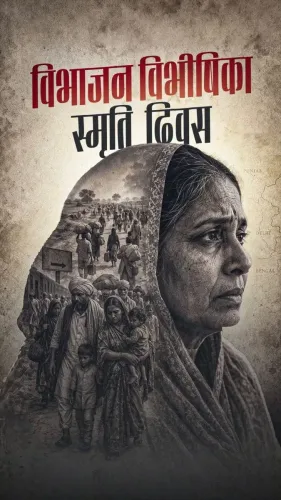
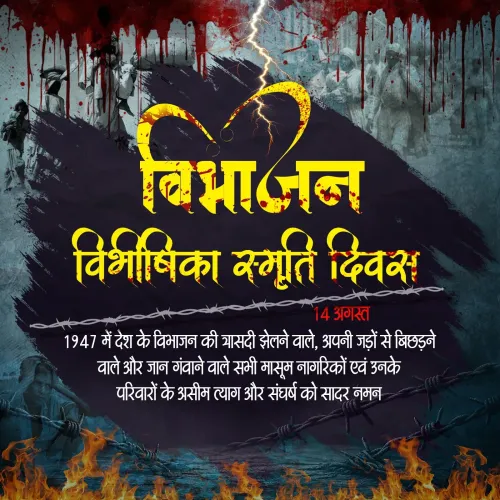
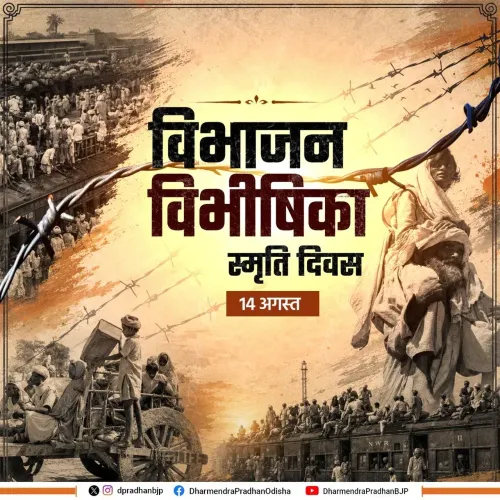
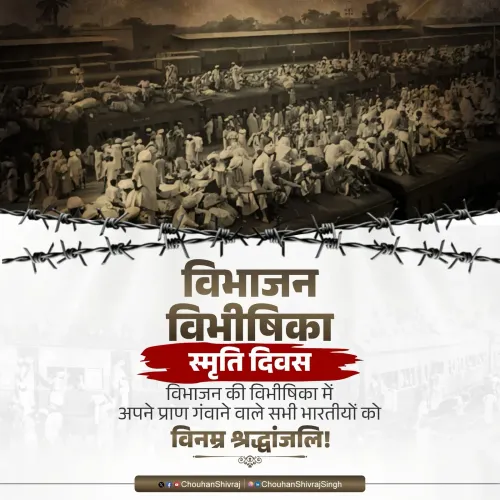
Anurag Thakur Marks Partition Horrors Remembrance Day
Synopsis
On Partition Horrors Remembrance Day, 14 August 2026, BJP MP Anurag Thakur paid tribute to victims of the 1947 Partition, holding Congress and the Muslim League responsible and urging national resolve toward harmony and a Viksit Bharat.
Key Takeaways
BJP MP Anurag Thakur posted a tribute on Partition Horrors Remembrance Day, 14 August 2026 .
He described the 1947 Partition as a 'great sin' committed by the Indian National Congress and the All-India Muslim League .
Partition Horrors Remembrance Day was formally instituted by the Government of India in 2021 and is observed annually on 14 August .
Thakur praised the resilience of millions who rebuilt their lives after Partition and linked their courage to the Viksit Bharat vision for 2047 .
The post reflects the BJP's consistent practice of pairing Partition remembrance with political attribution to Congress and a forward-looking development message.
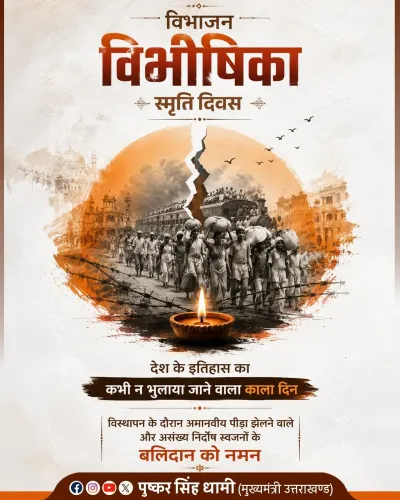
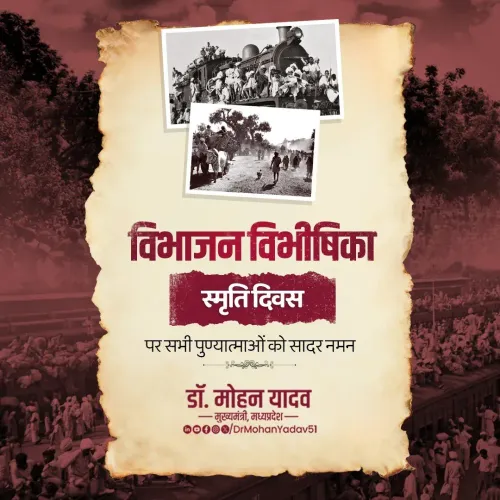
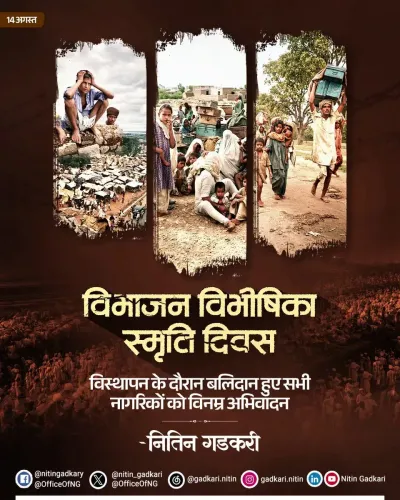
Seventy-nine years after one of history's most violent mass migrations, the wounds of 1947 still demand witness. On Partition Horrors Remembrance Day, 14 August 2026, BJP MP Anurag Thakur posted a solemn tribute to the millions who suffered and perished during the division of British India — and placed the blame squarely on the Indian National Congress and the All-India Muslim League.
A Day of Remembrance, an Accusation of History
Thakur wrote: 'We remember with tearful eyes those brave souls who suffered unbearable and unforgettable pain and lost their lives during the horrific Partition of India, the great sin committed by the Congress and the Muslim League.' The language is deliberate — 'great sin' is a moral indictment, not merely a historical observation. The Partition of 1947 triggered one of the largest forced migrations in recorded history, displacing an estimated 10 to 20 million people and killing hundreds of thousands in communal violence across what became India and Pakistan.
The Government of India formally declared 14 August as Partition Horrors Remembrance Day in 2021, institutionalising an annual moment of national grief. The date is not accidental — it falls on the eve of India's Independence Day, a deliberate juxtaposition of liberation and loss.
From Ashes to Ambition: The Viksit Bharat Thread
Thakur's post does not rest in mourning. It pivots: 'Yet, from the ashes of tragedy, millions rebuilt their lives and contributed to the progress of Bharat. Their courage reminds us of the strength of the human spirit.' The closing call — 'Let this day strengthen our resolve to preserve harmony, brotherhood and build a Viksit Bharat' — ties historical remembrance to the government's development vision for 2047, the centenary of independence.
Viksit Bharat (Developed India) is the BJP-led government's stated goal of transforming India into a fully developed nation by its hundredth year of independence. Linking Partition survivors' resilience to that forward ambition is a rhetorical move the party has refined since the remembrance day was instituted.
BJP's Consistent Framing of Partition as a Congress Legacy
Thakur's tribute follows a pattern visible in official BJP messaging since 2021: remember the suffering, assign political responsibility to Congress and the Muslim League, and use the occasion to reinforce national unity under a development-oriented vision. As a former Union Minister of Information and Broadcasting, Thakur was among those who helped shape the public communication architecture around this observance. His post this year continues that line without deviation.
For the families of partition survivors — millions of whom still live across Punjab, Rajasthan, Delhi, West Bengal and beyond — the day carries a grief that no political framing fully contains. Their stories remain the irreducible core of what 14 August is asked to hold.
As India marks another year of this solemn observance, the question the day quietly poses endures: how a nation remembers its deepest wound says as much about its present as its past.
Point of View
But the assignment of blame is partisan and deliberate. Tying the remembrance to the Viksit Bharat goal extends the BJP's strategy of anchoring its development agenda in a founding trauma, positioning the party as both the custodian of historical memory and the architect of national renewal. How opposition parties and civil society respond to this framing each year is itself a barometer of India's contested relationship with its partition history.
NationPress
14 Aug 2026
Frequently Asked Questions
What is Partition Horrors Remembrance Day?
Partition Horrors Remembrance Day is observed annually on 14 August to commemorate the victims of the 1947 Partition of India . The Government of India formally declared the day in 2021 to honour those who suffered displacement, violence and loss of life during the division of British India into India and Pakistan.
Why does BJP blame Congress for the Partition of India?
The BJP's position is that the leadership of the Indian National Congress and the All-India Muslim League agreed to the division of British India in 1947 , making them politically responsible for the mass violence and displacement that followed. This framing has been a consistent part of BJP messaging, particularly since the institution of Partition Horrors Remembrance Day.
What is Viksit Bharat?
Viksit Bharat , meaning 'Developed India', is the BJP-led government's vision to transform India into a fully developed nation by 2047 , the centenary of independence. It is frequently invoked as a forward-looking national goal in official and political messaging.
Who is Anurag Thakur?
Anurag Thakur is a BJP Lok Sabha MP from Hamirpur, Himachal Pradesh and a former Union Minister of Information and Broadcasting and Youth Affairs and Sports . He is a prominent BJP leader and has been vocal on issues of national memory and cultural policy.
When was Partition Horrors Remembrance Day instituted?
The Government of India declared 14 August as Partition Horrors Remembrance Day in 2021 . The date was chosen to fall on the eve of India's Independence Day, marking the grief of Partition alongside the celebration of freedom.