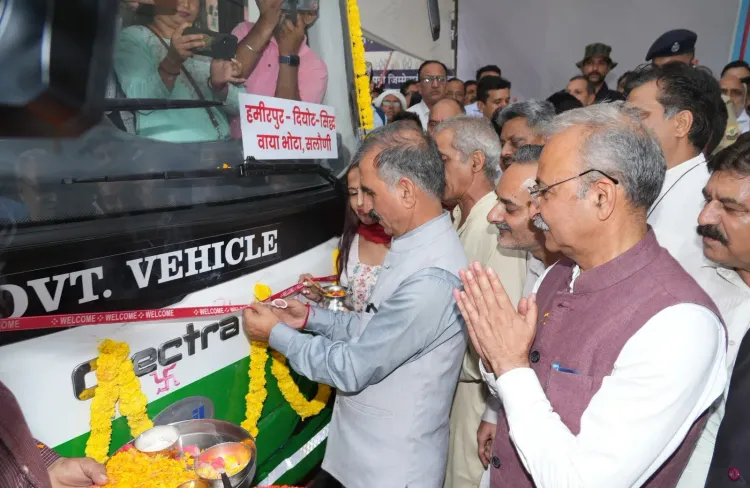
HP CM Sukhu flags off 35 HRTC electric buses from Hamirpur
Synopsis
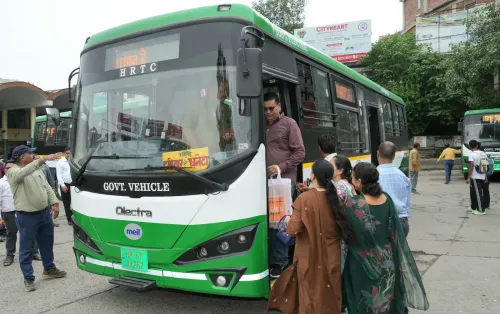
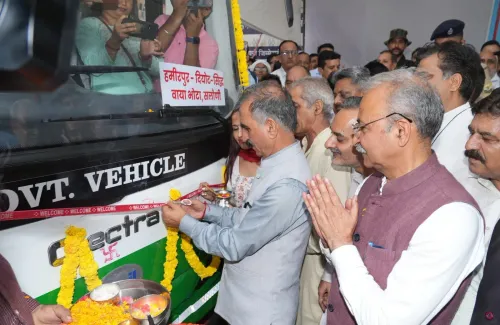
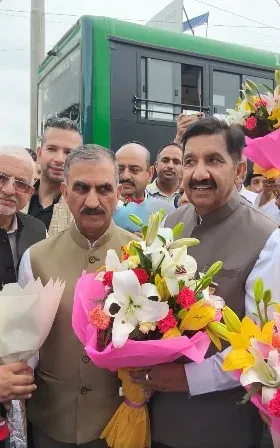
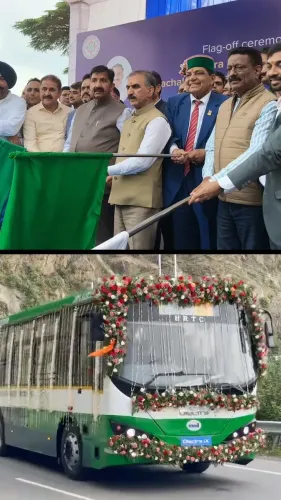
Chief Minister Sukhvinder Singh Sukhu flagged off 35 HRTC electric buses from Hamirpur's ISBT on 14 August 2026, strengthening rural connectivity in his home district and advancing Himachal Pradesh's push to electrify public transport on its challenging hill routes.
Key Takeaways
35 HRTC electric buses were flagged off from Hamirpur ISBT on 14 August 2026 by Chief Minister Sukhvinder Singh Sukhu .
Hamirpur is Sukhu's home district; the launch carries both operational and political significance.
HRTC serves as a critical lifeline connecting rural villages and towns across Himachal Pradesh's hilly terrain.
India's FAME-II scheme (2019) provided central support for state corporations to procure electric buses.
Charging infrastructure rollout and fleet expansion to other districts remain key milestones to watch.
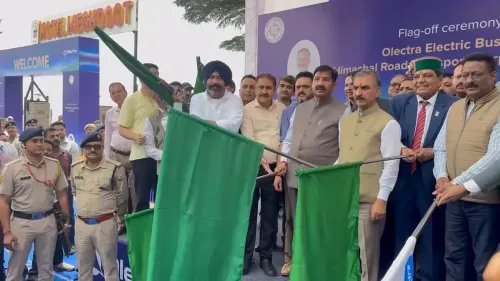
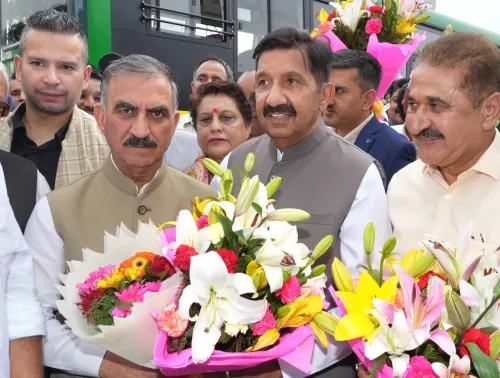
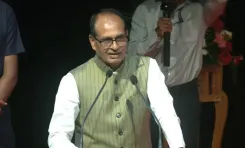
Thirty-five electric buses rolled out of Hamirpur's ISBT bus stand on Friday, 14 August 2026, as Chief Minister Sukhvinder Singh Sukhu flagged off the latest addition to Himachal Road Transport Corporation's (HRTC) green fleet — in the district he calls home.
Sukhu, flagging off the buses, described the service as more than a transport link. 'Hamirpur mein bus seva aavagaman ka sadhan hone ke saath-saath gaanvon aur kasbon ko jodne wali jeevanrekha hai' — 'In Hamirpur, the bus service is not just a means of travel but a lifeline connecting villages and towns,' he said. Thousands of commuters, he added, depend on these routes every single day to reach their destinations.
HRTC's electric push into hilly terrain
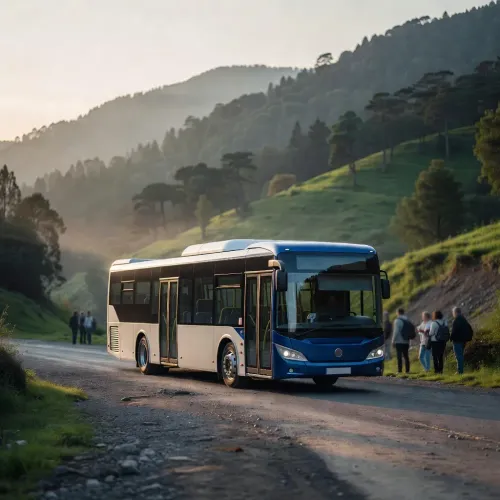
HRTC is the state's principal public bus operator, running routes across some of India's most demanding hill roads. Adding electric buses to that network is a logistical challenge that sets Himachal apart from plains-state counterparts — gradients, altitude, and temperature swings all stress battery range and braking systems. The corporation has been incrementally building its electric fleet, and this batch of 35 buses represents a visible acceleration of that effort.
Nationally, India's FAME-II scheme (2019) gave state transport corporations central financial support to procure electric buses and reduce dependence on diesel. Himachal Pradesh has drawn on that framework as part of a broader push to cut fuel costs and emissions on its public network.
What Hamirpur's commuters stand to gain
Hamirpur district is a dense patchwork of villages, small towns, and market centres — exactly the kind of geography where reliable bus frequency determines whether a student reaches school, a patient reaches a clinic, or a farmer reaches a mandi. Electric buses, quieter and lower on running costs than diesel counterparts, can make more frequent stops economically viable over time.
The inauguration at the home district of the Chief Minister carries political symbolism, but the operational stakes are real: rural Himachal still depends on HRTC in ways that urban India has largely outsourced to private apps and personal vehicles.
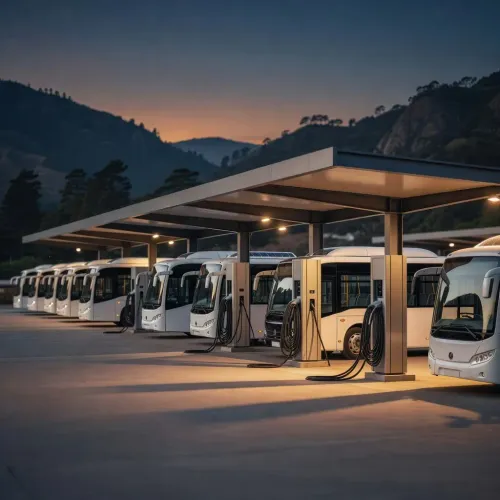
The next test is whether charging infrastructure keeps pace with the expanding fleet — and whether other districts across the state see similar deployments before the next budget cycle closes.
Point of View
Visible impact. Himachal Pradesh's electric bus procurement fits a national pattern where FAME-II funding has pushed state transport corporations toward cleaner fleets, but the real policy test is always downstream: whether charging infrastructure and maintenance capacity match the ambition. For a hill state where HRTC is irreplaceable for rural mobility, getting electrification right matters far more than the optics of the launch.
NationPress
14 Aug 2026
Frequently Asked Questions
How many electric buses did CM Sukhu flag off in Hamirpur?
Chief Minister Sukhvinder Singh Sukhu flagged off 35 HRTC electric buses from Hamirpur's ISBT bus stand on 14 August 2026 .
What is HRTC and why does it matter in Himachal Pradesh?
HRTC, the Himachal Road Transport Corporation , is the state-owned public bus operator that connects villages, towns, and cities across Himachal Pradesh's mountainous terrain, serving as the primary mode of transport for thousands of daily commuters.
Is Hamirpur the home district of CM Sukhu?
Yes. Hamirpur is the home district of Chief Minister Sukhvinder Singh Sukhu , who has served as Chief Minister of Himachal Pradesh since 2022 .
What central scheme supports electric bus procurement by state transport corporations?
India's FAME-II scheme , launched in 2019 , provides central government financial support to state transport corporations for procuring electric buses to cut emissions and fuel costs.
What are the next steps for HRTC's electric fleet expansion?
Key milestones to watch include the rollout of electric buses in other Himachal districts and state budget allocations for the charging infrastructure needed to support the growing fleet.