HP CM Office Inaugurates Residue Testing Lab in Hamirpur
Synopsis
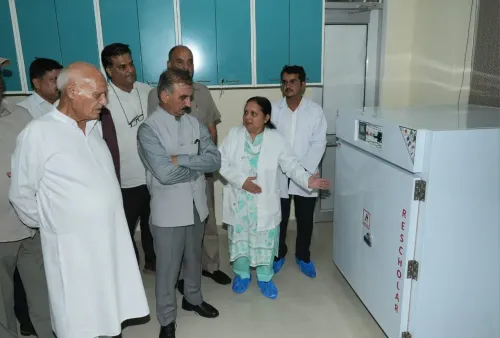
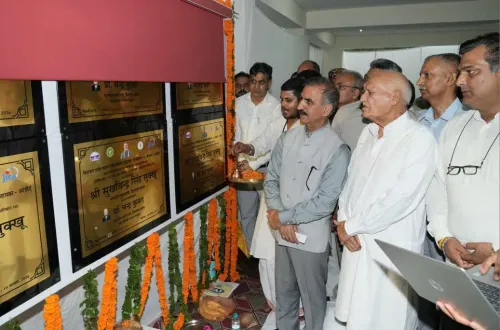
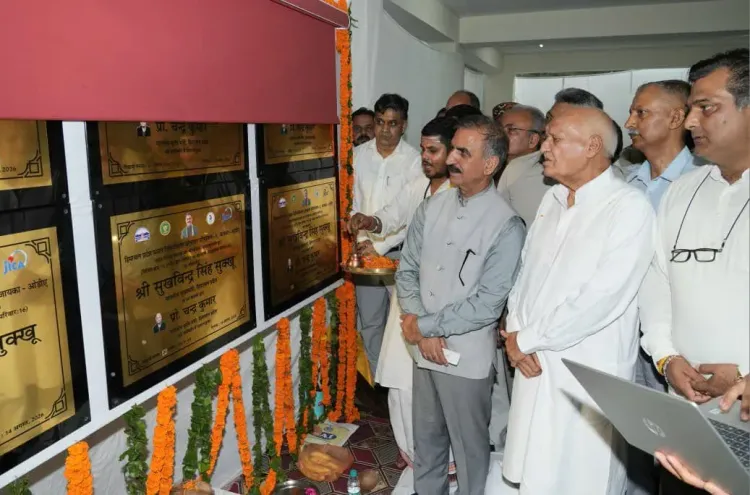
Himachal Pradesh's Chief Minister's Office inaugurated a State Residue Testing Laboratory at the Agriculture Department in Hamirpur on August 14, 2026, to scientifically test pesticide and chemical residues in agricultural products and strengthen food safety across the state.
Key Takeaways
The State Residue Testing Laboratory was inaugurated at the Agriculture Department, Hamirpur on August 14, 2026 .
The lab will conduct scientific testing of chemical and pesticide residues in agricultural products.
Its stated purpose is to ensure quality and food safety in Himachal Pradesh's agricultural supply chain.
The facility aligns with the national framework established under the Food Safety and Standards Act, 2006 .
Key stakeholders include farmers, consumers, and food processors in the state.
Analysts will watch for linkage with FSSAI requirements and potential expansion to other districts.
A new scientific watchdog for Himachal Pradesh's food supply quietly opened its doors on Friday, August 14, 2026 — the State Residue Testing Laboratory at the Agriculture Department in Hamirpur, inaugurated by the Chief Minister's Office of Himachal Pradesh. The facility is designed to scientifically test agricultural produce for chemical and pesticide residues, placing food safety on a more rigorous institutional footing for the state.
What the Hamirpur lab will actually do
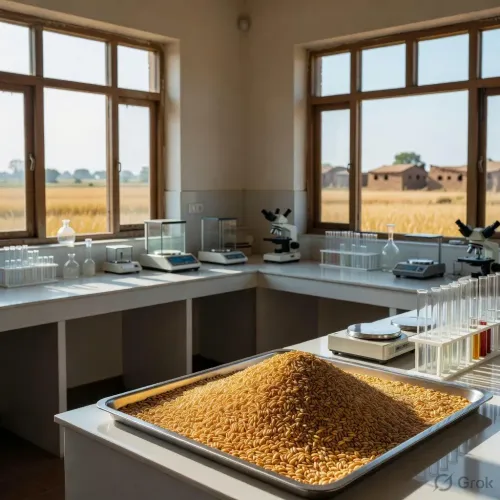
The laboratory's core mandate is the scientific examination of residues in agricultural products — pesticides, chemicals, and other contaminants that can reach consumers' plates undetected. The Chief Minister's Office stated that the facility will play 'an important role in ensuring quality and food safety through scientific testing of residues in agricultural products.' For a state whose hills produce a significant volume of fruit, vegetables, and horticultural goods, that testing capacity is not a formality — it is a direct line of defence for both farmers and consumers.
Himachal's horticulture output and why residue limits matter
Himachal Pradesh is one of India's leading horticultural states, supplying apples, stone fruits, and vegetables to markets across the country. The Food Safety and Standards Act, 2006 established the national framework for enforcing maximum residue limits on food commodities, and states are expected to maintain testing infrastructure to back that enforcement. A dedicated residue lab at the district level in Hamirpur strengthens the Agriculture Department's ability to intercept non-compliant produce before it moves through the supply chain. Indian states have incrementally built such facilities over the years; Himachal Pradesh is adding to that network with this inauguration.
Farmers, consumers, and the compliance chain ahead
The immediate beneficiaries are threefold: farmers who gain access to scientific feedback on their produce quality, consumers whose exposure to harmful residues can be monitored and curtailed, and food processors who require certified inputs to meet domestic and export standards. Analysts will now watch whether the state links the lab's outputs to FSSAI notification requirements and whether subsequent budget cycles fund additional district-level facilities to extend coverage beyond Hamirpur.
A single lab is a start. The harder question is whether Himachal Pradesh builds the testing network dense enough to match the scale of what its farms produce every season.
Point of View
2006 — moving enforcement closer to the point of production. For Himachal Pradesh, which depends heavily on horticultural exports for farm income, such a facility carries direct economic stakes: produce that fails residue checks can be rejected at mandis or export gateways, hurting growers. The real test of this investment will be utilisation rates and whether findings feed into actionable advisories for farmers, not just compliance paperwork. A single district lab is a credible first step, but the state's horticulture footprint demands a wider network to make a systemic difference.
NationPress
14 Aug 2026
Frequently Asked Questions
What is the State Residue Testing Laboratory inaugurated in Hamirpur?
It is a government laboratory set up under the Agriculture Department of Himachal Pradesh in Hamirpur to scientifically test agricultural products for pesticide and chemical residues, ensuring compliance with food safety standards.
Why is residue testing important for Himachal Pradesh farmers?
Himachal Pradesh is a major horticultural producer. Residue testing helps farmers ensure their produce meets maximum residue limits set under national food safety law, preventing rejection at markets and protecting consumer health.
Which law governs pesticide residue limits in India?
The Food Safety and Standards Act, 2006 establishes the national framework for maximum residue limits on food commodities and requires states to maintain testing infrastructure for enforcement.
Who benefits from the new lab in Hamirpur?
Farmers gain scientific feedback on produce quality, consumers benefit from reduced exposure to harmful residues, and food processors get certified inputs needed for domestic and export markets.
Will more such labs be set up in other districts of Himachal Pradesh?
That has not been officially announced yet. Analysts are watching whether future state budget allocations fund additional district-level residue testing facilities to expand coverage across the state.