Northeast emerging as India's growth engine under Modi: Assam CM Sarma
Synopsis
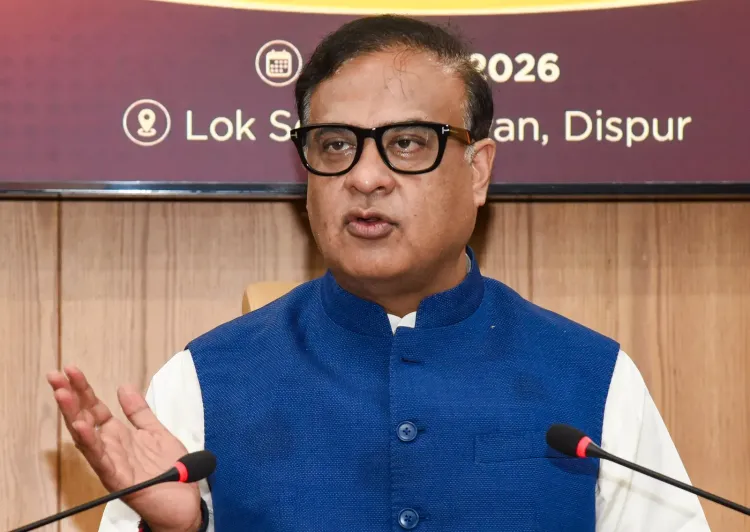
Assam Chief Minister Himanta Biswa Sarma has declared the Northeast — once seen as India's forgotten frontier — is now the country's next growth engine. Invoking the 'Ashtalakshmi' framing and the Viksit Bharat 2047 target, Sarma's post on X reflects a decade-long BJP effort to reposition the region from a security concern to a strategic economic corridor linking India with Southeast Asia.
Key Takeaways
Assam CM Himanta Biswa Sarma on 13 June declared the Northeast a central pillar of India's growth trajectory toward Viksit Bharat 2047 .
Sarma used the term 'Ashtalakshmi' to describe the eight Northeastern states and their collective development potential.
Since 2014 , the Centre has invested significantly in roads, railways, airports, waterways , and digital connectivity across the region.
The Northeast is being positioned as India's gateway to Southeast Asia under the Act East Policy .
Priority sectors include tourism, agriculture, trade, logistics , and renewable energy .
BJP -led governments at the Centre and in several Northeastern states have consistently described the region as a strategic growth engine.
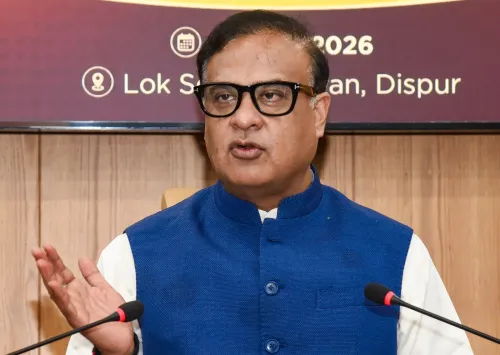
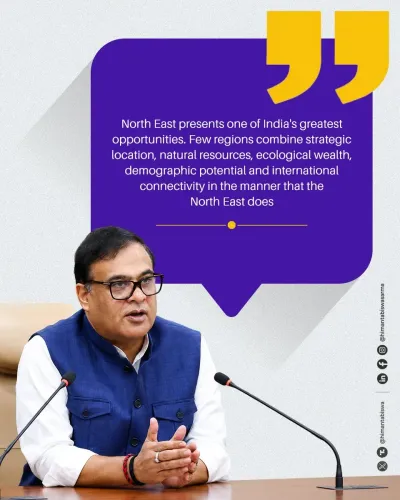
Assam Chief Minister Himanta Biswa Sarma on Saturday, 13 June said the Northeast, long perceived as peripheral to India's development mainstream, is now a central pillar in the country's growth trajectory and a critical corridor toward the Viksit Bharat 2047 vision. His remarks, shared on social media platform X, signal a broader political push to reframe the region's identity from a frontier concern to a national growth engine.
Sarma's Core Argument
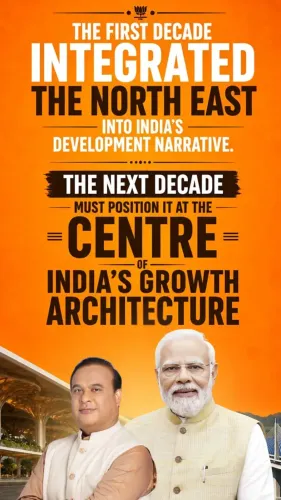
In his post, Sarma invoked the term 'Ashtalakshmi' — a reference to the eight Northeastern states — to describe the region's emerging developmental role. He stated that what was once considered far from the mainstream was today 'writing the development story of New India.' He added that the path to Viksit Bharat 2047 passes through the Northeast, and that the region would drive India's development journey in the coming decade.
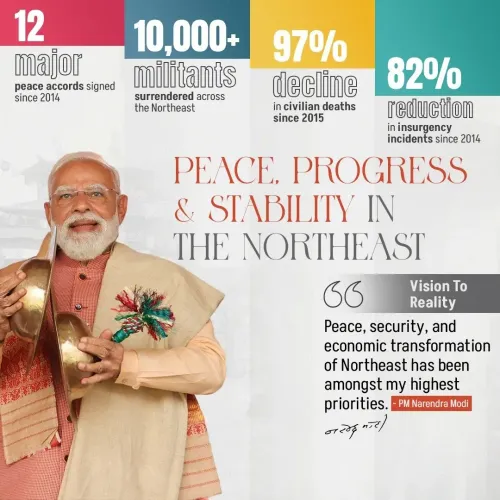
The remarks are consistent with a narrative the Bharatiya Janata Party (BJP)-led government has cultivated since 2014, positioning the Northeast as a strategic asset rather than a logistical liability.
Infrastructure Push Behind the Claim
The Chief Minister's assertion is backed by a decade-long infrastructure build-up in the region. Since 2014, the Centre has channelled significant investments into roads, railways, airports, waterways, and digital connectivity across the Northeastern states.
Major projects include national highway expansions, railway line extensions into remote areas, border infrastructure upgrades, and the addition of new air routes linking the Northeast with the rest of the country. These connectivity improvements are widely seen as prerequisites for unlocking the region's economic potential.
Strategic Sectors and Act East Policy
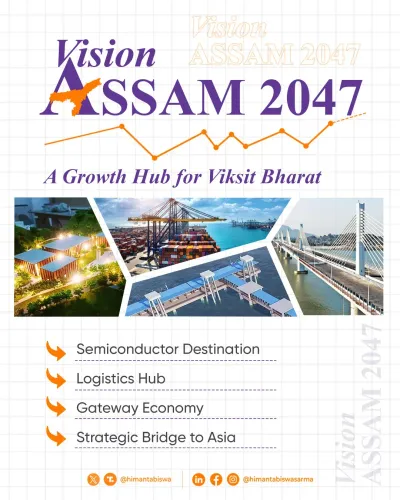
Beyond infrastructure, the Centre has prioritised tourism, agriculture, trade, logistics, and renewable energy in the Northeast. Crucially, the region is being promoted as India's gateway to Southeast Asia under the Act East Policy — a diplomatic and economic framework that gives the Northeast a geopolitical relevance it historically lacked.
This positioning is significant: the Northeast shares international borders with Bhutan, China, Myanmar, and Bangladesh, making it a natural bridge for trade and connectivity with the eastern neighbourhood.
Political Context and BJP's Northeast Strategy
BJP-led governments at both the Centre and in several Northeastern states have consistently described the region as a strategic growth engine. Sarma has been among the most vocal advocates of this framing, frequently citing Assam's own transformation over the past decade as evidence of what sustained Central support can deliver.
This comes amid the Centre's continued focus on economic integration across the region, with multiple flagship schemes — from PM Gati Shakti to the North East Special Infrastructure Development Scheme (NESIDS) — directing resources toward the area. Whether the pace of investment translates into commensurate improvements in per-capita income and employment across all eight states remains a question analysts continue to track.
What Comes Next
With 2047 as the stated horizon, the Northeast's trajectory over the next decade will be closely watched. Connectivity improvements are expected to deepen as ongoing railway and highway projects reach completion. The region's role in India's trade architecture with Southeast Asia will depend in large part on how quickly cross-border infrastructure and trade agreements mature.
Point of View
But the underlying question is whether a decade of infrastructure spending has meaningfully closed the Northeast's per-capita income gap with the national average. Connectivity is a necessary condition for growth — not a sufficient one. The Act East Policy has existed since 2014, yet cross-border trade volumes with Southeast Asia remain modest. The real test of the Northeast-as-growth-engine thesis will be in employment and private investment data over the next five years, not in highway kilometres alone.
NationPress
13 Sept 2026
Frequently Asked Questions
What did Assam CM Himanta Biswa Sarma say about Northeast India's development?
Sarma said the Northeast, once seen as distant from India's development mainstream, is now a key pillar in the country's growth trajectory and a critical corridor toward the Viksit Bharat 2047 vision. He made the remarks in a post on social media platform X on 13 June.
What is the 'Ashtalakshmi' reference used by Sarma?
'Ashtalakshmi' refers to the eight Northeastern states — Assam, Arunachal Pradesh, Manipur, Meghalaya, Mizoram, Nagaland, Sikkim, and Tripura. Sarma used the term to collectively describe the region's development potential and its role in India's growth story.
What infrastructure investments has the Centre made in the Northeast since 2014?
Since 2014, the Centre has invested in roads, railways, airports, waterways, and digital connectivity across the Northeastern states. Major projects include national highway expansions, railway line extensions, border infrastructure upgrades, and new air routes.
How does the Act East Policy relate to the Northeast's development?
The Act East Policy positions the Northeast as India's gateway to Southeast Asia, leveraging its shared borders with Bhutan, China, Myanmar, and Bangladesh. The Centre has prioritised trade, logistics, and connectivity in the region as part of this strategic framework.
What is the Viksit Bharat 2047 vision?
Viksit Bharat 2047 is the Indian government's stated goal of making India a fully developed nation by the centenary of its independence in 2047. The BJP-led government has described the Northeast as a critical corridor in achieving this vision.