How are Northeast CMs Responding to the Union Budget as a Visionary Roadmap towards ‘Viksit Bharat’?
Synopsis
Northeastern Chief Ministers commend the Union Budget 2026-27 as a transformative framework aimed at propelling India towards Viksit Bharat by 2047. Their insights highlight a focus on inclusive growth, infrastructure, and regional empowerment, making a compelling case for the future of the region.
Key Takeaways
Union Budget 2026-27 aims for a transformative framework for India by 2047.
Focus on inclusive growth and regional empowerment is emphasized.
Investment in infrastructure development is a key priority.
Support for MSMEs and tourism sectors is included.
Leaders stress the importance of cultural preservation and education alignment with job readiness.
Agartala/Guwahati, Feb 1 (NationPress) Chief Ministers and various ministers from the Northeastern states expressed their approval of the Union Budget 2026-27, calling it a transformative framework that will steer India towards Viksit Bharat by the year 2047.
The leaders noted that the Budget presents a comprehensive 25-year strategy emphasizing inclusive growth, infrastructure enhancement, job creation, and regional empowerment.
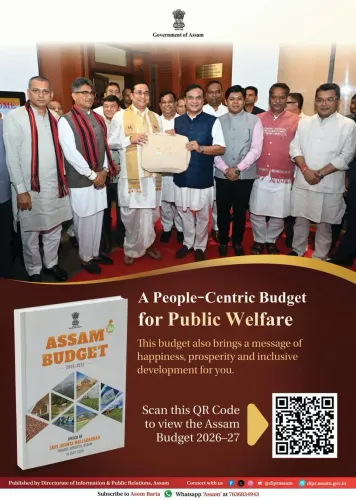
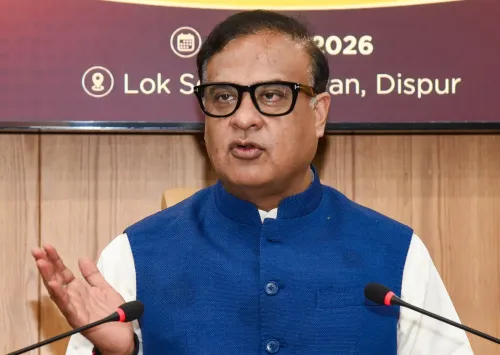
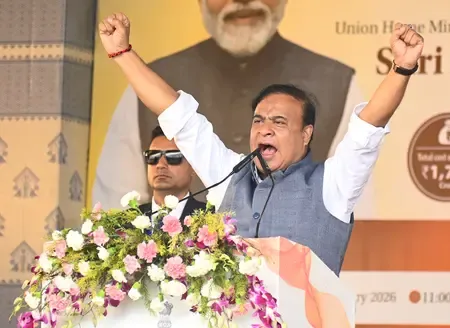
Assam Chief Minister Himanta Biswa Sarma praised Prime Minister Narendra Modi and Finance Minister Nirmala Sitharaman for delivering the Viksit Bharat Budget 2026, highlighting how the Central Budget achieves a harmonious balance between India's global ambitions and grassroots development.
“Assam and the eastern region will gain significantly from this reform-focused Budget,” Sarma shared in a post on X.
Tripura Chief Minister Manik Saha congratulated the Prime Minister and Finance Minister, stating that the Budget serves as a visionary roadmap for India’s evolution into a developed nation by 2047.
“From manufacturing and top-tier infrastructure to healthcare and tourism; from empowering rural communities to adopting cutting-edge AI; from modern sports facilities to sacred pilgrimage sites, this Budget fuels the aspirations of our youth, women, and farmers across every locality,” Saha remarked in a post on X.
Nagaland’s Higher Education and Tourism Minister Temjen Imna Along noted that the Union Budget sends a powerful message that services, education, and tourism will be critical to India’s next growth phase, particularly for Nagaland.
He emphasized the plan to create University Townships along major routes and a high-powered ‘Education to Employment and Enterprise’ standing committee, which underscores the importance of aligning higher education with job readiness and entrepreneurship—an area where Nagaland is already progressing.
In the tourism domain, Along welcomed the elevation of the National Council for Hotel Management to a National Institute of Hospitality, a pilot project to train 10,000 certified tourist guides, and the establishment of a National Destination Digital Knowledge Grid, stating that these initiatives will professionalize tourism and generate new opportunities for local youth.
He added that the Budget’s emphasis on MSMEs, start-ups, and creative industries, including AVGC and design education, provides avenues for young people to engage in the orange economy without having to leave the region.
Mizoram Tourism Minister Lalnghinglova Hmar mentioned that the Budget positions tourism at the crossroads of job creation, cultural preservation, and sustainable regional growth, aligning closely with Mizoram’s objectives.
He noted that the focus on eco-friendly tourism, professional skill development, hospitality education, and digital documentation signifies a transition from volume-driven tourism to value-centered, experience-oriented models.
The National Destination Digital Knowledge Grid, he added, would assist in showcasing lesser-known locales and opening doors for local youth and creative professionals.
Minister Hmar also welcomed the increase in public capital expenditure to Rs 12.2 lakh crore, asserting that enhanced last-mile connectivity would improve access to remote tourism circuits.
Support for MSMEs, women-led initiatives, and community entrepreneurship would guarantee that tourism development remains inclusive, he added.
Arunachal Pradesh’s Minister for Tourism, Education, Rural Works, and Parliamentary Affairs, Pasang Dorjee Sona, stated that the Union Budget reflects a profound appreciation of India’s diversity by concentrating on capacity building, connectivity, and cultural continuity.
For Arunachal Pradesh, he noted that the focus on Purvodaya, sustained capital investments, and enhanced fiscal devolution under the 16th Finance Commission solidifies the groundwork for decentralized and long-lasting growth.
Sona cited the Budget as a shift from welfare provision to capability building, highlighting initiatives such as University Townships, district-level girls’ hostels, and the Education-to-Employment Standing Committee as particularly pertinent for remote and border areas.
Additionally, he underscored the focus on digital documentation of heritage through the National Destination Digital Knowledge Grid, support for high-value agriculture like agarwood, the expansion of SHE Marts under the Lakhpati Didi initiative, and improved last-mile connectivity as measures designed to enhance rural livelihoods and support women-led enterprises.
The proposed Buddhist Circuit initiative strengthens Arunachal Pradesh’s position as a civilizational link between India and Asia.
Leaders from the Northeastern states affirmed that the Union Budget 2026–27 delivers a balanced, future-oriented roadmap that connects education, infrastructure, cultural preservation, and economic prospects, empowering the region to actively contribute to Viksit Bharat.
Point of View
It's evident that the Union Budget 2026-27 is a comprehensive strategy that reflects a deep understanding of regional needs while aligning with national goals. The positive response from Northeastern leaders showcases a unified vision for inclusive growth, infrastructure development, and cultural preservation, which are essential for India's journey towards becoming a developed nation.
NationPress
30 Sept 2026
Frequently Asked Questions
What is the significance of the Union Budget 2026-27?
The Union Budget 2026-27 is seen as a transformative framework aimed at guiding India towards Viksit Bharat by 2047, focusing on inclusive growth, infrastructure development, and regional empowerment.
How do Northeastern leaders view the budget?
Northeastern leaders have praised the budget as a visionary roadmap that aligns with their regional aspirations and emphasizes essential sectors like education, tourism, and MSMEs.
What initiatives are included in the budget for the Northeast?
The budget includes various initiatives such as the establishment of University Townships, enhanced capital expenditure, and support for MSMEs and tourism sectors, which are vital for regional growth.