What Does the India-Oman CEPA Mean for Economic Relations?

Synopsis
The India-Oman CEPA marks a groundbreaking shift in economic collaboration, granting extensive market access and tariff concessions across various sectors. This agreement not only strengthens bilateral trade but also opens new avenues for foreign investment and service expansion.
Key Takeaways
98.08% of Oman’s tariff lines will have zero-duty access for Indian goods.
Full tariff elimination for major labor-intensive sectors.
India is liberalizing tariffs on 77.79% of its total tariff lines.
Over 700,000 Indians reside in Oman, contributing to the economy.
Bilateral trade exceeds $10 billion .
Muscat/New Delhi, Dec 18 (NationPress) The Comprehensive Economic Partnership Agreement (CEPA) between India and Oman provides remarkable market access for Indian products with zero-duty access on 98.08% of Oman’s tariff lines, encompassing 99.38% of India's exports by value, as reported by the government on Thursday.
This agreement secures exceptional tariff concessions for India from Oman. Key labor-intensive sectors—including gems and jewellery, textiles, leather, footwear, sports goods, plastics, furniture, agricultural products, engineering products, pharmaceuticals, medical devices, and automobiles—will experience full tariff elimination.
The Commerce Ministry highlighted that immediate tariff elimination is being provided for 97.96% of tariff lines.
India, on its part, is liberalizing tariffs on 77.79% of its total tariff lines, which covers 94.81% of India’s imports from Oman by value. For products of interest to Oman that are sensitive to India, the offer primarily involves a tariff-rate quota (TRQ) based tariff liberalization.
To protect its interests, India has excluded sensitive products from concessions, particularly agricultural items such as dairy, tea, coffee, rubber, and tobacco products; as well as gold and silver bullion, jewelry, and other labor-intensive goods like footwear and sports goods.
Oman has significant global services imports totaling $12.52 billion, with Indian exports accounting for 5.31% of Oman's global imports, showcasing a vast unexploited potential for Indian service providers.
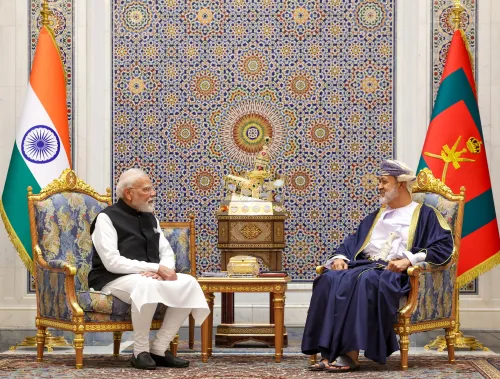
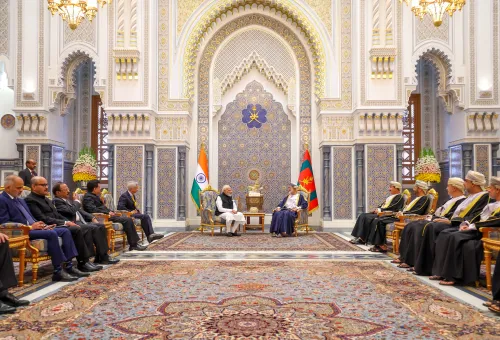
On Thursday, India and Oman took a pivotal step towards a robust economic partnership with the signing of CEPA under the enlightened leadership of Prime Minister Narendra Modi, the statement noted.
Commerce and Industry Minister Piyush Goyal and Oman’s Minister of Commerce, Industry and Investment Promotion, Qais bin Mohammed Al Yousef, formalized the agreement.
Approximately 700,000 Indian nationals reside in Oman, including Indian merchant families with a history spanning over 200–300 years, significantly contributing to Oman’s economy and society. Indian businesses have established a robust presence in Oman, with over 6,000 Indian establishments operating across various sectors.
Annual remittances nearing $2 billion further illustrate the depth of economic ties. The bilateral trade between India and Oman exceeds $10 billion, with promising prospects for growth under the CEPA framework.
The CEPA also facilitates 100% Foreign Direct Investment (FDI) by Indian companies in major service sectors in Oman through commercial presence, thus opening extensive opportunities for India’s service industry in the region.
Point of View
The India-Oman CEPA is a strategic move that enhances economic cooperation and showcases India's growing influence in global trade. This partnership not only benefits both nations economically but also strengthens cultural ties, paving the way for a prosperous future.
NationPress
2 Oct 2026
Frequently Asked Questions
What is the CEPA between India and Oman?
The CEPA is a Comprehensive Economic Partnership Agreement that enhances trade relations by providing zero-duty access for a majority of Indian goods to Oman.
Which sectors will benefit from the CEPA?
Key sectors include gems and jewellery, textiles, leather, sports goods, agricultural products, and pharmaceuticals, among others.
How does the CEPA affect Indian service providers?
The CEPA opens up significant opportunities for Indian service providers, especially in sectors where Oman has substantial global service imports.
What are the remittance figures from India to Oman?
Annual remittances from India to Oman are approximately $2 billion, reflecting strong economic ties.
What is the significance of this agreement?
The CEPA signifies a major step towards strengthening economic partnership, enhancing bilateral trade, and promoting foreign investment.