India targets 300 GW power capacity in 2026 as demand hits record 271 GW
Synopsis
India's peak electricity demand hit a record 271 GW this summer — and the government says it was ready with 284 GW on standby. Now it is targeting 300 GW for next year, driven by AI, EVs, and data centres. With installed capacity doubling from 249 GW in 2014 to 542 GW today, the scale of India's power build-out is one of the largest in the world — and it is accelerating.
Key Takeaways
India recorded its highest-ever peak electricity demand of 271 gigawatts this summer, which was fully met.
The government had pre-positioned capacity of 284 gigawatts to prevent any shortage.
Power capacity of 300 gigawatts is being prepared for next year, driven by data centres , EVs , and AI .
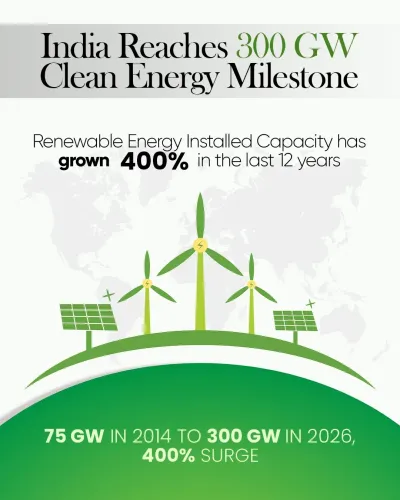
Installed generation capacity has grown from 249 GW in 2014 to 542 GW today.
Gujarat has installed more than 50 GW of renewable energy and is leading the National Green Hydrogen Mission .
The Saubhagya Scheme has provided electricity connections to nearly three crore households .
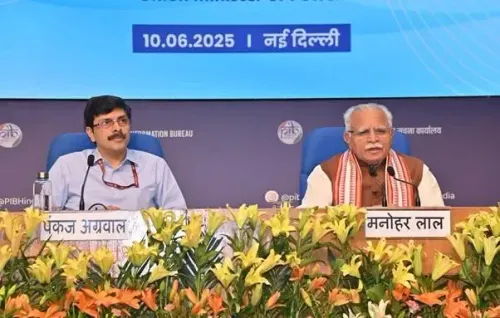
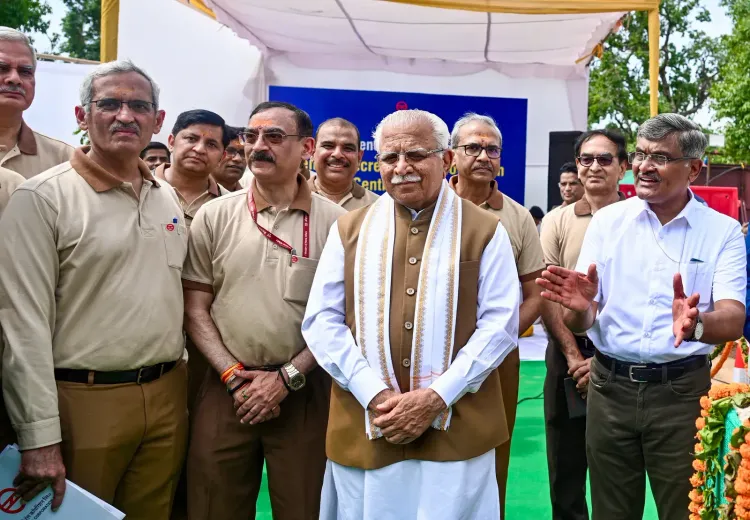
India is preparing to commission power generation capacity of 300 gigawatts in the coming year to keep pace with surging electricity demand driven by data centres, electric vehicles, and artificial intelligence, Union Power Minister Manohar Lal Khattar said on Monday, 29 June. The minister made the announcement while addressing the inaugural session of the Vibrant Gujarat Regional Conference (VGRC) for Central Gujarat in Vadodara.
Record Demand and How India Met It
Khattar disclosed that India recorded its highest-ever peak electricity demand since Independence this summer, with peak load reaching approximately 271 gigawatts. The country not only met that demand but had pre-positioned capacity of up to 284 gigawatts to ensure there were no supply shortfalls.
'As summers have become increasingly intense this year, India recorded its highest-ever peak electricity demand. Peak power demand across the country reached about 271 gigawatts, and we successfully met it. Not only that, we had prepared capacity of up to 284 gigawatts to ensure that there would be no shortage,' Khattar said.
Why Demand Is Set to Climb Further
The minister projected an additional 30 gigawatts of demand growth in the near term, attributing it specifically to the rapid expansion of data centres, EV adoption, and AI infrastructure. Accordingly, the government has already planned for a 300 GW capacity base for the next year — a figure that reflects proactive rather than reactive grid management.
'Over the coming years, we estimate that electricity demand will increase by another 30 gigawatts because of data centres, electric vehicles and artificial intelligence. Accordingly, we have already prepared for a capacity of 300 gigawatts for next year,' Khattar said.
A Decade of Transformation: 2014 to Today
Khattar drew a sharp contrast with India's power position in 2014, when peak demand stood at around 136 gigawatts — demand that the grid could not reliably meet at the time. India's installed generation capacity has since grown from 249 gigawatts in 2014 to 542 gigawatts today, effectively doubling while demand itself doubled. The minister attributed this transformation to long-term planning and reforms undertaken over the past 12 years under Prime Minister Narendra Modi.
On the access front, the Saubhagya Scheme has delivered electricity connections to nearly three crore households, while the PM Surya Ghar Muft Bijli Yojana is expanding rooftop solar adoption. The government's 'One Nation, One Grid, One Frequency' principle is also deepening grid integration across states.
Gujarat's Role as a National Power Leader
Khattar singled out Gujarat as a power-surplus state and a national frontrunner in renewable energy, noting that the state has already installed more than 50 gigawatts of renewable capacity. He cited the Renewable Energy Park in Kutch as a flagship example of the state's ability to balance industrial growth with environmental sustainability.
The minister also highlighted Gujarat's leading role in the National Green Hydrogen Mission, describing the state as rapidly emerging as one of the world's most competitive green manufacturing hubs at a time when global industry is pivoting toward low-carbon production.
Investor Confidence and the Road to Viksit Bharat 2047
Khattar framed reliable electricity as a prerequisite for investment, arguing that industrial decisions are made long before the first machine is installed — contingent on assurance of power availability, modern infrastructure, and stable policy. He said continued investment in the power sector would support India's goal of becoming a developed nation by 2047 and reinforce Gujarat's standing as a premier industrial destination.
Point of View
But the more telling number is the gap between the record 271 GW peak demand and the 284 GW standby capacity — a buffer of barely 13 GW, or under 5%. As AI infrastructure and EV charging loads grow non-linearly, that margin could compress faster than linear projections suggest. India's installed capacity doubling since 2014 is a genuine achievement, yet the quality of that capacity — particularly the share that is firm, dispatchable power versus weather-dependent renewables — will determine whether the grid holds under the next demand spike. Gujarat's green hydrogen ambitions add another variable: electrolysers at scale will draw enormous baseload power, and the transmission infrastructure to support that has not yet been stress-tested publicly.
NationPress
28 Sept 2026
Frequently Asked Questions
What is India's power capacity target for next year?
India is preparing power generation capacity of 300 gigawatts for next year, according to Union Power Minister Manohar Lal Khattar. This is to meet an anticipated additional demand of 30 GW driven by data centres, electric vehicles, and artificial intelligence.
What was India's record peak electricity demand this summer?
India's peak electricity demand reached approximately 271 gigawatts this summer, the highest since Independence. The government had pre-positioned capacity of up to 284 gigawatts to ensure there were no supply shortfalls.
How has India's power capacity grown since 2014?
India's installed power generation capacity has grown from 249 gigawatts in 2014 to 542 gigawatts today. Over the same period, peak demand roughly doubled from around 136 GW to 271 GW, which the grid now reliably meets.
What is Gujarat's contribution to India's power sector?
Gujarat is a power-surplus state with more than 50 gigawatts of renewable energy capacity already installed. The state is also leading the National Green Hydrogen Mission and is home to the Renewable Energy Park in Kutch, one of the country's flagship clean energy projects.
Which government schemes are expanding electricity access in India?
The Saubhagya Scheme has provided electricity connections to nearly three crore households. The PM Surya Ghar Muft Bijli Yojana is further expanding access through rooftop solar power installations across the country.