Is India Ready to Expand UPI to More Nations, Especially in East Asia?
Synopsis
India is on a mission to broaden the global presence of its digital payment system, UPI, focusing on East Asia. Financial Services Secretary M Nagaraju shared insights into UPI's success and its potential for international growth at the Global Inclusive Finance India Summit.
Key Takeaways
India aims to expand UPI's global presence, especially in East Asia.
UPI accounts for nearly 50% of India's digital transactions.
Currently accepted in eight countries, UPI facilitates cashless payments for Indian travelers.
The NPCI manages UPI, supported by the Reserve Bank of India.
Growth of micro-enterprises is vital for India's economic development.
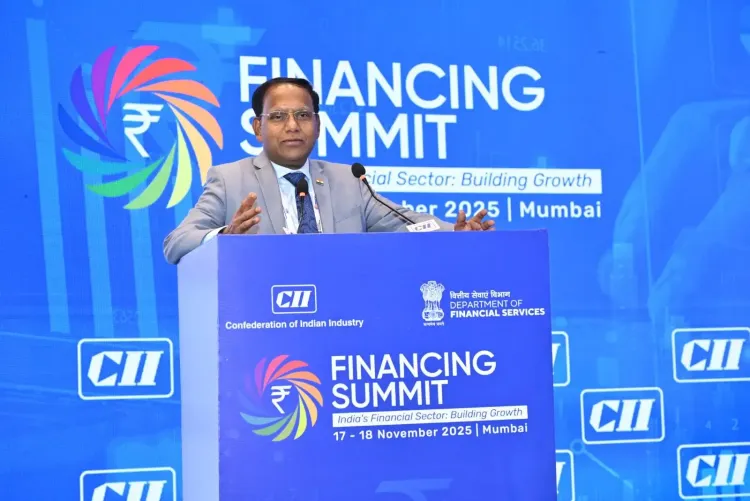
New Delhi, Jan 13 (NationPress) India is making strides to enhance the global footprint of its indigenous digital payment platform, Unified Payments Interface (UPI), targeting an expansion into additional nations, particularly in East Asia, as stated by Financial Services Secretary M Nagaraju on Tuesday.
During his address at the Global Inclusive Finance India Summit, Nagaraju emphasized the pivotal role UPI has played in propelling India’s digital payment revolution, now representing nearly 50 percent of all digital transactions nationwide.
He expressed the government's eagerness to extend this success to more global markets.
Currently, UPI is operational in eight countries: Bhutan, Singapore, Qatar, Mauritius, Nepal, the UAE, Sri Lanka, and France.
This international acceptance of UPI enables Indian travelers to conduct digital transactions abroad without relying on cash or international credit cards.
“We have already made inroads into some nations and are looking to broaden our reach further, especially in East Asia,” Nagaraju remarked, highlighting the government's ambition to establish UPI as a universally recognized payment method.
He also pointed out the impressive scale of UPI's usage in India, with transactions exceeding 21 billion in December 2025 alone.
According to him, this swift adoption of digital payments correlates strongly with the substantial growth of bank accounts under the Pradhan Mantri Jan Dhan Yojana, coupled with a consistent increase in the average balance held within these accounts.
UPI is overseen by the National Payments Corporation of India, which governs the nation's retail payment and settlement frameworks.
The NPCI initiative is supported by the Reserve Bank of India and the Indian Banks' Association.
In addition to discussing digital payments, Nagaraju underscored the importance of fostering the development of micro-enterprises within the country.
He highlighted that despite the existence of millions of micro-units, their transition into medium and large enterprises has been limited.
This transition, he stated, can only occur when micro-enterprises receive enhanced support in areas such as market access, productivity enhancements, and the adoption of technology and modern equipment.
Point of View
It's clear that India's push to expand UPI internationally signifies a strategic move to establish itself in the global digital payment landscape. As the world increasingly embraces cashless transactions, ensuring UPI's growth and acceptance in international markets is a forward-thinking initiative that can enhance India's economic stature.
NationPress
24 Sept 2026
Frequently Asked Questions
How many countries currently accept UPI?
UPI is currently accepted in eight countries: Bhutan, Singapore, Qatar, Mauritius, Nepal, the UAE, Sri Lanka, and France.
What is the significance of UPI for Indian tourists?
UPI enables Indian tourists to make digital payments abroad without needing cash or international credit cards.
What role does NPCI play in UPI?
The National Payments Corporation of India (NPCI) oversees UPI, managing the country's retail payment and settlement systems.
How does UPI contribute to India's economy?
UPI significantly boosts India's digital payments landscape, accounting for nearly 50% of all digital transactions and promoting financial inclusion.