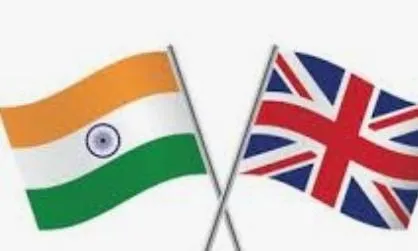
India-UK FTA to double bilateral trade to $115 billion by 2030, add up to 10 lakh jobs

Synopsis
A fresh Assocham study puts hard numbers on the India-UK FTA: bilateral trade could nearly double to $115 billion by 2030, with up to 10 lakh new jobs on the line — but only if Indian exporters clear the quality, certification, and sustainability bar the UK market demands. The agreement is already live; the race to capture its gains has begun.
Key Takeaways
The India-UK FTA entered into force on 15 July 2026 , marking India's first major Western trade pact in over a decade.
An Assocham study projects bilateral trade rising from $58 billion (2025-26) to $115 billion by 2030 .
The agreement could generate 7 lakh to 10 lakh new jobs , concentrated in textiles, leather, engineering goods, pharmaceuticals, and automotive sectors.
Assocham President Nirmal K Minda flagged that gains depend on meeting Rules of Origin , quality certification, and international sustainability standards.
Simpler customs and digital trade provisions are expected to reduce compliance costs and turnaround times for exporters.
The pact is described as a union of complementary economies — India's manufacturing base and young workforce paired with the UK's advanced technology and services expertise.
The India-UK Free Trade Agreement (FTA), which entered into force on 15 July 2026, could propel bilateral trade from $58 billion in 2025-26 to $115 billion by 2030, while generating between 7 lakh and 10 lakh new jobs, according to a study by the Assocham Global Research and Strategy Centre. The findings, released on 25 July, position the agreement as the most consequential trade pact India has signed in recent years.
Key Projections from the Assocham Study
The study projects a near-doubling of two-way trade within five years, driven by expanded market access in labour-intensive sectors. Textiles, leather, engineering goods, pharmaceuticals, and automotive components are among the industries expected to see the most immediate gains. The engineering goods sector, in particular, is seen as a significant driver of MSME growth and downstream job creation.
The agreement also includes simpler customs procedures and digital trade provisions that are expected to reduce compliance burdens, cut turnaround times, and create a more responsive trade environment for Indian exporters.
What Industry Leaders Said
Nirmal K Minda, President of Assocham, said Indian businesses would need to meet stringent product quality standards, certification requirements, Rules of Origin compliance, and international sustainability benchmarks to fully capitalise on the agreement. 'Ease of doing business reforms and continued investments in infrastructure and supply chain will hold the key to meeting these criteria,' Minda said.
Why the India-UK Pairing Works
The study describes the India-UK Comprehensive Economic and Trade Agreement (CETA) as a union of complementary economies. India brings a large domestic market, a young working-age population, a robust MSME base, and competitive strength in labour-intensive manufacturing. The UK contributes advanced technology, financial services expertise, and high-value service capabilities.
According to Assocham, these structural complementarities are expected to support long-term economic engagement, collaborative innovation, and supply chain resilience — particularly relevant as global trade routes face mounting uncertainty.
Conditions for Realising the Potential
The study is explicit that the projected gains are conditional, not automatic. Sustained competitiveness will be essential, requiring Indian exporters to upgrade quality infrastructure, invest in logistics, and align with evolving global sustainability standards. The agreement opens the door; whether Indian industry walks through it will depend on execution at the firm and policy level.
This comes amid a broader push by India to diversify its trade partnerships, with FTA negotiations also active with the European Union, Gulf Cooperation Council, and several Southeast Asian economies. The UK pact, now live, is the first major Western FTA India has brought into force in over a decade.
What Comes Next
With the agreement already operational, attention shifts to sector-specific utilisation rates and whether Indian exporters — especially smaller firms — can meet the Rules of Origin and certification thresholds required to access preferential tariffs. Industry bodies are expected to roll out compliance support programmes in the coming months.
Point of View
Often because MSME exporters lacked the quality infrastructure or certification capacity to access preferential terms. The India-UK FTA's Rules of Origin requirements are particularly demanding, and without a credible firm-level support architecture, the gains could accrue disproportionately to large organised players rather than the labour-intensive small manufacturers the study highlights. The job creation figure of 7-10 lakh also warrants scrutiny: it is a range, not a commitment, and the lower end represents a fraction of India's annual workforce entrants. The real test of this agreement will be visible in export utilisation rates two years from now — not in projection reports released the week it takes effect.
NationPress
24 Oct 2026
Frequently Asked Questions
What does the India-UK FTA mean for India's exports?
The India-UK Free Trade Agreement, in force since 15 July 2026, is projected to help India's bilateral trade with the UK nearly double from $58 billion in 2025-26 to $115 billion by 2030, according to an Assocham study. Key export sectors set to benefit include textiles, leather, engineering goods, pharmaceuticals, and automotive components.
How many jobs could the India-UK FTA create?
The Assocham study estimates the FTA could generate between 7 lakh and 10 lakh new employment opportunities in India. The gains are expected to be concentrated in labour-intensive industries that now have greater market access to the UK.
When did the India-UK FTA come into force?
The India-UK Free Trade Agreement officially entered into force on 15 July 2026. The Assocham study assessing its economic impact was released on 25 July 2026.
What conditions must India meet to benefit from the FTA?
According to Assocham President Nirmal K Minda, Indian businesses must comply with product quality standards, certification requirements, Rules of Origin provisions, and international sustainability norms. Ease of doing business reforms and infrastructure investment are also cited as prerequisites for realising the agreement's full potential.
Why is the India-UK FTA considered strategically significant?
It is India's first major trade agreement with a large Western economy to come into force in over a decade, and arrives as India seeks to diversify its trade partnerships amid global economic uncertainty. The UK's strengths in advanced technology and financial services complement India's manufacturing base and young workforce, according to the Assocham study.