India-US bilateral trade agreement: Both sides committed, says Commerce Secretary
Synopsis
India’s Commerce Secretary has publicly reaffirmed commitment to the India-US bilateral trade deal — but the real story is the mounting pressure on that commitment. A 10% Section 301 duty on Indian exports and a Senate bill that could trigger 100% tariffs on Russian-oil buyers like India are testing New Delhi’s diplomatic bandwidth, even as it quietly diversifies energy imports across 41 countries.
Key Takeaways
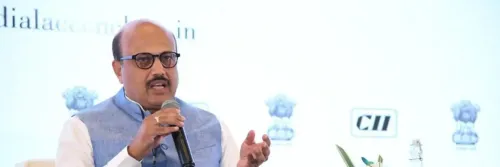
Commerce Secretary Rajesh Agarwal confirmed on 13 August that both India and the US remain committed to the bilateral trade agreement (BTA) framework agreed in February .
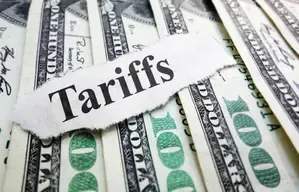
India’s exports face an additional 10 per cent duty under a US Section 301 investigation into alleged forced labour concerns.
The US Senate has passed a sanctions bill allowing President Trump to impose tariffs of up to 100 per cent on top buyers of Russian oil, including India.
Russia accounted for more than half of India’s total crude oil imports in July .
India has diversified crude sourcing to 41 countries (from 27) and LNG sourcing to 15 countries (from 6), with the US now a major LNG supplier.
India imports over 85 per cent of its crude oil requirement, making energy supply resilience a strategic priority.
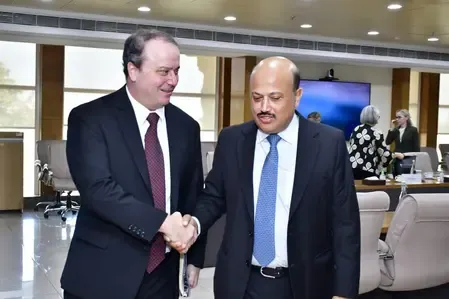
Commerce Secretary Rajesh Agarwal on Thursday, 13 August confirmed that India and the United States remain firmly committed to finalising the proposed bilateral trade agreement (BTA), with regular contacts ongoing between the two sides. The assurance comes as fresh tariff-related developments in the US have introduced new layers of uncertainty into the negotiations.
What the Commerce Secretary Said
Agarwal told journalists that both governments are aligned on the framework deal reached in February. “Our sense is both sides are completely committed to move ahead and finalise the framework that was agreed in February, and the two countries are in regular contact on the issue,” he said. He added: “We are engaged with the US side on the trade deal and our contacts are regular.”
New Tariff Pressures Clouding the Picture
Despite the stated commitment, the path to a final agreement is complicated by two significant US-side developments. First, India’s exports currently face an additional 10 per cent duty under a Section 301 investigation examining alleged forced labour concerns. Second, the US Senate has passed a sanctions bill granting President Donald Trump authority to impose tariffs of up to 100 per cent on goods from top buyers of Russian oil — a category that squarely includes India.
India’s crude imports from Russia have risen sharply, accounting for more than half of the country’s total oil imports in July. Western nations argue these purchases help finance Russia’s ongoing war against Ukraine. On the sanctions legislation, Agarwal was measured: “It is a legislative process of the US, which is underway and is their internal process,” he said, declining to elaborate further.
India’s Energy Diversification Drive
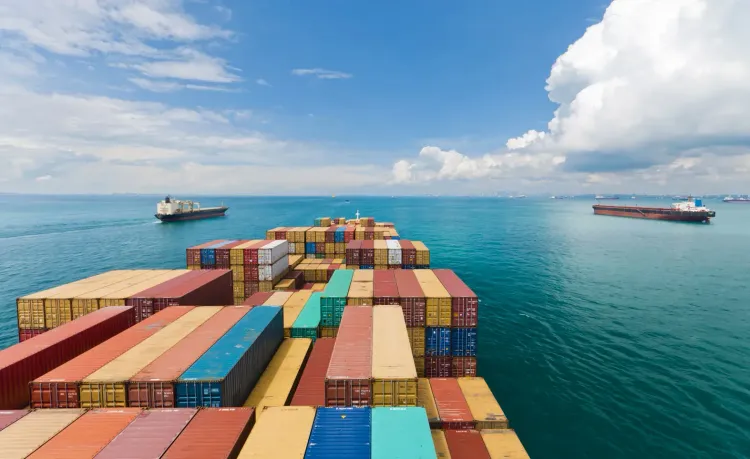
Against this backdrop of geopolitical volatility, India has significantly broadened its energy sourcing. The country has diversified crude oil imports to 41 supplier nations, up from 27 previously, following the outbreak of the Iran war and the closure of the Strait of Hormuz — a chokepoint through which roughly 20 per cent of the world’s oil and gas exports typically transit. Liquefied natural gas (LNG) sourcing has similarly expanded from 6 countries to 15, with the US now accounting for a major share of India’s LNG imports.
India imports more than 85 per cent of its crude oil requirement, making supply chain resilience a strategic imperative, particularly as global energy markets remain highly volatile amid ongoing geopolitical uncertainty.
What Comes Next
The first phase of the BTA had made measurable headway in February, but the accumulation of US tariff actions — Section 301 duties, the Senate sanctions bill, and broader trade posturing — means New Delhi will need to navigate multiple fronts simultaneously. Trade watchers will closely monitor whether the two sides can insulate the BTA track from the escalating tariff environment, or whether fresh US legislative moves force a renegotiation of terms.
Point of View
But it now hands Washington a significant tariff lever. The Commerce Secretary’s careful refusal to engage on the sanctions bill signals that New Delhi is watching closely but has no immediate counter-move. The BTA’s survival will depend on whether both governments treat the trade track as insulated from the energy-geopolitics track — an increasingly difficult separation to maintain.
NationPress
28 Sept 2026
Frequently Asked Questions
What is the India-US bilateral trade agreement (BTA)?
The India-US bilateral trade agreement is a proposed trade deal between the two countries, with the first-phase framework agreed upon in February 2025. Commerce Secretary Rajesh Agarwal confirmed on 13 August that both sides remain committed to finalising it, with regular contacts ongoing.
Why is the India-US trade deal facing uncertainty?
Fresh US tariff developments have complicated negotiations. India’s exports face an additional 10 per cent duty under a Section 301 investigation, and the US Senate has passed a sanctions bill that could impose tariffs of up to 100 per cent on top buyers of Russian oil, including India.
How much Russian oil does India import?
Russia accounted for more than half of India’s total crude oil imports in July. India imports over 85 per cent of its crude requirement and has been diversifying suppliers, but Russian crude has become its single largest source.
How has India diversified its energy imports?
India has expanded crude oil sourcing from 27 countries to 41, partly in response to the Iran war and the closure of the Strait of Hormuz. LNG imports have similarly grown from 6 source countries to 15, with the US now supplying a major share of India’s LNG.
What did Commerce Secretary Rajesh Agarwal say about the US sanctions bill?
Agarwal described it as ‘a legislative process of the US, which is underway and is their internal process,’ and declined to discuss it further, signalling that New Delhi is monitoring the development without publicly escalating its response.