How is the Indian diaspora becoming the UK’s most economically successful migrant community?

Synopsis
A recent study reveals that the Indian community has become the most economically successful migrant group in the UK. This article explores their significant contributions to the British economy, public services, and the global landscape, highlighting four key waves of migration and their impacts on society.
Key Takeaways
Indian diaspora tops UK's migrant success.
Community's contributions span over 70 years.
Professionals hold key roles in technology sectors.
Entrepreneurship revitalizes local economies.
Four significant waves of migration highlighted.
New Delhi/London, Feb 8 (NationPress) A recent study has shown that the Indian community has established itself as the most economically prosperous migrant group within the United Kingdom. This report emphasizes the community's longstanding and diverse contributions to the economy, public services, and global influence of Britain.
The research, carried out by Aston University in collaboration with the multicultural advertising agency Here & Now 365, examines extensive labor market and economic data, positioning Indians at the pinnacle of migrant achievement in the UK, as reported by Khalsa Vox.
The results underline remarkable employment rates, impressive academic performance, and a deeply ingrained entrepreneurial spirit as pivotal elements shaping the community's influence.
Indian professionals make up a significant portion of the workforce in Britain's technology and IT sectors. This is especially important considering the UK's status as the world's second-largest tech hub, following the United States and China.
Businesses led by Indians and professional networks have been instrumental in creating job opportunities, enhancing skills development, and fostering knowledge exchange across the nation, the Khalsa Vox report noted, referencing the university's findings.
The study states, "The Indian diaspora is intricately woven into the narrative of the UK's growth," highlighting various businesses, research initiatives, and networks focused on innovation that have contributed to both domestic and international development.
Beyond economic contributions, the research also points out how successive generations of Indians have fortified Britain’s public services and elevated its global stature.
This influence is traced through four significant waves of migration since India gained independence, collectively narrating a story of resilience, adaptation, and lasting contributions over more than seventy years.
The initial major migration wave occurred after World War II, a time when Britain faced critical labor shortages.
Indian migrants filled vital roles in manufacturing, transport, and public services, aiding the stabilization of the post-war economy and contributing to the foundational development of institutions like the National Health Service, the report indicated.
The second wave of migration started in the early 1970s, following the expulsion of Asians from East Africa during Idi Amin's regime. Many who moved to Britain brought valuable business acumen and entrepreneurial skills with them.
Over the years, they established thriving businesses, revitalized local economies, and fostered a robust entrepreneurial culture in various towns and cities throughout the UK.
The third migration phase mirrored a transformation in Britain's economic landscape towards knowledge-driven industries. During this time, Indian migrants increasingly comprised highly skilled professionals in finance, healthcare, engineering, education, and other specialized fields.
This transition marked a shift from predominantly blue-collar jobs to leadership roles in industries essential for sustainable economic development.
The latest wave of migration has been influenced by the post-Brexit and post-pandemic landscape. The study underscores the strategic importance of Indian talent in mitigating skill shortages, particularly in healthcare, social care, and technology sectors.
Currently, Indian-born professionals represent approximately 15 percent of the UK's technology workforce, highlighting their escalating influence in fostering innovation, digital transformation, and productivity, as mentioned in the report.
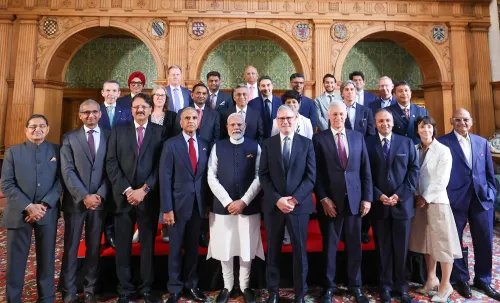
The findings were officially presented during an event at the House of Lords, bringing together policymakers, industry leaders, academics, and cultural representatives.
The unveiling at one of Britain's key political venues demonstrates a growing acknowledgment of the role diaspora communities play in shaping modern British society and economic progress.
Point of View
The findings of this study underscore the significant role the Indian diaspora plays in the UK's economy. Their contributions span various sectors, demonstrating resilience and adaptability. This narrative of success enhances our understanding of multiculturalism in Britain and highlights the importance of supporting diverse communities for national growth.
NationPress
13 Oct 2026
Frequently Asked Questions
What are the key factors contributing to the success of the Indian diaspora in the UK?
Key factors include high employment rates, academic achievements, and a strong entrepreneurial culture. These elements enable the community to contribute significantly to the economy.
How has Indian migration influenced the UK's economy?
Indian migrants have filled essential roles in various industries, particularly in technology and healthcare, helping to stabilize and grow the UK economy over several decades.
What are the historical waves of Indian migration to the UK?
The history includes four major migration waves, starting after World War II, followed by movements in the 1970s, the shift towards knowledge industries, and the recent post-Brexit and post-pandemic migration.