India's third NGOPV to be launched in Kolkata on August 11
Synopsis
India's NGOPV programme hit a fresh milestone on 11 August as GRSE launched its second next-gen patrol vessel in Kolkata — the third of 11 ships overall. With deliveries expected from 2028, these 3,000-tonne stealth-capable warships are a cornerstone of the Navy's push toward a 200-ship fleet.
Key Takeaways
The third NGOPV out of 11 ordered will be launched at GRSE, Kolkata on 11 August 2026 .
This is GRSE's second NGOPV launch; the first, Sanghmitra , was launched on 20 May 2026 .
Goa Shipyard Limited (GSL) launched its first NGOPV, Shachi , on 31 March 2026 .
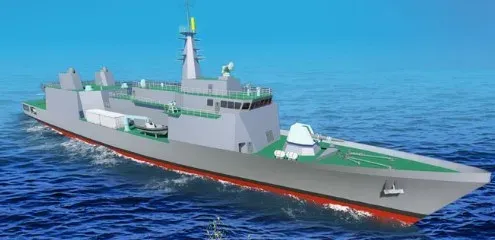
Each vessel is 113 metres long, displaces 3,000 tonnes , and has an endurance of 8,500 nautical miles .
Navy deliveries are expected to begin in 2028 , supporting the target of a 200-ship fleet .
All future Indian Navy warships will be next-generation variants, including NG Corvettes , Frigates , and Destroyers .
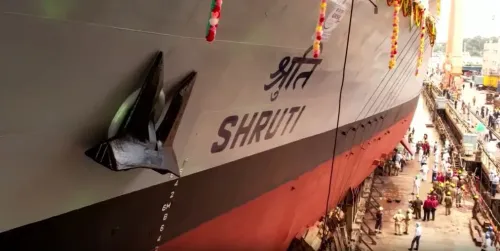
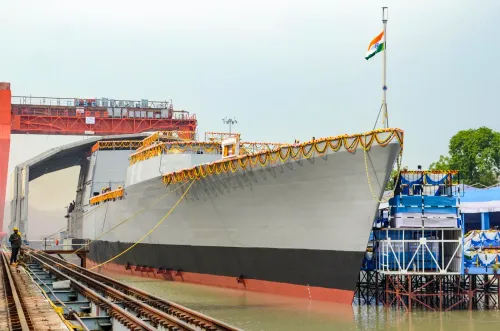
The Indian Navy's third next generation offshore patrol vessel (NGOPV) out of a total order of 11 ships is set to be launched at Kolkata on Tuesday, 11 August, officials confirmed on Sunday. The warship is being built by Garden Reach Shipbuilders and Engineers (GRSE) Limited and marks the company's second NGOPV launch this year.
Key Developments
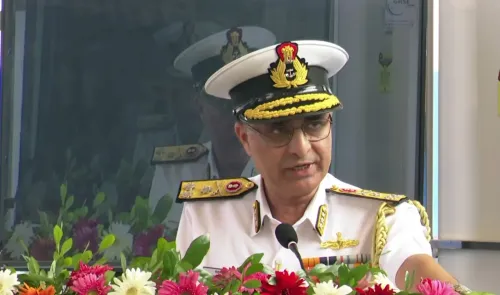
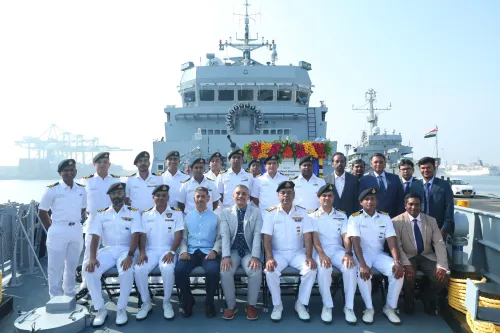
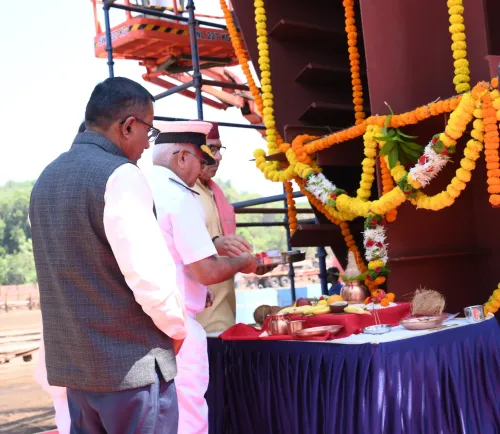
Manika Sadhu, wife of Vice Admiral Sanjay Sadhu, the Indian Navy's Controller of Warship Production and Acquisition (CWP&A), will formally launch the vessel at the GRSE facility. Vice Admiral Sadhu will serve as chief guest at the ceremony.
The first NGOPV launched by GRSE, named Sanghmitra, was commissioned on 20 May 2026. Goa Shipyard Limited (GSL), which is building seven of the 11 NGOPVs, had earlier launched its first vessel — named Shachi — on 31 March 2026. With three ships now moving to the outfitting stage, the Navy expects deliveries to begin sometime in 2028.
Capabilities and Design
Each NGOPV will measure approximately 113 metres in length and 14.6 metres in width, with a displacement of 3,000 tonnes. The vessels will achieve top speeds of up to 23 knots and carry an endurance of 8,500 nautical miles at 14 knots. A shallow draught requirement of just four metres enables operations in coastal waters.
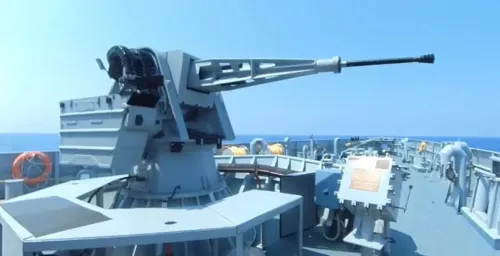
According to officials, the NGOPVs are a significant upgrade over the Navy's existing Offshore Patrol Vessels, incorporating greater stealth features, advanced armaments, and superior endurance. 'These are far more advanced than the OPVs the Navy has at the moment,' a senior official in New Delhi said.
Operational Roles
Once commissioned, the NGOPVs are designed to perform a wide spectrum of missions — from protecting offshore assets and conducting maritime interdiction to visit, board, search and seizure (VBSS) operations. They will also participate in presence-cum-surveillance patrols, mine warfare, and support for special operations.
Beyond combat roles, the vessels are equipped for anti-piracy missions, counter-infiltration, convoy escort, and non-combatant evacuation operations. They can additionally function as hospital ships and COMINT (communications intelligence) platforms, as well as provide fleet maintenance support and humanitarian assistance.
Broader Naval Modernisation
The NGOPV programme sits within a larger fleet modernisation drive. Officials indicated that all future warships will be next-generation variants, including NG Corvettes, NG Frigates, NG Survey Vessels, and NG Destroyers. The overarching goal is to build India's Navy toward a 200-ship fleet — a target the NGOPV deliveries from 2028 onwards are expected to support.
With the programme reportedly on schedule, the Navy's modernisation trajectory appears to be gaining momentum heading into the second half of the decade.
Point of View
Where delays are the norm rather than the exception. With GRSE and GSL together building 11 vessels, this is also a meaningful test of India's 'Atmanirbhar Bharat' shipbuilding ambition — the real measure will be whether the 2028 delivery timeline holds and the vessels enter service with their full capability suite intact. The pivot to next-generation variants across every warship class signals that the Navy is done patching legacy platforms, but sustaining that modernisation pace requires consistent budget allocation and supply-chain depth that India's defence industry is still building.
NationPress
24 Sept 2026
Frequently Asked Questions
What is the NGOPV programme of the Indian Navy?
The NGOPV (Next Generation Offshore Patrol Vessel) programme involves the construction of 11 advanced warships for the Indian Navy — four by GRSE and seven by GSL. The ships are designed to replace older OPVs with more capable, stealthy, and versatile platforms.
When will the Indian Navy receive the NGOPVs?
Deliveries are expected to begin in 2028, according to officials. Three ships are currently in the outfitting stage following their respective launches in 2026.
What are the key specifications of the NGOPV?
Each NGOPV is approximately 113 metres long and 14.6 metres wide, with a 3,000-tonne displacement. The vessels can reach speeds of up to 23 knots and have an endurance of 8,500 nautical miles at 14 knots.
What roles will the NGOPVs perform?
The NGOPVs are multi-role vessels capable of coastal patrol, maritime interdiction, VBSS operations, anti-piracy, mine warfare, special operations support, humanitarian assistance, and non-combatant evacuation. They can also function as hospital and COMINT ships.
How does the NGOPV differ from the Navy's existing patrol vessels?
According to officials, NGOPVs are significantly more advanced than the Navy's current OPVs, featuring greater stealth, higher endurance, and more sophisticated armaments and equipment, enabling a broader range of operational missions.