GRSE signs ₹32,000 crore deal to build five next-generation corvettes for Indian Navy
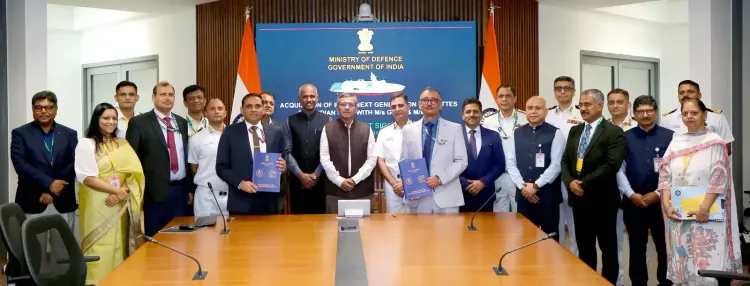
Synopsis
GRSE has landed the Indian Navy's biggest recent warship order — a ₹32,000 crore contract for five Next Generation Corvettes that are larger, faster, and more heavily armed than anything the Kolkata yard has built before. Fitted with MRSAM, anti-ship missiles, torpedo tubes, and helicopter decks, the NGCs mark a step-change in India's surface combatant capability.
Key Takeaways
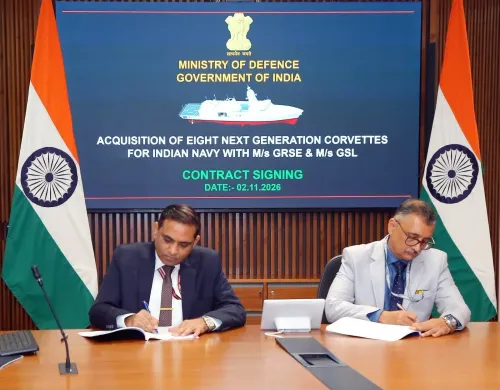
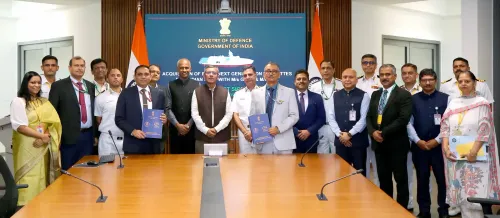
Garden Reach Shipbuilders and Engineers (GRSE) signed a ₹32,000 crore contract with the Indian Navy on 2 November 2026 to build five Next Generation Corvettes (NGCs) .
Each corvette will be 127 metres long, displace 4,950 tons , and reach a top speed of 26 knots with 14 days at-sea endurance.
Crew strength per vessel: 11 officers and 139 sailors .
Weapons suite includes MRSAM , MRAShM , 324 mm torpedo tubes , OTO Melara 76 mm SRGM , and AK 630 CIWS .
Propulsion uses a CODAG-CC architecture driving two Controllable Pitch Propellers .
The NGCs are designed for multi-role operations including ASW, anti-ship strikes, escort duties, and maritime interdiction.
Garden Reach Shipbuilders and Engineers (GRSE) Ltd on Monday, 2 November 2026, signed a contract with the Indian Navy for the construction of five Next Generation Corvettes (NGCs) valued at nearly ₹32,000 crore. The Kolkata-based state-owned shipyard was the lowest bidder for the project, marking one of the largest warship-building contracts awarded to a single Indian yard.
What the NGCs Will Look Like
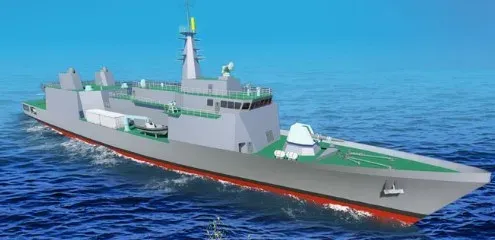
Each corvette will measure 127 metres in length and 17.6 metres in width, with a deadweight tonnage of 4,950 tons. The vessels will be capable of operating at sea without replenishment for 14 days and will reach a maximum speed of 26 knots. Crew complement is set at 11 officers and 139 sailors, as approved by a Naval Headquarters-recognised classification society.
Advanced Propulsion and Weapons Suite
The NGCs will feature a Combined Diesel and Gas turbine with Cross-Connect gearbox (CODAG-CC) propulsion architecture, driving two Controllable Pitch Propellers (CPP) — a highly sophisticated arrangement that offers both fuel efficiency at cruising speeds and burst power when required. On the weapons front, each ship will carry Medium Range Anti-Ship Missiles (MRAShM), Medium Range Surface-to-Air Missiles (MRSAM), and 324 mm torpedo tubes.
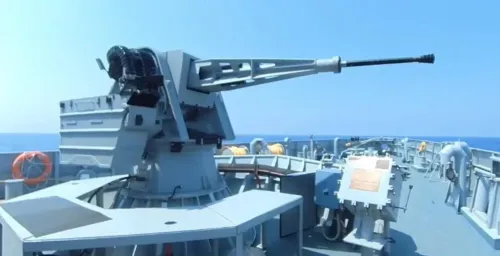
Notably, the warships will also be equipped with an OTO Melara 76 mm Super Rapid Gun Mount (SRGM) with the latest upgrade, an AK 630 Close-In Weapon System (CIWS), 12.7 mm Stabilised Remote Controlled Guns (SRCGs) fitted with an Electro-Optic Based Fire Control System, an Electro-Optical Infrared Search and Track (EOIRST) system, and a Multi-Function Surveillance, Track and Guidance Radar (MFSTAR). The vessels will also carry helicopters.
Multi-Role Operational Mandate
The NGCs are designed for a wide spectrum of missions: offensive Ship-to-Ship and Ship-to-Surface Missile Attacks, Anti-Missile Defence, Anti-Submarine Warfare (ASW), Escort Duties, and Maritime Interdiction Operations (MIO) — including Visit, Board, Search and Seizure (VBSS) operations — as well as Local Naval Defence. This multi-role profile makes them considerably more capable than GRSE's earlier guided-missile and anti-submarine warfare corvette builds.
Why This Contract Matters
GRSE has a well-established track record in corvette construction for the Indian Navy, but the NGCs represent a generational leap — larger, faster, and more heavily armed than their predecessors. The contract is also a significant milestone for India's Atmanirbhar Bharat defence indigenisation drive, with the project expected to sustain and expand the shipyard's workforce and supply chain in Kolkata. This comes amid a broader Indian Navy expansion push as strategic competition in the Indian Ocean Region intensifies. The delivery timeline has not yet been officially disclosed, but projects of this scale typically span seven to ten years from contract signing to final handover.
Point of View
000 crore contract for five warships is not routine procurement — it is a decade-long strategic commitment that will shape India's surface combatant capability well into the 2040s. What stands out is the CODAG-CC propulsion and the MRSAM integration: this is the Indian Navy acknowledging that the threat envelope in the Indian Ocean has evolved sharply, and that legacy corvettes are no longer adequate. GRSE's position as the lowest bidder also signals that Indian public-sector shipyards can now compete on cost without sacrificing capability — a direct validation of the indigenisation pipeline. The real test will be delivery discipline; India's warship programmes have historically slipped on schedule, and the Navy can ill afford that on this scale.
NationPress
2 Nov 2026
Frequently Asked Questions
What is the GRSE next generation corvette contract with the Indian Navy?
It is a ₹32,000 crore contract signed on 2 November 2026 under which Garden Reach Shipbuilders and Engineers will build five Next Generation Corvettes (NGCs) for the Indian Navy. GRSE was selected as the lowest bidder for the project.
What are the key specifications of the Next Generation Corvettes?
Each NGC will be 127 metres long and 17.6 metres wide, with a deadweight tonnage of 4,950 tons, a top speed of 26 knots, and an at-sea endurance of 14 days without replenishment. They will be crewed by 11 officers and 139 sailors.
What weapons will the NGCs carry?
The corvettes will be fitted with Medium Range Anti-Ship Missiles (MRAShM), Medium Range Surface-to-Air Missiles (MRSAM), 324 mm torpedo tubes, an OTO Melara 76 mm Super Rapid Gun Mount, an AK 630 Close-In Weapon System, stabilised remote-controlled guns, and will also carry helicopters.
How are the NGCs different from GRSE's earlier corvettes?
While GRSE has previously built guided-missile and anti-submarine warfare corvettes, the NGCs are larger, faster, and significantly more advanced, featuring state-of-the-art sensors, a sophisticated CODAG-CC propulsion system, and a broader multi-role weapons suite.
Why is this contract significant for India's defence sector?
The deal is a major milestone under India's Atmanirbhar Bharat indigenisation drive, sustaining high-end shipbuilding capability at a state-owned yard. It also signals the Indian Navy's response to an evolving threat environment in the Indian Ocean Region, where surface combatant capability is increasingly critical.