Owaisi Presses Congress: Restore Karnataka Muslim OBC Quota
Synopsis
AIMIM president Asaduddin Owaisi has publicly challenged the Congress government in Karnataka for not restoring the 4% Muslim OBC sub-quota that the BJP scrapped in 2023, renewing debate over religion-linked reservations and minority-welfare promises.
Key Takeaways
AIMIM president Asaduddin Owaisi posted on 2 November 2026 demanding Congress explain why it has not restored Karnataka's Muslim OBC reservation.
The BJP-led Karnataka cabinet removed the 4% Muslim OBC sub-quota in 2023 and redistributed the share among other communities.
Congress has governed Karnataka since May 2023 but has not publicly reinstated the sub-quota.
Religion-specific sub-quotas face recurring legal challenges under Articles 15 and 16 of the Constitution, complicating any legislative move to restore the policy.
The debate fits a broader southern-state pattern of reservation policies shifting with changes of government, often in proximity to elections.
Any Karnataka ordinance or bill to reinstate the quota would likely face scrutiny in the High Court or the Supreme Court .
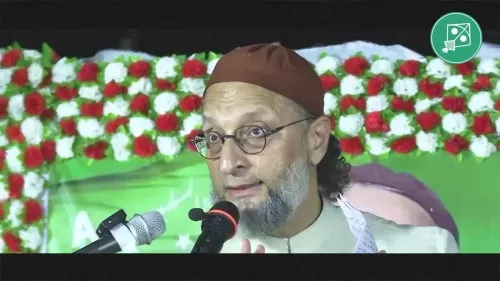
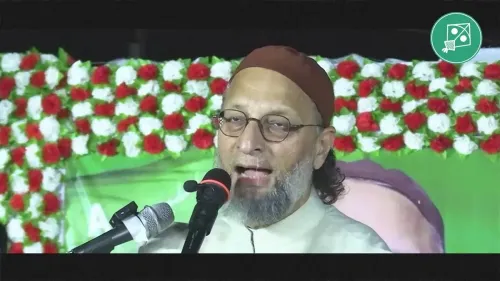
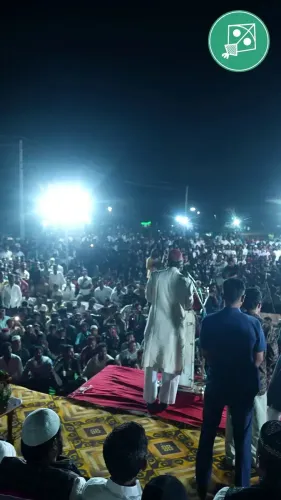
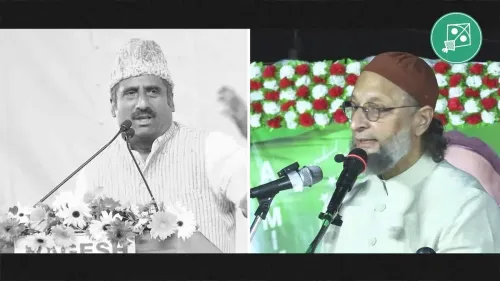
Three years after the BJP government in Karnataka scrapped a 4% OBC sub-quota for Muslims, a pointed question hangs in the air — and AIMIM president Asaduddin Owaisi is making sure it does not go unanswered. On Monday, 2 November 2026, Owaisi took to X to challenge the Indian National Congress directly on one of the most contested reservation decisions in recent Karnataka history.
Posting in Hindi, Owaisi demanded: 'Karnataka mein BJP ne Musalmano'n ka jo reservation barkhast kiya tha, INC ne usey dubara bahaal kyun nahi kiya?' — ('Why has the Congress not restored the reservation for Muslims in Karnataka that the BJP had cancelled?'). The question, short and blunt, lands squarely on the Congress government that has been in power in the state since May 2023.
The 4% Sub-Quota That Disappeared Overnight
Karnataka had maintained a 4% sub-quota within the OBC reservation category for Muslim communities for decades — a policy rooted in the state's backward-classes framework that predates even the national Mandal debate of the early 1990s. In 2023, the then BJP-led Karnataka cabinet removed that sub-quota and redistributed the share among other communities. The move came ahead of the Karnataka assembly elections and immediately became a flashpoint.
Congress campaigned hard on minority welfare ahead of those elections and swept to power. That victory made the unreversed quota removal a live political liability — one that Owaisi is now publicly exploiting.
Why Owaisi's Challenge Stings
Owaisi has built his national profile precisely on moments like this: holding both the BJP and the Congress accountable on Muslim-specific policy, denying either party a free pass with minority voters. His question targets a gap between Congress's electoral promises and its governance record. As the Hyderabad MP frames it, the removal of the quota was the BJP's act — but the failure to restore it is now Congress's silence.
The policy terrain is legally complicated. Religion-specific sub-quotas in education and public employment face recurring challenges under Articles 15 and 16 of the Constitution, and any Karnataka ordinance or bill to reinstate the quota would almost certainly face scrutiny in the High Court or the Supreme Court. That legal exposure may partly explain Congress's caution — but it also gives the opposition a powerful 'why not?' line of attack.
A Pattern Repeated Across Southern States
Karnataka's quota story is not unique. Several southern states have introduced or withdrawn religion-linked OBC sub-quotas over the decades, and the political cycle — introduce before elections, cancel in office, promise to restore, delay — is familiar. What makes this moment distinct is that a government which explicitly campaigned on reversing BJP's 'anti-minority' actions has had more than three years to act.
For Muslim OBC communities in Karnataka, the practical stakes are real: seats in state engineering and medical colleges, and posts in government employment, that the sub-quota once reserved. Owaisi's post, short as it is, condenses that lived frustration into a single electoral-accountability question that Congress will now need to answer — in Karnataka's legislature, or in the next election cycle, whichever comes first.
Point of View
He creates a two-front accountability that denies both parties easy cover heading into future election cycles. The post also surfaces a genuine governance puzzle: the legal fragility of religion-specific sub-quotas means Congress faces real judicial risk if it legislates a restoration, but political cost if it does not. That bind — lawcourt versus ballot box — is the fault line Owaisi is deliberately pressing.
NationPress
3 Nov 2026
Frequently Asked Questions
What was the Muslim OBC reservation in Karnataka that was removed?
Karnataka maintained a 4% sub-quota within the OBC reservation category for Muslim communities in education and public employment. The BJP-led state cabinet removed it in 2023 and redistributed the share among other backward communities.
Has Congress restored the Muslim reservation in Karnataka after winning in 2023?
The Congress government , which came to power in May 2023 , had not publicly restored the sub-quota as of the time of Owaisi's post in November 2026, which is the basis of his challenge.
Why is Asaduddin Owaisi questioning Congress on the Karnataka Muslim quota?
Owaisi regularly challenges both the BJP and Congress on Muslim-specific policy, seeking to hold each accountable. He argues that Congress, having criticised the BJP's removal of the quota, bears responsibility for not reinstating it while in power.
Is a religion-based reservation in OBC categories legally valid in India?
Religion-specific OBC sub-quotas face recurring legal challenges under Articles 15 and 16 of the Constitution. Courts have scrutinised whether such quotas impermissibly conflate religion with backwardness, making their legal standing contested and jurisdiction-specific.
What happens next with the Karnataka Muslim OBC quota issue?
The key developments to watch are whether the Karnataka Congress government introduces an ordinance or bill in the state assembly to restore the sub-quota, and any subsequent proceedings before the Karnataka High Court or the Supreme Court of India .