Owaisi questions Karnataka's minority budget shortfall
Synopsis
AIMIM president Asaduddin Owaisi has questioned why Karnataka spent only ₹4,760 crore against a promised ₹10,000 crore minority welfare budget, highlighting a shortfall of over ₹5,000 crore and pressing the state government for accountability.
Key Takeaways
Asaduddin Owaisi flagged a ₹5,240 crore gap between Karnataka's promised and actual minority welfare spending.
The state had reportedly committed ₹10,000 crore for minority development but spent only ₹4,760 crore .
Owaisi posted the question on November 2, 2026 , in Hindi, broadening the reach of the challenge beyond English-language discourse.
The shortfall represents a utilisation rate of under 48 per cent of the announced allocation.
Low utilisation of minority welfare budgets is a recurring pattern across multiple Indian states, affecting scholarships, housing, and skill-training schemes.
Karnataka's next budget session will be a key moment to watch for an official response to the figures Owaisi cited.
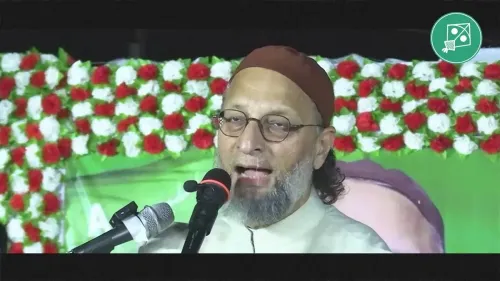
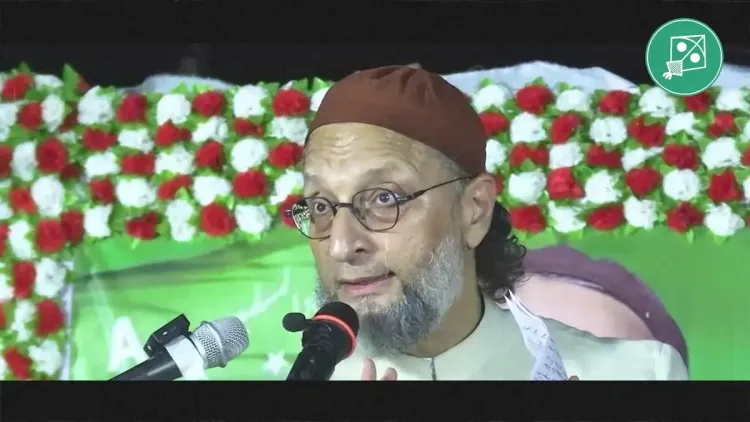
A promise of ₹10,000 crore for minority welfare in Karnataka — and only ₹4,760 crore actually spent. AIMIM president Asaduddin Owaisi on Monday, November 2, 2026, zeroed in on that gap with a pointed question that goes to the heart of how Indian states translate budget announcements into ground-level delivery.
Posting in Hindi, Owaisi asked: 'Jab Karnataka mein minorities ke liye ₹10,000 crore ka budget dene ka wada kiya gaya tha, to sirf ₹4,760 crore hi kyun kharch kiye gaye?' — 'When a commitment was made to allocate a ₹10,000 crore budget for minorities in Karnataka, why were only ₹4,760 crore actually spent?'The ₹5,240 crore question hanging over Bengaluru
The arithmetic is stark: by Owaisi's reckoning, barely 47.6 per cent of a headline welfare commitment reached fruition — leaving more than half the promised sum unspent. In welfare budgeting, the gap between an announced allocation and actual expenditure is often where schemes quietly die. Scholarships never disbursed, infrastructure never built, self-employment loans never sanctioned.
This pattern is not unique to Karnataka. Across Indian states, minority development budgets — covering education, skill-training, housing, and economic support — routinely show utilisation rates far below announced figures. Opposition leaders and civil-society groups have long argued that low utilisation reflects either poor planning, bureaucratic bottlenecks, or a lack of political will to follow through.
Why Owaisi's scrutiny lands differently
Owaisi, as the Hyderabad MP who has built AIMIM's national profile largely on minority accountability politics, has made state-level welfare audits a signature tactic. By framing the question as 'a promise was made — why was it not kept?', he shifts the burden directly onto the ruling dispensation in Karnataka to explain the shortfall, rather than debate whether the scheme itself was well-designed.
Karnataka has seen its minority-welfare debates sharpen considerably in recent budget cycles, with both the allocation methodology and spending execution under scrutiny. The state's next annual budget session will be the immediate test of whether the gap Owaisi flags is acknowledged and corrected — or defended away.
In Indian political accountability, a question posted with a number is harder to ignore than one without. ₹5,240 crore is not a rounding error — and Owaisi is making sure Karnataka's government knows it.
Point of View
Verifiable number — a technique that is difficult for governments to deflect without releasing counter-data. The ₹10,000 crore versus ₹4,760 crore framing plugs directly into a long-running national debate about whether minority welfare commitments in Indian state budgets are aspirational headlines or genuine expenditure targets. For Karnataka's ruling party, the challenge is particularly sensitive because minority welfare has been a differentiating plank in its electoral positioning. If the utilisation figures hold up to scrutiny, the political cost of the gap may prove larger than the fiscal one.
NationPress
3 Nov 2026
Frequently Asked Questions
What did Owaisi say about Karnataka's minority welfare budget?
Owaisi questioned why Karnataka spent only ₹4,760 crore against a promised ₹10,000 crore minority welfare budget, flagging a shortfall of more than ₹5,000 crore.
How much was Karnataka supposed to spend on minorities?
According to Owaisi's post, Karnataka had committed ₹10,000 crore for minority welfare, but the actual expenditure came to ₹4,760 crore — roughly 47.6 per cent of the promise.
Why do Indian states often underspend minority welfare budgets?
Analysts point to poor planning, bureaucratic bottlenecks, delayed scheme implementation, and in some cases insufficient political will as common reasons for minority welfare budget underutilisation across Indian states.
What is AIMIM's position on minority welfare in India?
AIMIM, led by Owaisi, consistently demands full implementation of announced minority welfare budgets and holds state governments accountable for gaps between promised allocations and actual spending.
What happens next for Karnataka's minority welfare spending?
Karnataka's next annual budget session will be the critical juncture — either the government addresses the utilisation shortfall Owaisi highlighted, or it faces continued political pressure over the unspent funds.