Owaisi fires back at Bidar MLA over 'Khuda' names remark
Synopsis
AIMIM president Asaduddin Owaisi posted a video rebuttal on 1 November 2026 targeting a Bidar MLA's remark that 'all three names resemble names of God,' framing the response as a formal counter on communal language in Karnataka politics.
Key Takeaways
AIMIM president Asaduddin Owaisi posted a video on 1 November 2026 directly rebutting a Bidar MLA's remark.
The MLA's quoted phrase — 'Teeno naam Khuda se milte hain' — links three unspecified names to divine appellations, touching on religious-identity politics.
Bidar district , northern Karnataka, has a significant Muslim population and is a contested zone for AIMIM, Congress, and BJP.
Owaisi chose a video rebuttal ( radd-e-amal ), indicating a prepared and substantive response rather than a casual social-media reply.
The exchange fits AIMIM's documented strategy of amplifying regional communal controversies to build national visibility among Muslim voters.
The identity of the Bidar MLA and the full original statement remain unverified from available sources.
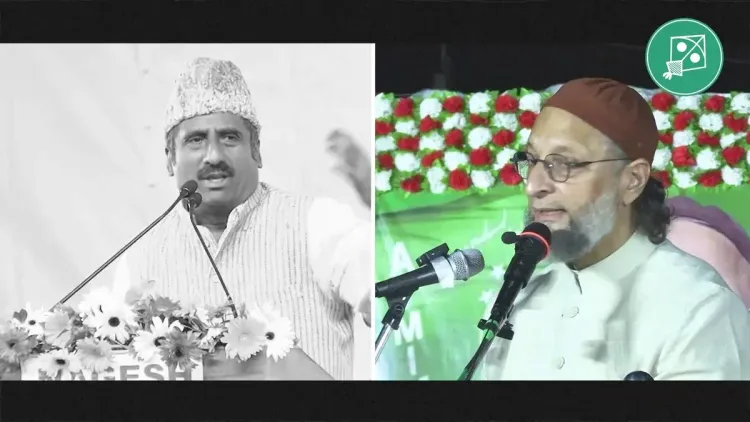
A single phrase from a Karnataka legislator has drawn a sharp public response — and AIMIM president Asaduddin Owaisi has made clear he will not let it pass without rebuttal. On Sunday, 1 November 2026, Owaisi posted a video to X responding to a statement made by the Bidar MLA, centred on the remark 'Teeno naam Khuda se milte hain' — 'All three names resemble names of God.'
Owaisi's post directly cites the MLA's words and announces his radd-e-amal — his formal rebuttal — through the attached video, signalling that the pushback is substantive rather than a passing comment. The exact details of the Bidar MLA's original statement have not been independently confirmed, but the phrase suggests the legislator drew a connection — or made a comparison — between three specific names and divine appellations, touching a thread that runs through religious identity politics in Karnataka.
Why Bidar sits at the centre of this exchange
Bidar district in northern Karnataka carries a sizeable Muslim population and has historically been contested political terrain — one where AIMIM has sought a foothold alongside Congress, BJP, and regional formations. Statements that touch on Muslim names, religious vocabulary, or communal symbolism in this geography rarely stay local for long. They travel fast, and Owaisi has built a platform precisely around intercepting them before they can be left unanswered.
For AIMIM, this kind of intervention is both a strategic move and a branding exercise. The party's national visibility depends heavily on Owaisi's ability to respond to regional provocations — real or perceived — that resonate with Muslim voters across states. A video rebuttal, rather than a text thread, also suggests this is a considered statement, not a reactive swipe.
A pattern of social-media ripostes on communal speech
Owaisi has used X consistently to challenge statements by state-level politicians on questions of religious identity, minority rights, and communal language. Whether the original speaker belongs to the ruling Congress in Karnataka, the BJP, or a regional outfit rarely changes the formula: a direct quote, a stated rebuttal, and a video laying out the argument. The approach keeps AIMIM in national conversations even from constituencies where it does not field candidates.
With Karnataka facing a cycle of local body elections on the horizon, the timing of such exchanges sharpens. Each statement becomes a data point for voters deciding whether smaller parties can give them a more combative voice than the established formations.
Whether the Bidar MLA responds — and how Karnataka's political establishment reacts — will determine if this stays a sharp one-day exchange or becomes a longer flashpoint in the state's communal discourse.
Point of View
Not opportunism, which plays well with the party's core audience. Karnataka is increasingly contested ground for AIMIM, and the timing — ahead of potential local body polls — makes even a single MLA's offhand remark worth contesting publicly. Whether this exchange shifts votes will depend on whether the Bidar MLA's statement gains wider traction or fades as a one-day controversy.
NationPress
1 Nov 2026
Frequently Asked Questions
What did the Bidar MLA say that Owaisi responded to?
The MLA reportedly made a remark that 'all three names resemble names of God' — Teeno naam Khuda se milte hain . The full context of the statement has not been independently confirmed.
Why did Owaisi respond to a Bidar MLA's statement?
Owaisi regularly counters regional politicians' remarks on religious or communal themes, particularly in states like Karnataka where AIMIM is building electoral presence among Muslim voters.
What is AIMIM's presence in Bidar?
Bidar district in northern Karnataka has a notable Muslim population and has seen AIMIM activity, making it a target constituency for the party alongside competition from Congress and BJP.
What does 'radd-e-amal' mean?
'Radd-e-amal' is an Urdu term meaning 'reaction' or 'rebuttal.' Owaisi's use of the word signals that his video is a considered, formal response rather than an off-the-cuff remark.
Will this controversy affect Karnataka elections?
Karnataka faces upcoming local body polls, and exchanges over communal language between state legislators and national opposition figures like Owaisi can influence Muslim voter sentiment in contested districts like Bidar.