India semiconductor market seen at $100-110 bn by 2030: CareEdge
Synopsis
India's chip market is set to roughly double to $100-110 billion by 2030, but the country still imports 90-95% of what it consumes. Imports tripled to $36.5 billion in FY26, and only five of 12 approved fab and OSAT projects are producing. Execution, not demand, will decide who captures the boom.
Key Takeaways
CareEdge Advisory projects India's semiconductor market to grow from $45-50 billion in 2026 to $100-110 billion by 2030 .
Networking and communications' revenue share is set to rise from 26.1% (2020) to 33.3% by 2030, at a 17.8% CAGR.
Consumer electronics' share is projected to decline from 29.1% to 22.2% .
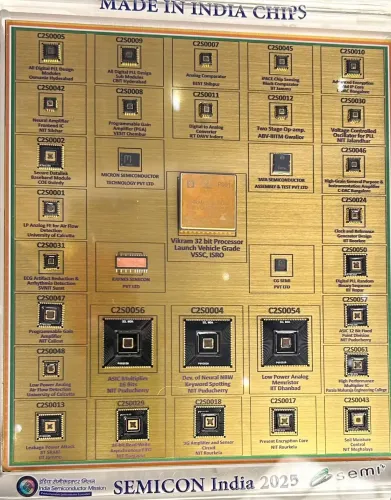
12 projects worth over ₹1.64 lakh crore have been approved under the India Semiconductor Mission; five were in commercial production by October.
Semiconductor imports rose from $11.9 billion in FY21 to $36.5 billion in FY26 and meet 90-95% of domestic demand.
India's semiconductor market is projected to expand from $45-50 billion in 2026 to $100-110 billion by 2030, according to a new report by CareEdge Advisory released in Mumbai on Thursday, 26 November 2026. The report attributes the growth to rising demand from electronics, telecommunications, automotive systems, artificial intelligence (AI), data centres and digital infrastructure.
The projection points to the market roughly doubling in four years. It also highlights a gap: domestic consumption is growing far faster than India's ability to manufacture chips at home.
Demand Shifts Towards Connectivity and Computing
The report says India's chip demand is moving towards connectivity and computing applications. Networking and communications is projected to raise its share of semiconductor revenue from 26.1 per cent in 2020 to 33.3 per cent by 2030, a compound annual growth rate (CAGR) of 17.8 per cent.
Computing and data storage is expected to grow its share from 12.8 per cent to 15.1 per cent over the same period, at a CAGR of 11.9 per cent.
Consumer electronics, by contrast, is projected to fall from 29.1 per cent to 22.2 per cent. According to the report, this reflects the growing weight of digital infrastructure, cloud computing and AI-led demand in India's chip consumption.
India Semiconductor Mission: 12 Projects, ₹1.64 Lakh Crore
Under the India Semiconductor Mission, 12 projects with cumulative investments of more than ₹1.64 lakh crore have been approved. They are spread across Gujarat, Assam, Uttar Pradesh, Odisha, Punjab and Andhra Pradesh.
The projects cover semiconductor fabrication, compound semiconductors, and assembly, testing, marking and packaging (ATMP) or outsourced semiconductor assembly and test (OSAT) facilities. A government update showed that five of the 12 projects had started commercial production by October.
The next phase of the mission is expected to build deeper capabilities in research and development, materials, equipment and talent development.
Import Dependence Remains High
India still meets most of its rising chip demand through imports. Semiconductor imports more than tripled, from $11.9 billion in FY21 to $36.5 billion in FY26.
Citing DSCI estimates, the report says imports account for 90-95 per cent of domestic demand for semiconductor devices and components. That figure shows how far domestic manufacturing capacity lags consumption.
What CareEdge Advisory Said
Tanvi Shah, Senior Director at CareEdge Advisory, said: “The bigger opportunity, however, is in India’s ability to translate its chip-design strength and approved investments into commercially viable fabrication, testing and advanced-packaging capabilities. Timely project execution, access to technology, availability of skilled talent and the development of a robust supplier ecosystem will be important enablers of this growth.”
Praveen Pardeshi, Associate Director at CareEdge Advisory, said: “The next phase of India’s semiconductor journey will be defined by the conversion of approved projects into stable, commercially competitive production.”
The Road to 2030
Both analysts put the focus on execution rather than new announcements. With five of 12 approved units producing and imports still covering nearly all domestic demand, progress over the next four years will likely be judged on how many approved plants reach stable, competitive output. That will determine whether India captures the projected $100-110 billion opportunity or continues to import most of it.
Point of View
And demand was never India's problem. The harder statistic is that imports still cover 90-95% of consumption and have tripled in five years, so every dollar of growth so far has largely flowed to foreign fabs. With five of 12 approved projects producing, the ₹1.64 lakh crore pipeline is promising but not yet proven. The shift towards networking, data centres and AI also raises the bar, because those segments need advanced nodes and packaging that India's first-wave plants are not yet built to supply.
NationPress
26 Nov 2026
Frequently Asked Questions
How big will India's semiconductor market be by 2030?
India's semiconductor market is projected to reach $100-110 billion by 2030, up from $45-50 billion in 2026, according to a CareEdge Advisory report. Growth is expected to come from electronics, telecom, automotive, AI, data centres and digital infrastructure.
Which segments will drive semiconductor demand in India?
Networking and communications, along with computing and data storage, are expected to drive demand. Networking's revenue share is projected to rise to 33.3% by 2030, while consumer electronics' share is set to fall to 22.2%.
How many projects have been approved under the India Semiconductor Mission?
Twelve projects with cumulative investments of over ₹1.64 lakh crore have been approved across Gujarat, Assam, Uttar Pradesh, Odisha, Punjab and Andhra Pradesh. Five of them had begun commercial production by October, according to a government update.
How dependent is India on semiconductor imports?
Imports meet 90-95% of India's domestic demand for semiconductor devices and components, citing DSCI estimates. Imports more than tripled from $11.9 billion in FY21 to $36.5 billion in FY26.
What will determine the success of India's semiconductor push?
CareEdge Advisory says the key factor is converting approved projects into stable, commercially competitive production. Timely execution, technology access, skilled talent and a strong supplier ecosystem are listed as critical enablers.