India's Humanitarian Aid to Africa Amidst Global Food Crisis
Synopsis
India has recently provided significant humanitarian aid to African nations facing severe food crises, sending rice and essential supplies. However, experts question whether these measures will adequately address the ongoing hunger crisis exacerbated by global conflicts.
Key Takeaways
India has sent significant humanitarian aid to Africa, including rice and essential supplies.
The food crisis in Africa is deepening due to global conflicts.
Over 87 million people in East and Southern Africa are projected to face acute hunger.
31 African nations require external food assistance to avert disaster.
India's aid symbolizes solidarity amidst geopolitical tensions.
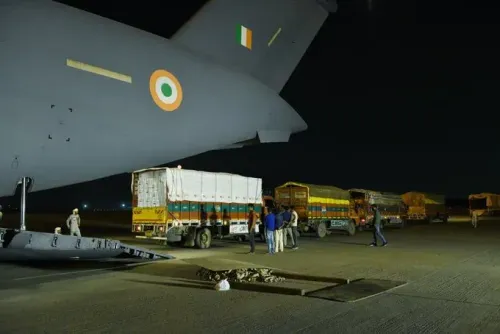
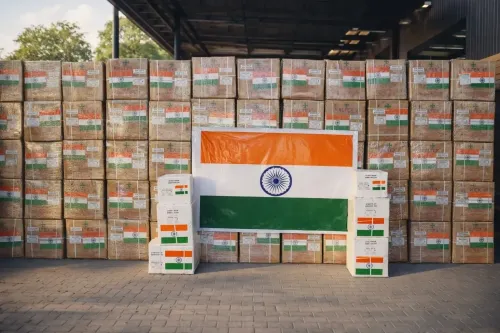
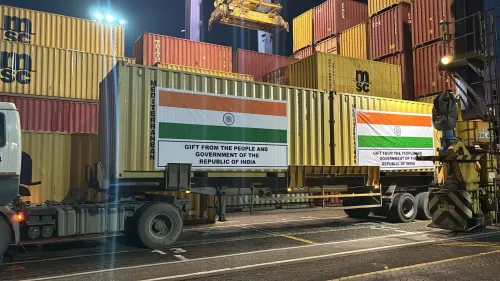
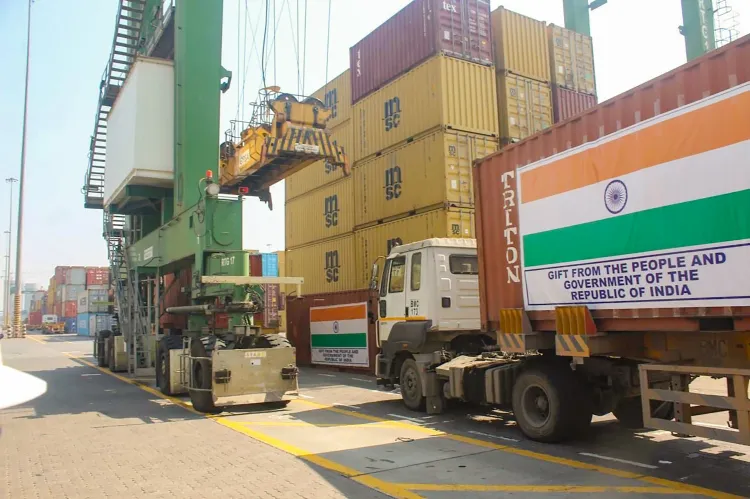
Cape Town, April 19 (NationPress) Recently, India has dispatched 1,000 metric tonnes of rice to the drought-affected nation of Malawi, another 1,000 metric tonnes to Burkina Faso, and 500 metric tonnes along with essential relief items such as tents, hygiene kits, and medicines to Mozambique. However, the real question is whether these efforts can adequately address the crisis, as noted by a South African news article.
Nonetheless, it was highlighted that India's assistance alone is insufficient to resolve Africa's food crisis, according to a report by Independent Online (IOL).
This initiative from India symbolizes a gesture of solidarity in a world often preoccupied with choosing sides rather than understanding the profound impact of conflict on the most vulnerable populations.
The US-Iran war has once again revealed the stark inequalities in global power dynamics. Major state actors are engaged in struggles for dominance over energy corridors, military positioning, and regional control, while the African continent grapples with one of its most severe food crises in decades, as reported by IOL.
Amidst the geopolitical maneuvers of the US, Iran, Russia, and China in West Asia, Africa is facing a humanitarian disaster, worsened by conflicts that have triggered instability from the Niger Delta to the Great Lakes. Nations in Africa that depend heavily on food and fuel imports are particularly vulnerable. A collaborative report from the African Development Bank, the African Union Commission, and UN agencies indicates that if the war continues beyond six months, it could decrease Africa's GDP by 0.2 percentage points.
Forecasts suggest a 21% increase in food insecurity across West and Central Africa, and a 17% rise in East and Southern Africa. This situation represents a man-made disaster orchestrated by a global system that prioritizes the strategic interests of a few over the survival of many. By April 2026, over 87 million people in East and Southern Africa are expected to confront severe hunger, while around 52 million in West and Central Africa are projected to be food insecure by mid-year. Currently, 31 African nations require external food assistance to avert catastrophe, as per the report.
The data, derived from the World Bank, World Food Programme, and Food and Agriculture Organisation, paints a picture of a humanitarian crisis of tremendous magnitude. Yet, this emergency is largely unfolding away from the spotlight of global media, overshadowed by escalating conflicts in the Middle East that have monopolized diplomatic and media attention. The statistics reveal a narrative of systemic failure: in Zambia, the devastating El Nino phenomenon has destroyed 70% of the national maize harvest; in neighboring Zimbabwe, the loss is 80%. Five countries, including Lesotho, Malawi, Namibia, Zambia, and Zimbabwe, have officially declared national disasters due to drought and ensuing hunger, according to the IOL report.
The government of Malawi is facing a significant funding gap for its national relief initiatives, leaving millions of families reliant on the uncertain benevolence of the international community. Crops have been devastated, and livestock decimated due to four consecutive failed rainy seasons in Djibouti, Eritrea, Ethiopia, Kenya, and Somalia, as reported by IOL.
The World Food Programme has issued warnings about “catastrophic shortfalls” in Somalia, which urgently requires $95 million to sustain operations from March to August 2026. The outlook is dire in West and Central Africa, where Burkina Faso has launched a national humanitarian response plan valued at over 769 billion CFA francs aimed at assisting 4.4 million vulnerable individuals, a staggering amount for a nation where many households are subsisting on just one meal per day.
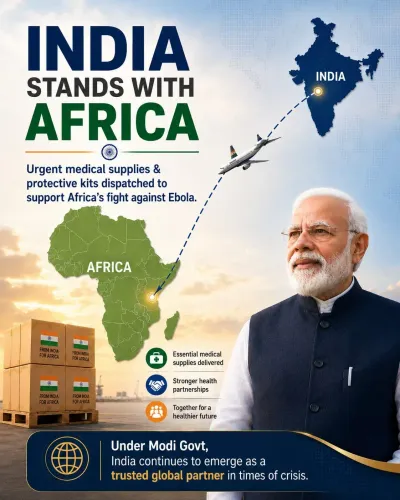
In the midst of this turmoil, India's humanitarian aid has timely arrived on the continent. Recently, New Delhi has delivered 1,000 metric tonnes of rice to Malawi, another 1,000 metric tonnes to Burkina Faso, and 500 metric tonnes along with relief supplies, notably including tents, hygiene kits, and medicines to Mozambique. While these shipments may seem modest compared to the continent's vast needs, their significance lies not in quantity but rather in timing and context, according to the IOL report.
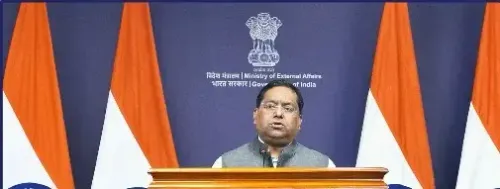
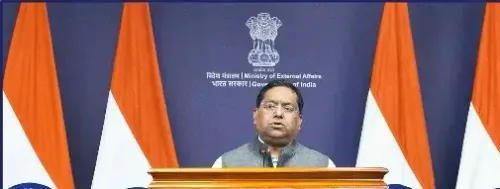
The Indian Ministry of External Affairs has explicitly described this aid effort as 'humanitarian assistance' aimed at 'bolstering food security for vulnerable communities and internally displaced individuals,' emphasizing that this gesture reflects India's ongoing commitment as a dependable developmental and HADR (Humanitarian Assistance and Disaster Relief) partner to nations in the Global South. Although India's rice and food contributions alone cannot reverse a continent-wide food crisis, they symbolize something increasingly rare in modern geopolitics: a show of solidarity in a world fixated on partisanship and hesitant to analyze the true costs of conflict on the most vulnerable. In a year when 31 African nations necessitate external food assistance and global focus is diverted elsewhere, this may be the most valuable export that New Delhi can provide.
Point of View
I emphasize the urgent need for a collective response to the ongoing humanitarian crisis in Africa. While India's aid represents a hopeful gesture, the scale of assistance required far exceeds current efforts. A comprehensive strategy is essential for meaningful change.
NationPress
19 Sept 2026
Frequently Asked Questions
What humanitarian aid has India provided to Africa?
India has dispatched 1,000 metric tonnes of rice to Malawi, 1,000 metric tonnes to Burkina Faso, and 500 metric tonnes along with relief supplies to Mozambique.
How serious is the food crisis in Africa?
The food crisis in Africa is severe, with projections indicating over 87 million people in East and Southern Africa facing acute hunger by April 2026.
What factors are contributing to the food crisis?
The food crisis is exacerbated by global conflicts, particularly the US-Iran war, which has destabilized regions and disrupted food supply chains.
What is the projected impact of the war on Africa's GDP?
If the war extends beyond six months, it could reduce Africa's GDP by 0.2 percentage points, according to a joint report from several organizations.
How many African nations require external food assistance?
Currently, 31 African nations need external food assistance to avoid catastrophe.