Why are Robust Critical Mineral Supply Chains Essential for India's Manufacturing Goals?
Synopsis
India's manufacturing sector stands on the brink of transformation, as Union Minister Ashwini Vaishnaw advocates for strengthening critical mineral supply chains. This initiative not only aims to enhance manufacturing resilience but also aligns with India's ambitious goals for sustainable development and energy transition.
Key Takeaways
Strengthening critical mineral supply chains is essential for India's manufacturing resilience.
The government has launched a scheme with a funding of ₹7,280 crore to boost REPM production.
The initiative aims to reduce import dependence and enhance local manufacturing capabilities.
India’s engagement in global partnerships like MSP and IPEF is crucial for building a resilient framework.
The focus on sustainability aligns with India’s Net Zero 2070 vision.
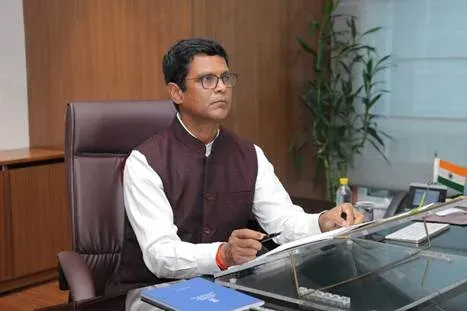
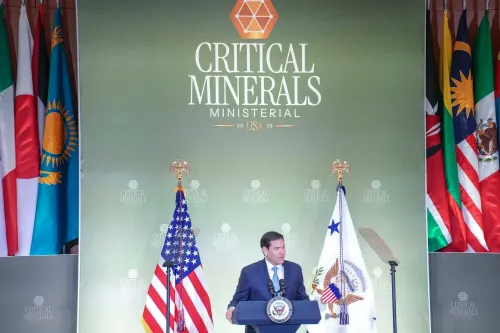
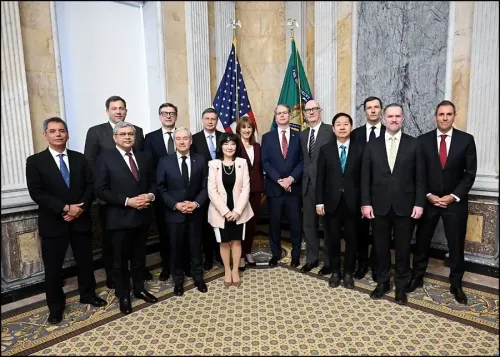
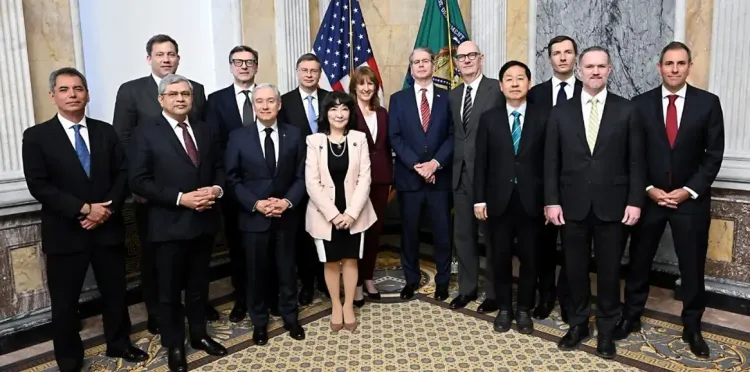
New Delhi, Jan 13 (NationPress) Union Minister for Railways and Electronics and IT, Ashwini Vaishnaw, emphasized the importance of fortifying critical mineral supply chains to bolster the resilience of India’s manufacturing sector during his participation in the Critical Minerals Ministerial Meeting in the United States.
Vaishnaw arrived in the US on Sunday to attend this significant meeting hosted by Treasury Secretary Scott Bessent.
“I took part in the Critical Minerals Ministerial Meeting organized by the Treasury Secretary. Enhancing critical mineral supply chains is crucial for strengthening the resilience of India’s manufacturing capabilities and the rapidly expanding electronics industry,” the minister shared on the X social media platform.
Bessent expressed satisfaction at the strong collective ambition to swiftly tackle critical vulnerabilities in mineral supply chains.
“I am hopeful that countries will choose prudent derisking over decoupling and recognize the necessity for decisive measures,” stated the US Treasury Secretary.
Vaishnaw’s trip to the US coincides with the Indian government's recent announcement of a scheme aimed at fostering the production of sintered Rare Earth Permanent Magnets (REPM). This initiative seeks to strengthen India’s role in global advanced-materials value chains while decreasing import reliance.
With a financial commitment of ₹7,280 crore, this scheme aims to establish an integrated manufacturing capacity for REPM at 6,000 metric tonnes per annum, covering the entire spectrum from rare-earth oxides to finished magnets, as per an official announcement.
The initiative is designed to boost competitiveness, attract technology-driven investments, and support long-term scalability, contributing to energy transition objectives and India’s Net Zero 2070 vision. By developing domestic capabilities and reinforcing downstream connections, this government initiative will aid in job creation, enhance industrial capacity, and support the vision of Aatmanirbhar Bharat.
India is also actively involved in multilateral frameworks such as the Minerals Security Partnership (MSP) and the Indo-Pacific Economic Framework (IPEF) to cultivate resilient critical mineral supply chains.
Point of View
I see this initiative as a pivotal step for India. The government’s commitment to enhancing critical mineral supply chains reflects a strategic move towards self-reliance and sustainable industrial growth. It is essential for India to participate actively in global supply chains while ensuring domestic capacities are strengthened to meet future demands.
NationPress
10 Oct 2026
Frequently Asked Questions
Why are critical mineral supply chains important for India?
Critical mineral supply chains are vital for enhancing the resilience of India's manufacturing capabilities and supporting the growth of the electronics sector.
What is the financial commitment for the REPM manufacturing scheme?
The government has announced a financial outlay of ₹7,280 crore for the manufacturing of sintered Rare Earth Permanent Magnets.
How does this initiative contribute to India's Net Zero 2070 vision?
By establishing domestic capabilities and reducing reliance on imports, this initiative supports India’s energy transition goals and overall sustainability.