What Does India Need for Inclusive AI?
Synopsis
As India strives for a future enriched by AI, experts outline the need for scale, coordination, and interoperability to ensure inclusivity. Discover how these elements can transform education and empower learners across the nation.
Key Takeaways
AI in education must be scaled to reach every learner.
Teacher support is vital for enhancing educational outcomes.
A national orchestration platform is needed for future phases of AI integration.
AI should promote language diversity and be inclusive.
Practice-based frameworks improve student engagement.
New Delhi, Feb 14 (NationPress) Despite India's robust artificial intelligence (AI) solutions, experts emphasize the critical need for scale, coordination, and interoperability. Professor V Kamakoti, Director of IIT Madras, highlighted the importance of AI in fostering inclusion, maintaining language diversity, and supporting all learners to prevent disparities.
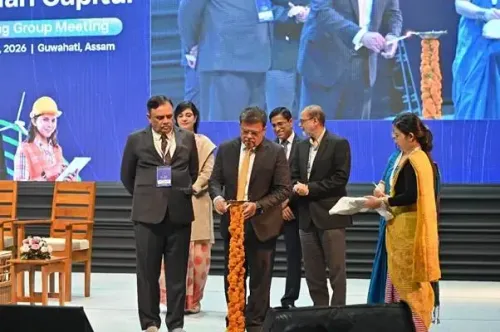
Speaking at the ‘Bharat Bodhan AI Conclave 2026’, which convened an unprecedented assembly of India’s educational and technological sectors, he reaffirmed the commitment towards a responsible, AI-driven transformation of the nation’s education landscape.
Key conclusions from the conclave included: while India possesses strong AI solutions for education, they must be expanded to benefit every learner; enhancing teacher support is paramount for improving educational outcomes; and a national orchestration platform is essential for the next phase.
Under the moderation of Professor Manindra Aggarwal, Director of IIT Kanpur, discussions revealed that states are transitioning from mere monitoring to intervention-based governance through AI-enabled platforms. Real-time decision-making is being facilitated by dashboards, while integrated systems for students, teachers, and schools are replacing fragmented tools. The Ministry of Education indicated that effective scaling of AI necessitates statewide ecosystem platforms over isolated solutions.
In another session led by Professor Manoj Kumar Tiwari, Director of IIM Mumbai, the necessity for multilingual AI to ensure equitable national adoption was underscored. Speakers emphasized that AI should enhance teacher agency and support contextual pedagogy instead of enforcing uniform digital templates.
Practice-oriented learning frameworks have been shown to engage learners more effectively, with states presenting advanced models that incorporate AI for teacher support, student learning, and governance.
Sanjay Kumar, Secretary of School Education and Literacy, expressed that the discussions over the past two and a half days were highly promising, showcasing the significant initiatives across the country aimed at integrating AI into education. AI presents a unique chance to merge scale with personalization through adaptive learning strategies tailored to each child's needs.
He stressed that by prioritizing equitable access, these innovations could substantially enhance educational outcomes, promote inclusion, and empower both teachers and students.
Point of View
It's crucial to recognize that the integration of AI in education is not merely a technological upgrade but a necessary evolution to ensure equitable learning opportunities for all in India. The experts’ insights at the conclave highlight a clear path towards leveraging AI responsibly, ensuring that every learner has the tools they need to succeed.
NationPress
7 Oct 2026
Frequently Asked Questions
What is the main focus of the Bharat Bodhan AI Conclave 2026?
The conclave centers on enhancing India’s education system through AI by emphasizing scale, coordination, and interoperability.
How can AI promote inclusivity in education?
By ensuring multilingual support and adaptive learning tools that cater to diverse learner needs, AI can help bridge educational divides.
What role do teachers play in the integration of AI in education?
Teachers are crucial for improving learning outcomes, and AI should empower them by providing support rather than imposing standardized methods.