FairPoint: India's Lesson on Smart Conflict Resolution for a Restless World
Synopsis
As global conflicts intensify, India’s experience with Operation Sindoor offers valuable lessons on achieving swift and effective outcomes in warfare. This article explores the necessity for smarter strategies over prolonged engagements in the face of uncertainty.
Key Takeaways
Smarter solutions are preferred over prolonged warfare.
India's Operation Sindoor exemplifies effective conflict resolution.
Prolonged conflicts create more challenges than they solve.
Strategic autonomy is crucial for modern nations.
Decisive actions lead to clearer outcomes.
New Delhi, April 5 (NationPress) As the US-Iran tensions extend into their second month, causing market instability and challenging alliances, it has become increasingly evident: the world requires smarter solutions, not more prolonged wars.
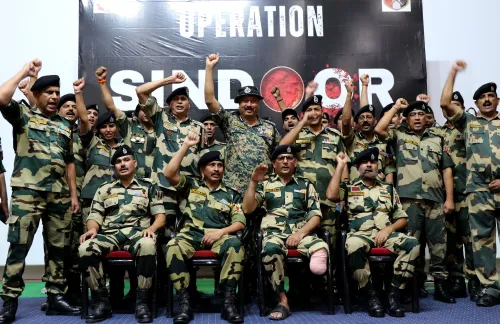
This situation prompts a reflection on a domestic decision that faced intense backlash from the Congress-led opposition. The Modi administration's choice to conclude Operation Sindoor shortly after accomplishing its goals was labeled by the opposition as both rash and lacking foresight.
Looking back, such criticism now appears more politically motivated than analytical. In matters of national defense, strategy transcends immediate perceptions; it revolves around having a clear objective and understanding when that goal has been fulfilled. A show of strength does not always necessitate extended engagement to deliver a message.
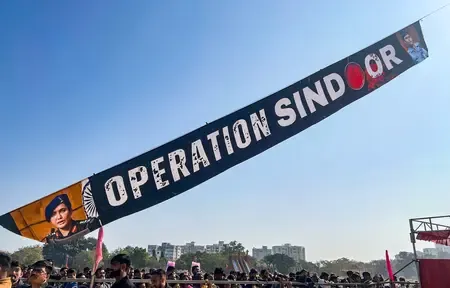
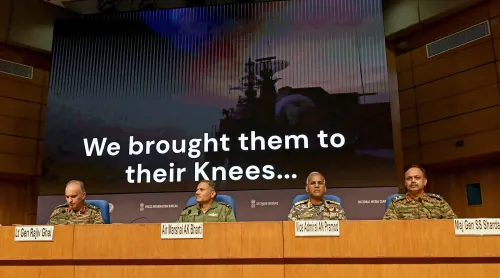
India had the ability to prolong Operation Sindoor (May 7, 2025 – May 10, 2025); it could have escalated or expanded its engagement. Instead, it chose to cease operations once the objectives were achieved. This led to a swift response from Pakistan, which quickly sought relief and a ceasefire—a clear success for India.
This rapid resolution may have unsettled some observers, as it lacked the drawn-out buildup, dramatic escalation, or prolonged confrontation typical of many conflicts. Instead, it resulted in a quick, contained outcome.
Now, let's consider the situation in West Asia. Despite repeated claims of control, the US appears mired in a conflict that is intensifying rather than resolving.
President Donald Trump continues to project assurance, yet the realities on the ground paint a more complex picture. Iran has demonstrated its capability to retaliate, perpetuating a cycle of uncertainty.
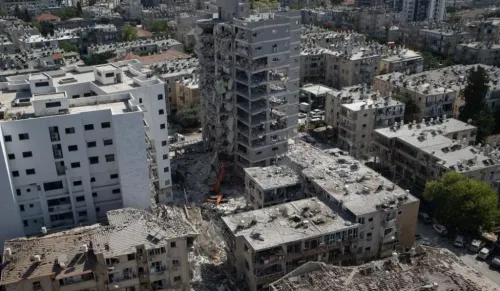
The situation around the Strait of Hormuz speaks volumes. The disruptions are sending shockwaves through global energy markets. This illustrates the peril of extended conflicts: they seldom remain confined, and their ramifications ripple far beyond the initial battleground.
Moreover, there is a noticeable hesitation among the US's traditional allies. While there is some support, it lacks the commitment that translates into substantial involvement. Instead, we see cautious distancing and, in some instances, visible discomfort.
French President Emmanuel Macron recently expressed this shift, calling for a “coalition of independence.” This sentiment reflects a growing unease among nations regarding their close ties to dominant power blocs, emphasizing the importance of strategic autonomy.
For India, this concept is not new. The nation has long valued strategic autonomy, evolving from non-alignment to a more flexible, interest-based approach. India has successfully established a framework for engaging with multiple partners without being tethered to a single alliance.
Amid the current crisis, New Delhi has largely adhered to this strategy. It has resisted pressures to take overt stances while safeguarding its own interests, particularly concerning energy supplies. This careful approach has enabled the country to maintain steady operations through critical maritime routes. Numerous Indian vessels have continued to navigate the Hormuz Strait despite the ongoing instability.
Diplomatic efforts persist, with support being extended when necessary—quietly and without fanfare. This subtlety can often be overlooked in a world that equates visibility with effectiveness.
As the conflict drags on, the disparity becomes increasingly pronounced. Prolonged military actions tend to introduce more complexities than they resolve. They stretch resources, test alliances, and present unpredictable risks. Conversely, decisive, well-defined actions create less opportunity for escalation.
Operation Sindoor may not have garnered widespread international recognition, but it underscored an undeniable principle: effectiveness is determined not by duration, but by the achievement of objectives. Remaining in a conflict for an extended period does not guarantee improved outcomes; in fact, it often leads to the contrary.
The US and other global actors are currently grappling with this reality. India recognized this lesson long ago.
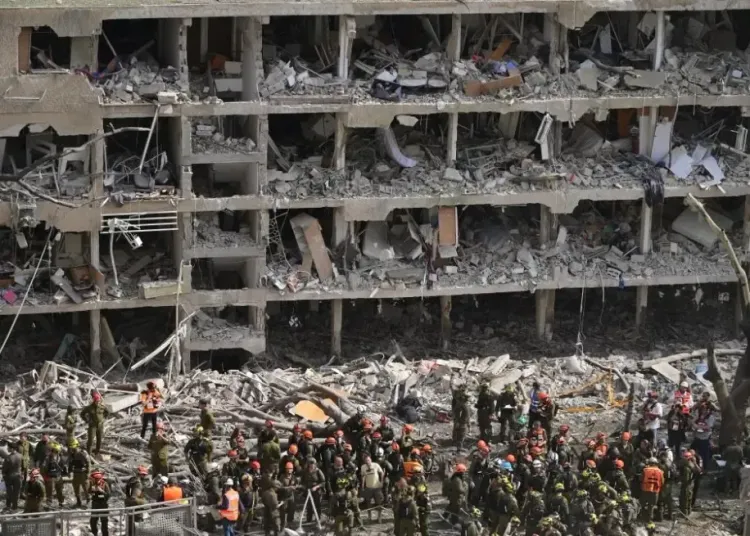
The past weeks have illustrated this truth: prolonged wars seldom conclude neatly. They generate layers of uncertainty—economic, political, and strategic—that take far longer to resolve than the conflicts themselves.
Decisiveness, restraint, and clarity are frequently undervalued during high-stakes moments. They may not generate sensational headlines, but ultimately, wars are not won based on their duration but rather on how conclusively they are resolved.
In this context, India's strategy becomes particularly noteworthy, with Operation Sindoor serving as a prominent recent example.
(Deepika Bhan can be reached at deepika.b@ians.in)
Point of View
Emphasizing the importance of decisive actions rather than prolonged engagements. It illustrates how India successfully navigated complex geopolitical tensions while maintaining its interests, positioning itself as a model for effective national security strategies.
NationPress
10 Sept 2026
Frequently Asked Questions
What is Operation Sindoor?
Operation Sindoor was a military operation conducted by India from May 7 to May 10, 2025, aimed at achieving specific objectives without extending engagement unnecessarily.
How does India's approach differ from the US strategy?
India emphasizes swift, decisive actions and strategic autonomy, while the US often engages in prolonged conflicts that can lead to increased uncertainty and complexity.
What are the implications of prolonged conflicts?
Prolonged conflicts can stretch resources, test alliances, and introduce unpredictable risks, making it difficult to achieve clear objectives.
What lessons can other countries learn from India's Operation Sindoor?
Countries can learn the importance of clarity in objectives, the need for strategic autonomy, and the value of decisive actions to avoid unnecessary escalation.
Why is strategic autonomy important for countries?
Strategic autonomy allows countries to engage with multiple partners and maintain their interests without being overly reliant on dominant power blocs.