CM Karnataka Greets Kannadigas on Rajyotsava Day
Synopsis
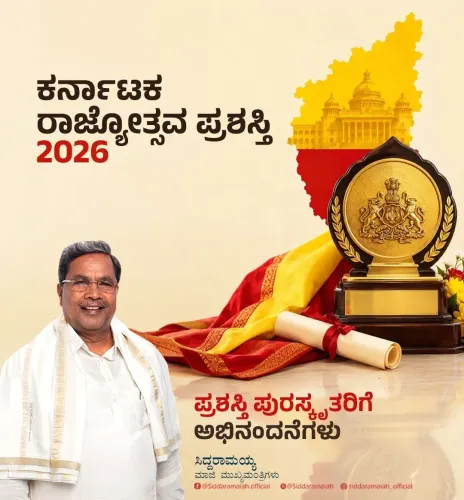
The Chief Minister's Office of Karnataka greeted Kannadigas on Rajyotsava Day, 1 November 2026, calling Kannada the identity and self-respect of its people and pledging to protect the state's land, language, soil, and water on the 70th anniversary of Karnataka's formation.
Key Takeaways
The Chief Minister's Office of Karnataka posted a Kannada Rajyotsava greeting on 1 November 2026 .
The post declared Kannada 'not merely a language but our identity, self-respect, and the breath of our existence.' The CMO pledged protection of land, language, soil, and water — Karnataka's four pillars of state identity.
Rajyotsava marks the formation of Mysore state (later renamed Karnataka) on 1 November 1956 under the States Reorganisation Act.
The closing phrase 'Sirigannadadam Gelge, Sirigannadadam Balge' — May glorious Kannada triumph and thrive — is Karnataka's defining cultural invocation.
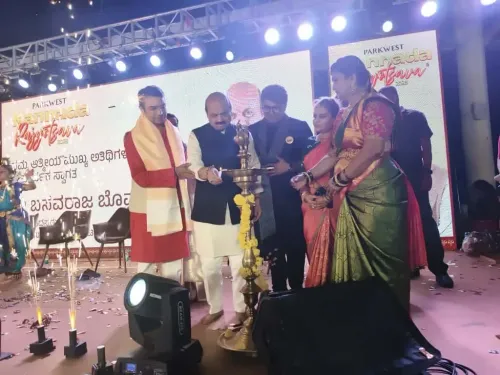
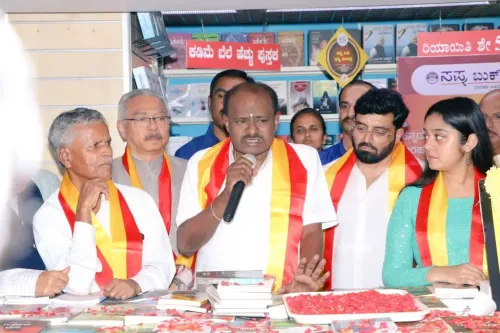
Seventy years after the States Reorganisation Act drew the map of modern Karnataka, the language that held a people together still carries the weight of an entire identity. On 1 November 2026 — Kannada Rajyotsava — the Chief Minister's Office of Karnataka marked the occasion with a message that framed the day not as a ceremonial anniversary but as a living, daily festival of progress.
The post, written in Kannada, opens with a salute to the state's millennia of history, its rich literary tradition, and the diversity of its culture, art, language, and way of life. 'ಕನ್ನಡವೆಂಬುದು ಕೇವಲ ಭಾಷೆಯಲ್ಲ, ಅದು ನಮ್ಮ ಅಸ್ಮಿತೆ, ಆತ್ಮಗೌರವ ಮತ್ತು ಬದುಕಿನ ಉಸಿರು' — 'Kannada is not merely a language; it is our identity, our self-respect, and the very breath of our existence.' That single line distils the emotional architecture of every Rajyotsava: the insistence that a language is not a tool but a people's soul.
Seventy years of a state built on a word
The roots of the celebration reach back to 1 November 1956, when the States Reorganisation Act brought together Kannada-speaking regions scattered across former princely states and provinces into a single entity — then called Mysore, renamed Karnataka in 1973. The reorganisation was itself the outcome of a hard-won argument: that language, not colonial geography, should define the borders of Indian states. Karnataka was proof that the argument had won.
Kannada's literary lineage stretches well over a thousand years, placing it among the oldest continuously written Dravidian languages. That heritage — poets, inscriptions, epics — is precisely what annual Rajyotsava observances invoke when state leaders speak of 'ಸಾವಿರಾರು ವರ್ಷಗಳ ಇತಿಹಾಸ', 'thousands of years of history.'
The pledge behind the festivity
The message closes with a resolve that goes beyond celebration. The CMO committed to protecting 'ನಾಡು, ನುಡಿ, ನೆಲ, ಜಲ' — land, language, soil, and water — a quartet that in Karnataka's political vocabulary signals everything from Kannada-medium education policy to the perennial water-sharing disputes with neighbouring states. The closing invocation, 'ಸಿರಿಗನ್ನಡಂ ಗೆಲ್ಗೆ, ಸಿರಿಗನ್ನಡಂ ಬಾಳ್ಗೆ' — 'May glorious Kannada triumph, may glorious Kannada thrive' — is the state's unofficial battle-cry, as familiar to Kannadigas as any anthem.
The CMO titled the message 'ಕನ್ನಡ ರಾಜ್ಯೋತ್ಸವ - ಪ್ರಗತಿಯ ನಿತ್ಯೋತ್ಸವ' — 'Kannada Rajyotsava: a daily festival of progress' — a framing that positions the occasion not as a nostalgic look backward but as an ongoing claim on the future. For a state that hosts one of India's largest technology and startup ecosystems alongside ancient temple towns and farming communities, that tension between heritage and ambition is entirely real. Rajyotsava is the day Karnataka chooses to hold both at once.
Point of View
But the CMO's framing of the day as a 'daily festival of progress' rather than a static anniversary signals an attempt to link linguistic pride with developmental ambition — a politically useful bridge in a state where Kannada-medium schooling, water-sharing disputes, and tech-sector dominance all intersect. The pledge on 'naadu, nudi, nela, jala' keeps the door open for follow-up policy moves on Kannada implementation in government and education. In a state where identity politics around language retains significant electoral salience, even ceremonial messaging carries forward-looking weight.
NationPress
1 Nov 2026
Frequently Asked Questions
What is Kannada Rajyotsava and why is it celebrated on 1 November?
Kannada Rajyotsava marks the formation of the state of Mysore — later renamed Karnataka — on 1 November 1956, when the States Reorganisation Act merged Kannada-speaking regions into a single linguistic state. It is Karnataka's official state formation day.
What does 'Sirigannadadam Gelge, Sirigannadadam Balge' mean?
The phrase translates to 'May glorious Kannada triumph, may glorious Kannada thrive.' It is Karnataka's most recognised cultural and linguistic rallying cry, traditionally used to close Rajyotsava speeches and greetings.
When was the state of Mysore renamed Karnataka?
The state was renamed from Mysore to Karnataka in 1973, to better reflect the broader Kannada-speaking identity of its people rather than the historical Mysore kingdom.
What is the significance of 'naadu, nudi, nela, jala' in Karnataka politics?
'Naadu, nudi, nela, jala' — land, language, soil, and water — is a political and cultural shorthand in Karnataka that covers Kannada-medium education, language policy, territorial integrity, and the state's long-running water-sharing disputes with neighbouring states.
How old is the Kannada literary tradition?
Kannada has a documented literary tradition spanning over a thousand years, making it one of the oldest continuously written Dravidian languages with a rich body of poetry, inscriptions, and classical texts.