43 Delegates from 17 Nations Visit Rajasthan Legislative Assembly
Synopsis
A group of 43 international delegates gathered at the Rajasthan Legislative Assembly to enhance their understanding of legislative drafting. Speaker Vasudev Devnani emphasized the importance of clear language in law-making, marking the occasion as a significant learning experience for participants from diverse backgrounds.
Key Takeaways
Legislative drafting is crucial for effective governance.
The Assembly emphasizes transparency and public interest .
Participants gained valuable insights into law-making processes.
The programme fosters global exchange of democratic practices.
The Rajasthan Assembly celebrates 75 years of its establishment.
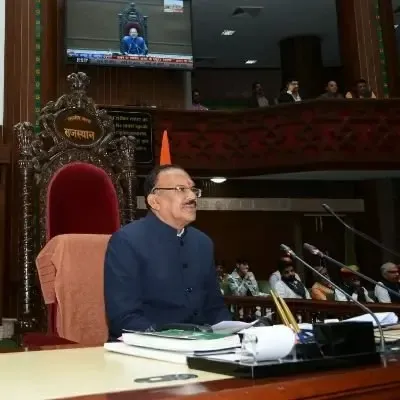
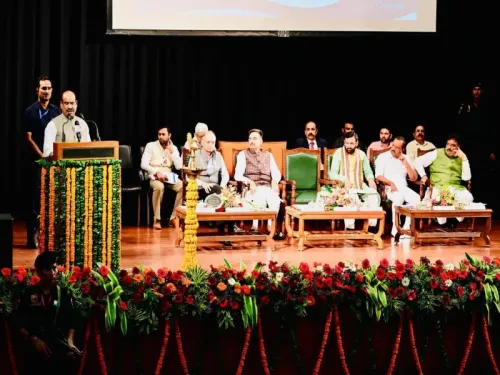
Jaipur, April 18 (NationPress) The Speaker of the Rajasthan Legislative Assembly, Vasudev Devnani, highlighted that the art of legislative drafting is pivotal to the law-making process and should embody the people's aspirations using clear and straightforward language.
He explained that the procedure of passing legislation in the Assembly is carried out with exceptional care, transparency, and a focus on quality, which guarantees effective and people-centric legislation.
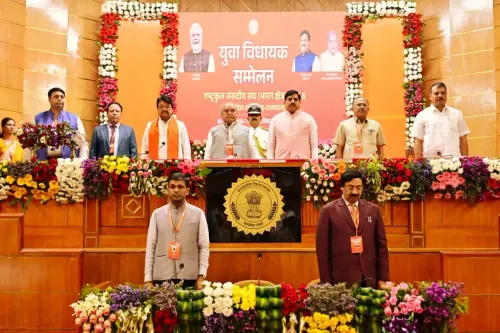
Devnani was addressing participants at the 37th International Training Programme on Legislative Drafting, organized by the Parliamentary Research and Training Institute for Democracies under the Lok Sabha Secretariat, as part of the Indian Technical and Economic Cooperation Programme of the Ministry of External Affairs.
The event saw the participation of 43 delegates from 17 countries, including Bangladesh, Bhutan, Ghana, Kenya, Sri Lanka, Tanzania, and Zambia. The Speaker also engaged with the attendees and posed for a group photograph.
Devnani elaborated on the three critical phases of the legislative process: the introduction of a bill, thorough deliberation (often with committee scrutiny), and the final passage through voting.
He emphasized that each phase is designed to ensure that laws are not only robust but also easily understandable and aligned with the public's interests. Clear and simple language, he pointed out, is essential for delivering justice.
Referring to the Assembly as a “temple of democracy,” Devnani stated it plays a crucial role in promoting inclusive development and enacting social welfare laws.
As the Assembly marks 75 years of its foundation, he reflected on its evolution from the initial years of state formation to the contemporary era of digital governance.
With 200 members, the Assembly embodies the collective will and aspirations of the people of Rajasthan.
The Speaker remarked that as India celebrates 75 years of independence, it is entering a transformative phase known as ‘Amrit Kaal’, a 25-year journey leading up to 2047, commemorating 100 years of independence.
He described this era as a chance for reflection and for establishing ambitious national objectives.
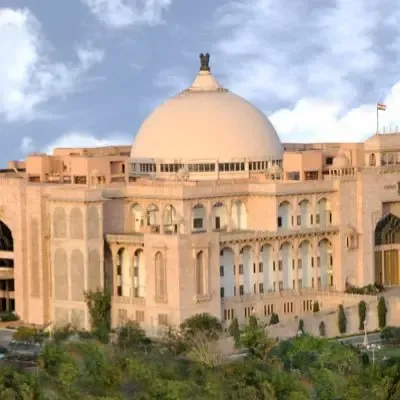
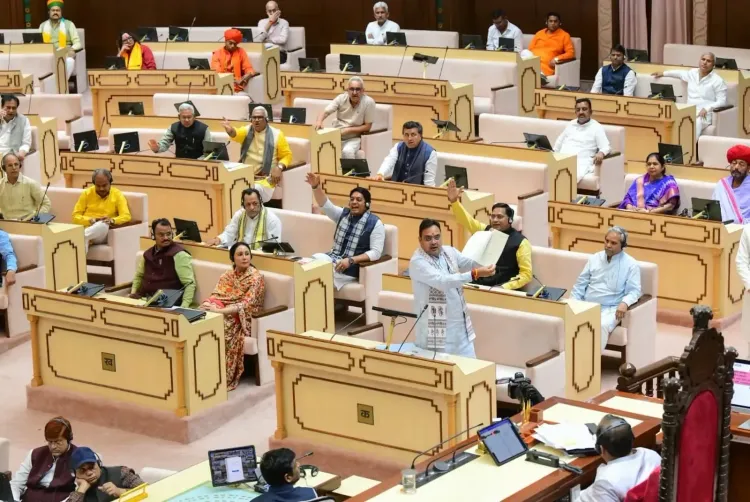
Referring to the Rajasthan Legislative Assembly as the “Pink House” of Jaipur, Devnani remarked that it has become a model institution through the complete digitization of its legislative records. This evolution bolsters transparency, accountability, and efficiency in governance.
He also pointed out that the Assembly building stands as an architectural marvel that harmoniously blends traditional Rajasthani design with modern utility.
The Speaker noted that the Assembly’s modern digital museum acts as a link between the institution and the public, particularly the youth. It provides insights into the state’s democratic journey and aids citizens in comprehending legislative processes better.
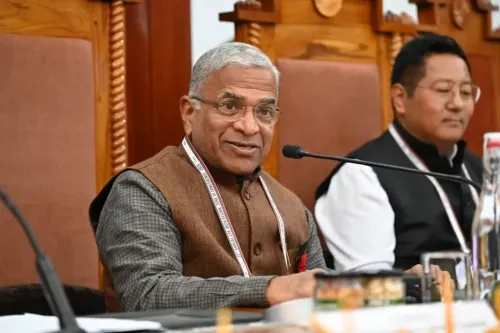
Encouraging international participants, Devnani asserted that interactions with seasoned legislators offer invaluable practical insights that transcend academic knowledge.
He expressed hope that the delegates would truly experience the essence of “Padharo Mhare Desh” during their time in India.
During the programme, participants from nations like Tanzania, Kenya, and Malaysia posed inquiries about topics such as Centre-State relations, women’s reservation, the Anti-Defection Law, and private member bills.
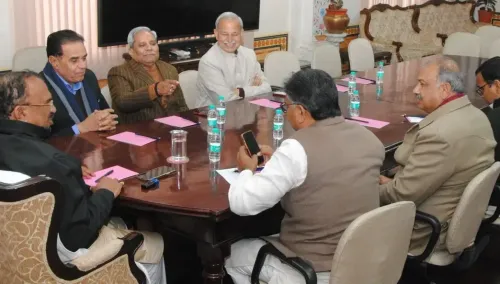
Government Chief Whip Jogeshwar Garg and Opposition Chief Whip Rafiq Khan responded to these queries comprehensively, fostering a meaningful exchange of ideas.
Among those present were Leader of the Opposition Tikaram Jully; Government Chief Whip Jogeshwar Garg; Opposition Chief Whip Rafiq Khan; MLAs Dr Gopal Sharma, Chandrabhan Singh Aakya, Kailash Verma, Gurveer Singh, and Dr Shikha Meel Barala. Also attending were Bharat Bhushan Sharma, Principal Secretary of the Rajasthan Legislative Assembly; Rajkumar, Director of the Parliamentary Research and Training Institute for Democracies Programme; and Programme Director K.M. Chaturvedi.
Ms Phurpa Dema from Bhutan expressed the vote of thanks. The international participants conveyed their appreciation for the museum within the Assembly complex, characterizing it as informative, engaging, and insightful.
Point of View
This event showcases India's commitment to sharing democratic practices with the world.
NationPress
19 Sept 2026
Frequently Asked Questions
What was the focus of the 37th International Training Programme?
The programme focused on legislative drafting, emphasizing the importance of clear and simple language in the law-making process.
How many countries participated in the event?
A total of 43 delegates from 17 different countries participated in the event.
Who is the Speaker of the Rajasthan Legislative Assembly?
The Speaker is Vasudev Devnani, who addressed the international participants.
What is the significance of the 'Pink House'?
The 'Pink House' refers to the Rajasthan Legislative Assembly, noted for its architecture and role in promoting democracy.
What topics did participants inquire about during the programme?
Participants raised questions on Centre-State relations, women's reservation, the Anti-Defection Law, and private member bills.