Iranian ship Touska: 6 of 28 crew freed, 22 still held after US seizure
Synopsis
Six crew members of the US-seized Iranian container ship Touska are free — but 22 remain in custody, Iran is warning of 'unprecedented' military action in the Strait of Hormuz, and Tehran has formally accused Washington of maritime piracy at the UN Security Council. A fragile post-ceasefire calm is unravelling fast.
Key Takeaways
Six of 28 crew members of the Iranian ship Touska have been released and returned to Iran as of 30 April .
The vessel was seized by US forces near Chabahar port in the Gulf of Oman on 19 April .
Iran's military command warned of "practical and unprecedented military action" if the US blockade on the Strait of Hormuz continues.
Iran's UN envoy Amir Saeid Iravani formally wrote to the UN Security Council , calling the seizures "maritime piracy." The blockade followed failed Iran-US talks in Islamabad on 11–12 April , days after a ceasefire halted 40 days of fighting.
Efforts to secure the release of the remaining 22 crew members are reportedly ongoing.
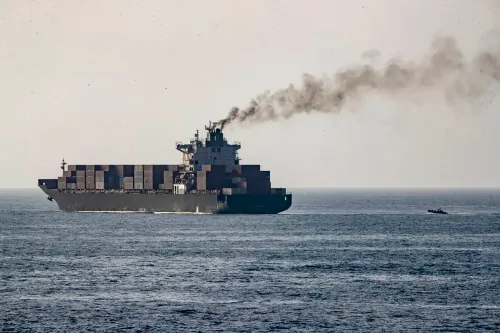
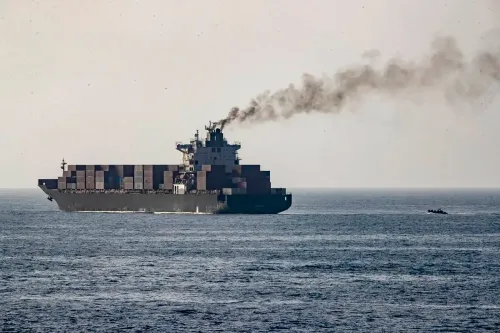
Six of the 28 crew members aboard the Iranian container ship Touska have been released and returned to Iran, according to a report by the semi-official Tasnim news agency on Wednesday, 30 April. The remaining 22 crew members are still in US custody, with Tehran describing them as hostages of what it calls the "terrorist" US government.
Background: How the Seizure Unfolded
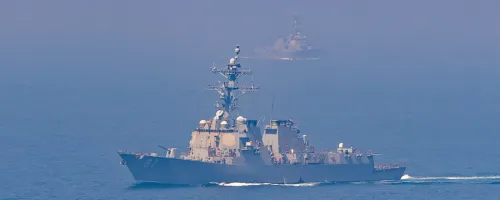
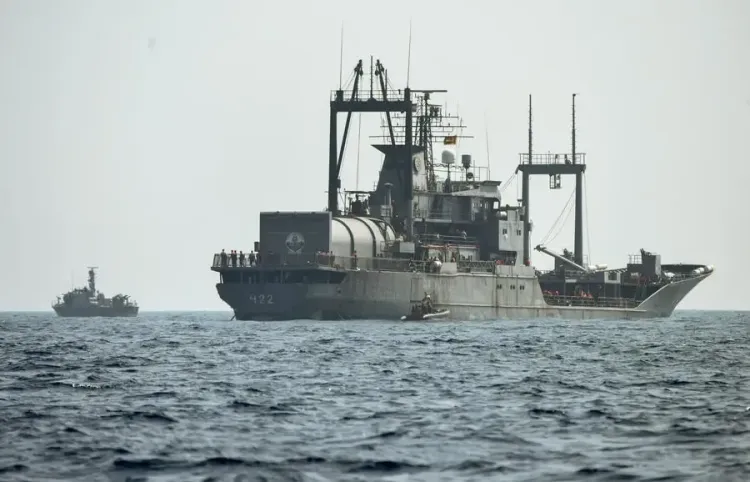
The Iranian-flagged vessel Touska was boarded and seized by US forces off the coast of Iran's southeastern Chabahar port in the Gulf of Oman on 19 April, according to Xinhua news agency. Iran swiftly condemned the seizure as a "flagrant act of piracy." The country's main military command, Khatam al-Anbiya Central Headquarters, explained that Iranian armed forces chose not to intervene at the time because crew members' families were reportedly on board.
Iran's Military Warns of 'Unprecedented' Response
State-run Press TV, citing a high-ranking security source, reported that the continued US maritime "piracy and banditry" — characterised as a naval blockade — will soon be met with "practical and unprecedented military action." Iran's armed forces have maintained that "patience has limits," and that a "punishing response" will be necessary if the United States continues what Tehran describes as its "illegal" naval blockade in the Strait of Hormuz. The source warned that if US "obstinacy and delusions" continue and Iran's conditions are rejected, the "enemy" should expect a "different kind of response" to the blockade, which it likened to "maritime banditry."
Iran Takes the Matter to the United Nations
In a formal escalation, Iran's permanent representative to the United Nations, Amir Saeid Iravani, addressed a letter to the UN Security Council describing the US seizures of Iranian vessels as "maritime piracy" and "illegal coercion and interference in legal trade," Tasnim reported. The diplomatic move signals Tehran's intent to internationalise the dispute and build a multilateral case against Washington's maritime actions.
The Wider Context: Blockade and Stalled Negotiations
The United States imposed a blockade on the Strait of Hormuz, preventing ships departing from Iranian ports from transiting the waterway. The blockade came into effect after Iran-US negotiations held in Islamabad, Pakistan on 11 and 12 April failed to produce an agreement. Those talks had followed a ceasefire on 8 April among Iran, the United States, and Israel, which halted 40 days of fighting. The seizure of the Touska and the subsequent standoff represent a sharp deterioration in the fragile post-ceasefire environment.
What Happens Next
Efforts are reportedly underway to secure the release of the remaining 22 crew members. With Iran escalating its rhetoric at the UN and its military issuing pointed warnings, the situation in the Strait of Hormuz — one of the world's most critical oil transit chokepoints — remains highly volatile. The coming days will test whether diplomatic back-channels can prevent a further military escalation.
Point of View
But not enough to defuse Tehran's domestic pressure to respond forcefully. Iran's simultaneous escalation on two fronts — military rhetoric through Press TV and a formal UN Security Council letter — suggests it is building both a deterrence posture and an international legal record. The real danger lies in the Strait of Hormuz: any Iranian military action there would immediately threaten global oil flows, pulling in far more than two bilateral adversaries. The post-ceasefire architecture, already fragile after just three weeks, is being stress-tested at its weakest seam.
NationPress
16 Sept 2026
Frequently Asked Questions
Which Iranian ship was seized by the US and when?
The Iranian-flagged container ship Touska was seized by US forces on 19 April near Chabahar port in the Gulf of Oman, according to Xinhua news agency. It had 28 crew members on board at the time of seizure.
How many crew members have been released so far?
Six of the 28 crew members have been released and returned to Iran as of 30 April, according to the semi-official Tasnim news agency. Efforts are reportedly underway to secure the release of the remaining 22.
Why did Iran not intervene when the Touska was seized?
Iran's main military command, Khatam al-Anbiya Central Headquarters, said armed forces did not intervene because crew members' families were reportedly on board the vessel at the time of the seizure.
What is Iran's position on the US blockade of the Strait of Hormuz?
Iran has described the US naval blockade of the Strait of Hormuz as illegal and equivalent to maritime piracy. Its military has warned of 'practical and unprecedented military action' if the blockade continues, while its UN envoy has formally complained to the Security Council.
What led to the current Iran-US maritime standoff?
The standoff escalated after Iran-US negotiations in Islamabad on 11–12 April failed to produce an agreement. Those talks followed a ceasefire on 8 April among Iran, the US, and Israel that halted 40 days of fighting. The US subsequently imposed a blockade on the Strait of Hormuz targeting ships from Iranian ports.