Iran Reports 'Progress' in US Negotiations, Yet Final Agreement Remains Elusive
Synopsis
Iran claims significant advancements in its negotiations with the United States while underscoring that a final agreement is still a distant goal. The two-week ceasefire is set to expire soon, raising questions about the future of these discussions.
Key Takeaways
Progress reported in Iran-US negotiations.
Ceasefire ends on April 22.
Significant differences still exist.
Iran maintains control over the Strait of Hormuz.
Negotiations viewed as a form of struggle for Iran.
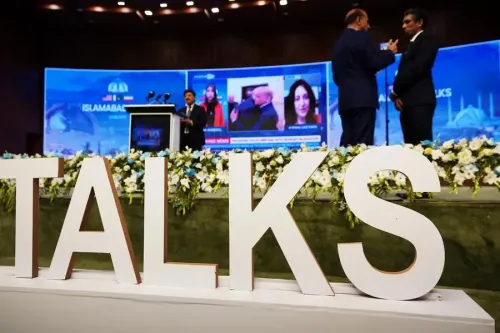
Tehran, April 19 (NationPress) Iran has announced notable "progress" in its discussions with the United States; however, it emphasized that a conclusive agreement remains distant, with the existing two-week ceasefire set to end on April 22, as reported by local media on Sunday.
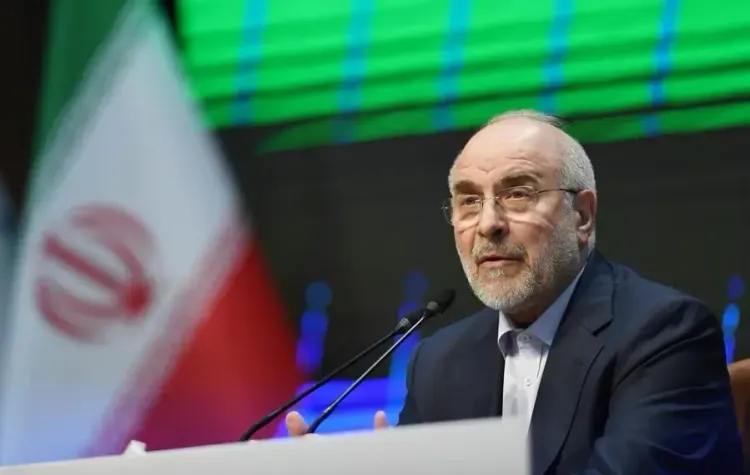
Mohammad Bagher Ghalibaf, the Speaker of the Iranian Parliament, stated in a televised speech on Saturday (local time) that significant disparities still exist between the two parties.
Ghalibaf remarked, "There are several gaps and some fundamental issues remain," stressing that negotiations have not yet reached a critical phase.
"We are still far from the final discussion," he added, indicating that while dialogue continues, a comprehensive resolution has yet to be realized.
He also claimed that Iran had maintained a strong position during the recent weeks of conflict, suggesting that Tehran’s agreement to the temporary ceasefire was contingent upon Washington acknowledging its conditions.
"If we accepted the ceasefire, it was because they accepted our demands," he stated, referring to the United States.
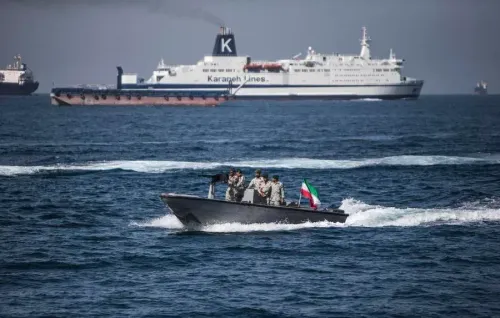
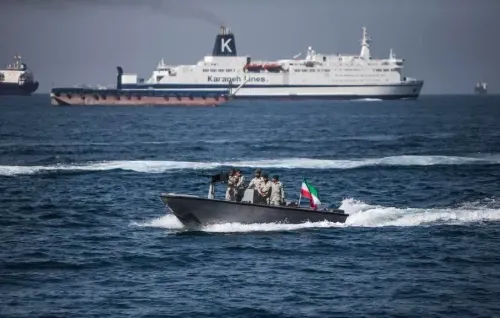
Highlighting Iran's strategic advantage, he asserted that the US has not achieved its objectives, while Iran continues to exert control over the vital Strait of Hormuz, a crucial maritime pathway for global energy supplies.
"The enemy's every effort was to impose its demands on us, and it is crucial that we assert our rights; thus, negotiation serves as a form of struggle," Ghalibaf said.
Meanwhile, Iran's Supreme National Security Council (SNSC) declared its commitment to oversee and regulate traffic through the Strait of Hormuz until the conflict is definitively resolved and lasting peace is established in the region.
This announcement, reported by Iranian media, followed the statement from Iran's primary military command, Khatam al-Anbiya Central Headquarters, which revealed the resumption of strict control over the Strait of Hormuz, in response to the continuing US naval blockade against Iran.
The SNSC indicated it will manage the strait by collecting vessel information, issuing passage permits, charging security and environmental service fees, and directing maritime traffic according to its regulations and wartime protocols, as reported by Xinhua news agency.
Point of View
It is essential to present an unbiased perspective on the ongoing negotiations between Iran and the United States. While progress is claimed, the significant gaps highlighted by Iranian officials suggest a cautious approach as both sides navigate this complex geopolitical landscape.
NationPress
19 Sept 2026
Frequently Asked Questions
What is the current status of the negotiations between Iran and the US?
Iran has reported progress in its negotiations with the US, but officials indicate that a final agreement is still not in reach.
When does the current ceasefire expire?
The current two-week ceasefire is set to expire on April 22.
What key issues remain in the negotiations?
Significant differences and fundamental points remain unresolved between the two parties.
How is Iran asserting its position in the Strait of Hormuz?
Iran is maintaining control over the Strait of Hormuz and has resumed strict regulations on maritime traffic.
What does Iran's Supreme National Security Council state about its role?
The SNSC has committed to overseeing maritime traffic in the Strait of Hormuz until lasting peace is achieved.