Did ISRO's PSLV-C62 successfully launch the EOS-N1 satellite for 2026?
Synopsis
In a remarkable start to 2026, ISRO's PSLV-C62 has launched the EOS-N1 Earth observation satellite. This mission enhances India's remote sensing capabilities and includes the innovative KID re-entry technology. Learn more about ISRO's latest achievements and what this means for the future of space exploration.
Key Takeaways
ISRO successfully launched the EOS-N1 satellite on January 12, 2026.
The launch enhances India's remote sensing capabilities across various sectors.
The mission included 15 co-passenger satellites .
The KID capsule demonstrates innovative re-entry technology.
This mission is the 9th commercial venture by NSIL.
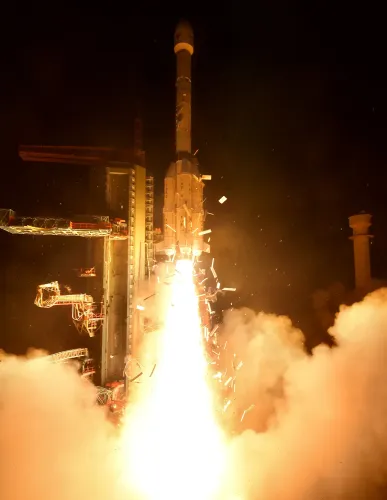
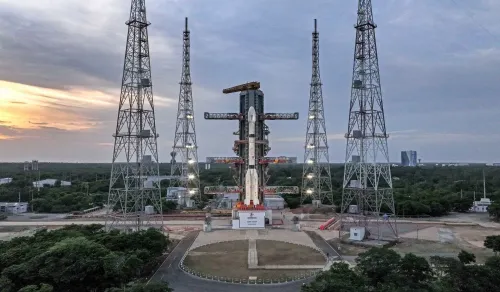
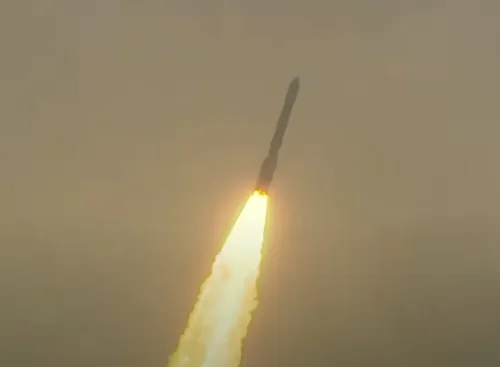
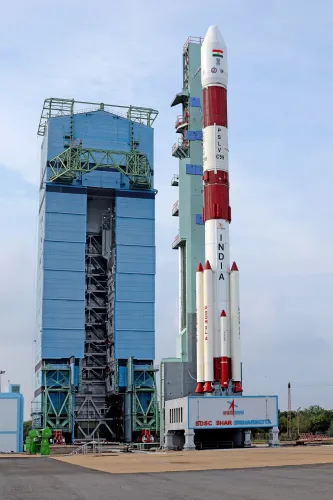
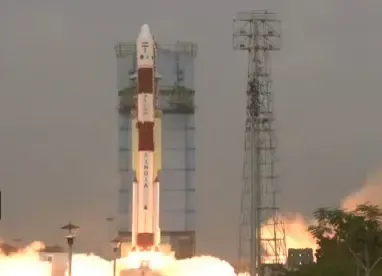
New Delhi, Jan 12 (NationPress) The Indian Space Research Organisation (ISRO) successfully executed the first launch of 2026 with the EOS-N1 Earth observation satellite, also known as Anwesha, aboard its PSLV-C62 rocket. The EOS-N1 lifted off during the 64th flight of the Polar Satellite Launch Vehicle (PSLV) at 10:17 am IST from the First Launch Pad (FLP) at the Satish Dhawan Space Centre in Sriharikota.
ISRO announced on social media, "Liftoff! PSLV-C62 launches the EOS-N1 Mission from SDSC-SHAR, Sriharikota." The launch aims to bolster India’s remote sensing capabilities, benefiting sectors such as agriculture, urban mapping, and environmental monitoring.
This mission includes 15 co-passenger satellites, with a planned injection into Sun Synchronous Orbit. Additionally, the PSLV-C62 mission will showcase KID or Kestrel Initial Technology Demonstrator, a small-scale prototype of a re-entry vehicle being developed by a Spanish startup. The KID capsule is intended for a re-entry trajectory, as per ISRO's plans.
After the KID is the final co-passenger to be deployed, it will re-enter the Earth's atmosphere, targeting a splashdown in the South Pacific Ocean. The PSLV-C62/EOS-N1 Mission marks the 9th dedicated commercial venture by NewSpace India Limited (NSIL), ISRO's commercial arm.
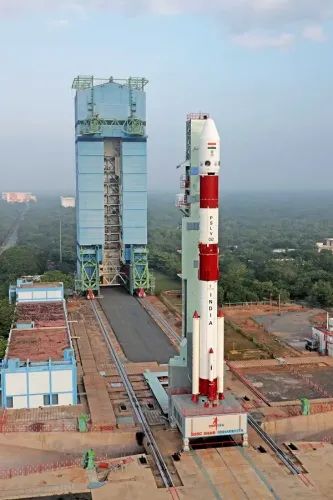
This launch is the fifth utilizing the PSLV-DL variant, featuring two solid strap-on boosters. The PSLV has successfully completed 63 flights, including significant missions like Chandrayaan-1, Mars Orbiter Mission, Aditya-L1, and Astrosat. In 2017, PSLV achieved a world record by launching 104 satellites in a single mission.
Earlier in May, ISRO completed its 101st launch with the PSLV-C61 mission, deploying the 1,696 kg EOS-09 Earth Observation Satellite into a 505 km Sun-Synchronous Polar Orbit. While the initial phases of that flight were successful, a technical issue in the rocket's third stage hindered the mission from reaching its designated orbit.
Point of View
I emphasize how ISRO's latest achievement reflects our nation's growing capabilities in space technology. The PSLV-C62's successful launch of the EOS-N1 satellite is a testament to India's commitment to advancing scientific exploration and improving our understanding of Earth through enhanced remote sensing.
NationPress
19 Sept 2026
Frequently Asked Questions
What is the EOS-N1 satellite?
The EOS-N1 satellite, also referred to as Anwesha, is an Earth observation satellite launched by ISRO to improve remote sensing capabilities in various sectors.
What does PSLV-C62 stand for?
PSLV-C62 refers to the 62nd flight of the Polar Satellite Launch Vehicle, a launch vehicle developed by ISRO.
How many satellites were launched with EOS-N1?
The mission included a total of 15 co-passenger satellites alongside the EOS-N1.
What is the purpose of the KID capsule?
The KID capsule is a prototype for a re-entry vehicle developed by a Spanish startup, designed to demonstrate re-entry technology.
Where did the PSLV-C62 launch take place?
The PSLV-C62 launched from the Satish Dhawan Space Centre located in Sriharikota, India.