Is ISRO's PSLV-C62 Set to Launch an Earth Observation Satellite on January 12?
Synopsis
The upcoming launch of ISRO's EOS-N1 satellite aboard PSLV-C62 is an exciting moment for India's space ambitions. Scheduled for January 12, this mission will enhance remote sensing capabilities while carrying multiple payloads, including a groundbreaking re-entry vehicle prototype. Discover what this mission means for India's technological progress!
Key Takeaways
EOS-N1 satellite aims to improve remote sensing in India.
Launch scheduled for January 12, 2026 .
PSLV-C62 will carry 15 co-passenger payloads .
Mission includes a re-entry vehicle prototype called KID .
This is the 64th flight of PSLV.
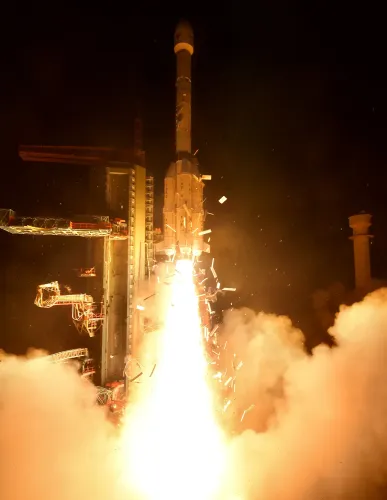
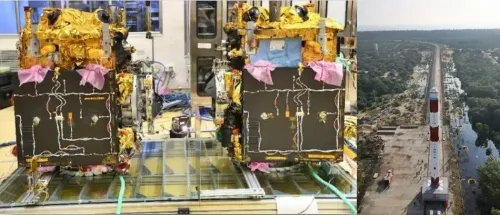
New Delhi, Jan 8 (NationPress) The Indian Space Research Organisation (ISRO) is gearing up to launch the EOS-N1 earth observation satellite aboard the PSLV-C62 rocket on January 12, initiating the first mission of 2026.
The EOS-N1, also known as Anvesha, is a sophisticated Earth observation satellite aimed at enhancing India’s remote sensing capabilities, particularly in agriculture, urban mapping, and environmental monitoring.
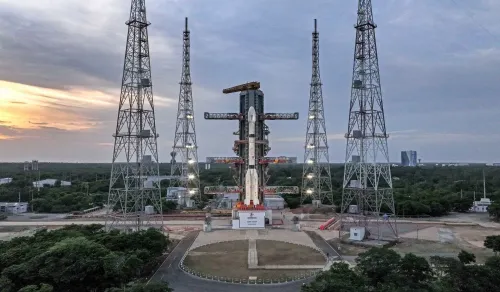
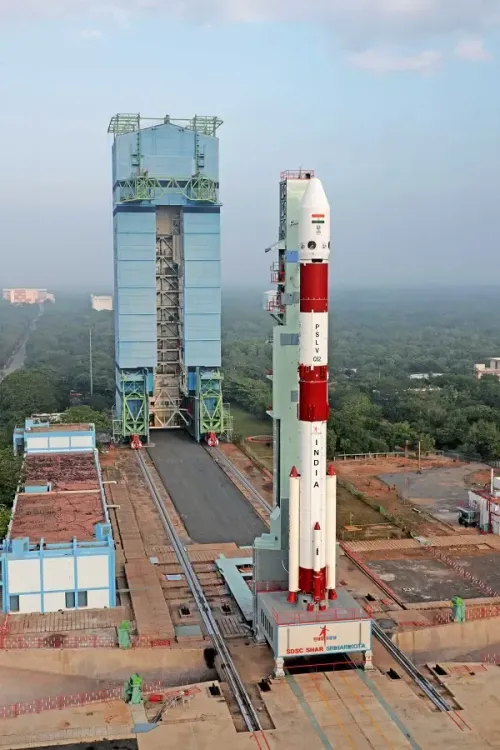
ISRO confirmed that the integration of the vehicle and satellites has been finalized, with pre-launch checks currently underway. The PSLV-C62 mission is scheduled for liftoff on January 12, 2026, at 10:17 AM from the First Launch Pad at the Satish Dhawan Space Centre in Sriharikota.
This mission will also carry 15 co-passenger payloads, making it a noteworthy multi-satellite deployment.
Moreover, the PSLV-C62 mission will showcase the KID or Kestrel Initial Technology Demonstrator from a Spanish startup, representing a small-scale prototype of a re-entry vehicle under development.
The KID is expected to be the final co-passenger injected, after which it will re-enter the Earth’s atmosphere for a splashdown in the South Pacific Ocean.
The PSLV-C62 / EOS-N1 Mission marks the 9th dedicated commercial mission carried out by NewSpace India Limited (NSIL), ISRO's commercial arm.
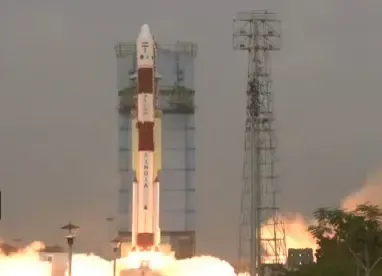
Notably, this will be the 64th flight of the PSLV, and the launch will be the fifth utilizing the PSLV-DL variant, featuring two solid strap-on motors.
PSLV has successfully completed 63 flights, including major missions like Chandrayaan-1, Mars Orbiter Mission, Aditya-L1, and Astrosat Mission. In 2017, it set a world record by launching 104 satellites in a single mission.
In May, ISRO launched the 101st mission with PSLV-C61, deploying the 1,696 kg EOS-09 Earth Observation Satellite into a 505 km Sun-Synchronous Polar Orbit. Despite initial success, a technical anomaly in the rocket's third stage impeded the mission from achieving its targeted orbit.
Point of View
ISRO's upcoming launch is a testament to India's growing prowess in space technology. The EOS-N1 mission not only signifies the importance of remote sensing for various sectors but also showcases India's commitment to advancing its technological capabilities on the global stage.
NationPress
2 Oct 2026
Frequently Asked Questions
What is the EOS-N1 satellite?
The EOS-N1, also known as Anvesha, is an Earth observation satellite designed to enhance India's remote sensing capabilities across agriculture, urban mapping, and environmental monitoring.
When is the PSLV-C62 launch scheduled?
The PSLV-C62 mission is set to launch on January 12, 2026, at 10:17 AM from the Satish Dhawan Space Centre in Sriharikota.
What is the significance of the KID payload?
The KID, or Kestrel Initial Technology Demonstrator, is a small-scale prototype of a re-entry vehicle developed by a Spanish startup, which will be the last co-passenger injected during the mission.
How many payloads will PSLV-C62 carry?
The PSLV-C62 mission will carry a total of 15 co-passenger payloads along with the EOS-N1 satellite.
What is the PSLV-DL variant?
The PSLV-DL variant is a configuration of the PSLV that utilizes two solid strap-on motors, enhancing its payload capacity and performance.