Is Jamaat-e-Islami Closing the Gap with BNP in Post-Hasina Bangladesh?
Synopsis
The political dynamics in Bangladesh are shifting as Jamaat-e-Islami gains traction against BNP. With Awami League out of the race, Jamaat's rise reflects a broader change in public sentiment, raising questions about the upcoming elections. Will this trend continue?
Key Takeaways
Jamaat-e-Islami is gaining ground against BNP.
Awami League's disqualification has intensified the political battle.
Pakistan's influence is aiding Jamaat's rise.
Public sentiment is shifting towards radical politics.
A Jamaat victory could strain India-Bangladesh relations.
New Delhi, Dec 4 (NationPress) The political scene in Bangladesh is undergoing a dramatic transformation. Contrary to the expectation that the Bangladesh Nationalist Party (BNP) would have an easy path, the Jamaat-e-Islami is notably gaining momentum.
With the Awami League sidelined due to its disqualification from the electoral race, the contest has become a direct rivalry between the Jamaat and the BNP.
A year ago, polls indicated a landslide victory for the BNP. However, this gap is narrowing, with Jamaat making substantial inroads.
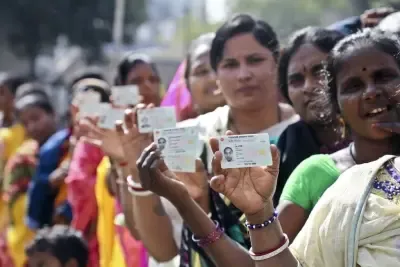
According to a survey from the International Republican Institute (IRI), a think-tank based in the US, 39% of respondents expressed a likelihood to vote for the BNP, while 29% favored the Jamaat. Analysts anticipate this gap will continue to close as the elections approach in February 2026.
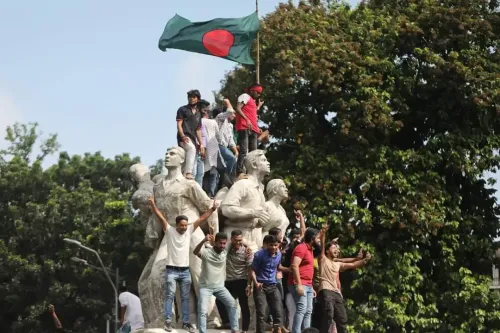
Additionally, 6% showed support for the National Citizens Party (NCP), formed by students who spearheaded protests that led to Sheikh Hasina's departure from the Prime Minister position.
Observers note that the Jamaat's fortunes shifted significantly after its student wing, the Islami Chhatra Shibir (ICS), dominated the Dhaka University Central Students’ Union election. The ICS also achieved victories in Jahangirnagar, Rajshahi, and Chittagong universities.
The Jamaat's rise can be attributed to several factors, including its superior organizational structure compared to the BNP. Had the Awami League participated, it would likely have had an advantage due to its stronger organization than the Jamaat.
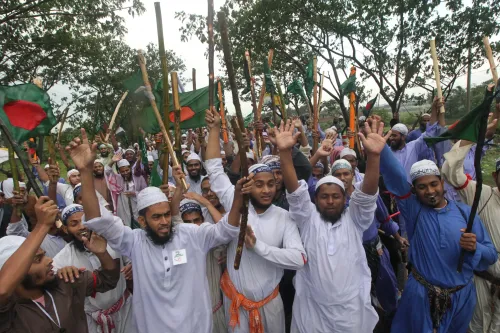
This shift towards the Jamaat signifies a radical change in Bangladesh's political climate, reflecting an increasing preference for a party that endorses radical Islam.
Moreover, after the Hasina government's collapse, significant interference from Pakistan, a close ally of the Jamaat, has bolstered the party's position, allowing it to propagate its radical agenda across broader regions.
Officials have noted that while the Jamaat has engaged in radicalization and institutional changes, it has refrained from corruption. However, this does not guarantee its behavior post-elections, as one official mentioned.
Conversely, the BNP seems overconfident about securing the elections. Complaints regarding extortion and land grabs by some of its members have negatively affected its popularity in recent months.
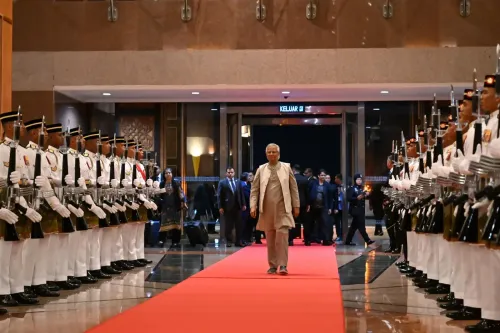
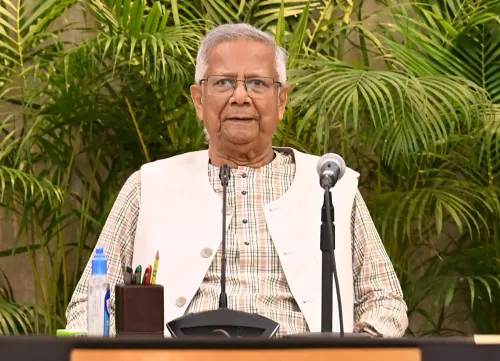
The NCP, meanwhile, appears inexperienced, seeking to control institutions and enforce changes even before facing elections. Many believe its leaders are leveraging their connection to caretaker Muhammad Yunus to influence decisions.
Yunus has been cooperative, given his indebtedness to the students who facilitated Hasina's ousting.
Experts point out that the Jamaat is advocating for reforms, including electoral processes, attempting to present an image that they are not as detrimental as the BNP or the Awami League and genuinely care for the country's welfare.
However, it’s crucial to recognize that this could merely be a facade, and post-election, the Jamaat might revert to its former self.
A Jamaat victory would pose challenges for India, as the organization is banned there, and its alignment with Pakistan suggests strained relations with New Delhi.
During the Jamaat's prior coalition with the BNP from 2001 to 2006, it created significant challenges for India, enabling anti-India factions and jihadists to operate freely, even facilitating attacks against India.
This period was also marked by the seizure of ten truckloads of arms headed for India.
Experts believe that currently, the political landscape is closely contested. There is a gradual shift away from the BNP, with voters increasingly leaning towards the Jamaat. The key question remains: how will Awami League voters respond? Most likely, they will abstain from the elections.
Point of View
It is imperative to observe the shifting allegiances among the electorate. The rise of the Jamaat-e-Islami indicates a pivotal change that could reshape the nation's future. While the BNP remains a significant contender, the Jamaat's increasing support invites scrutiny regarding its implications for regional stability, particularly concerning India.
NationPress
24 Sept 2026
Frequently Asked Questions
What is the current political situation in Bangladesh?
The political environment in Bangladesh is rapidly changing, with the Jamaat-e-Islami gaining momentum against the BNP due to the Awami League's disqualification from elections.
How is the Jamaat-e-Islami performing in polls?
Recent polls indicate that the Jamaat-e-Islami is closing the gap with the BNP, with a significant shift in public support as elections approach.
What influence does Pakistan have on the Jamaat?
Pakistan's interference has reportedly aided the Jamaat in spreading its radical agenda within Bangladesh, especially after the fall of the Hasina government.
What are the implications of a Jamaat victory for India?
A Jamaat win could strain relations with India, as the organization is banned there and has previously been linked to anti-India activities.
Will the BNP maintain its popularity?
The BNP's popularity appears to be declining due to allegations of corruption and mismanagement among its leaders.